The term kickback meaning can vary depending on the context. You may hear it in casual conversations, business discussions, or legal news reports, but its interpretation changes based on how it is used. Sometimes, a kickback simply refers to relaxing with friends, while in other situations, it describes an illegal payment or a form of corruption.
Understanding the different meanings of “kickback” can help you use the word correctly and avoid confusion. This guide explains the definition of kickback, its origins, common uses, and real-world examples.
What Is the Kickback Meaning?
At its core, the kickback meaning refers to a return or payment given back to someone, often as a reward, favor, or compensation. The word has two primary meanings:
- A social gathering or a time to relax
- An illicit payment or bribe in business or politics
The intended meaning depends entirely on the situation and the way the word is used.
Kickback Meaning in Slang and Everyday Conversation
In modern slang, a kickback usually means a small, relaxed social event where people spend time together casually. It often involves close friends, music, food, or simply hanging out.
Examples of Kickback in a Sentence
- “We’re having a kickback at my house tonight. Come over if you’re free.”
- “After a long week of work, I just want to kick back and relax.”
- “The birthday kickback was small but really enjoyable.”
In this sense, a kickback is similar to words such as:
- Get-together
- Gathering
- Hangout
- House party
- Casual event
The slang usage became especially popular among younger generations and is commonly seen on social media.
Kickback Meaning in Business and Law
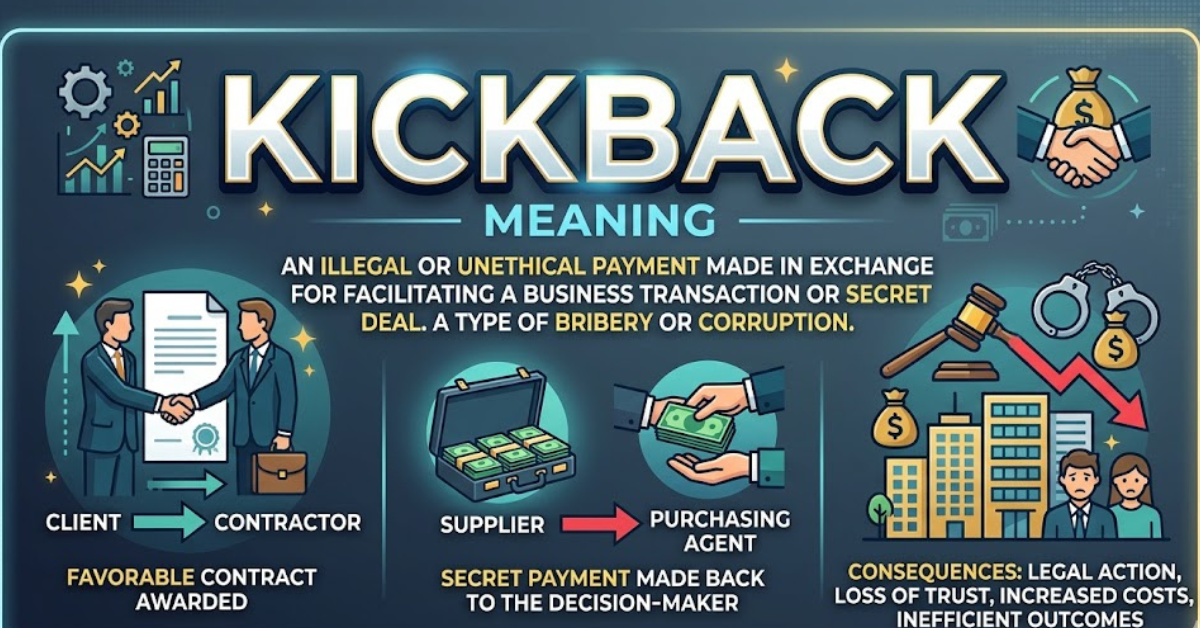
In a business or legal context, the kickback meaning usually refers to an illegal or unethical payment given in exchange for special treatment, a contract, or a favor.
For example, a supplier might secretly pay a company employee to ensure they receive a contract. This hidden payment is known as a kickback.
Common Examples of Illegal Kickbacks
- A contractor paying money to a government official to win a project.
- A company employee receiving secret commissions from a vendor.
- A healthcare provider receiving payments for referring patients to specific services.
Many countries have strict anti-kickback laws because these arrangements can lead to corruption, unfair competition, and misuse of public or private funds.
What Is a Kickback Payment?
A kickback payment is money, gifts, or benefits given to a person in return for influencing a decision. These payments are usually hidden and are considered unethical or illegal in many situations.
Kickbacks can include:
- Cash payments
- Expensive gifts
- Luxury trips
- Undisclosed commissions
- Personal favors
While some legitimate commissions and referral fees exist, they are generally transparent and agreed upon openly. Secret payments made to influence decisions are what make kickbacks problematic.
Difference Between a Kickback and a Bribe
Many people confuse kickbacks with bribes because both involve exchanging benefits for influence. However, there is a slight difference.
| Kickback | Bribe |
| Often involves returning part of a payment or profit | Usually involves offering something valuable to influence an action |
| Common in contracts, purchasing, or business deals | Can occur in many areas, including politics and law enforcement |
| Typically hidden from the organization affected | Usually a secret attempt to gain an unfair advantage |
In practice, the two terms often overlap, and both are associated with corruption.
Origin of the Word Kickback
The word kickback comes from the idea of a portion of money being “kicked back” or returned to someone after a transaction. The term appeared in American English in the early 20th century and became strongly associated with secret payments and corruption.
Over time, another informal meaning developed from the phrase “kick back,” which means to relax or recline comfortably. This led to the modern slang use of “kickback” as a relaxed gathering.
Common Phrases Related to Kickback
Here are some popular phrases that use the word:
“Kick Back and Relax”
This means to rest, take it easy, or enjoy free time.
Example: “After the exam, I’m going to kick back and watch some movies.”
“A Kickback Party”
This refers to a small, informal social event.
Example: “We’re hosting a weekend kickback with a few friends.”
“Receiving a Kickback”
This means accepting an illegal payment or secret benefit.
Example: “The official was investigated for receiving kickbacks from contractors.”
Why Understanding Kickback Meaning Is Important
Knowing the correct kickback meaning helps you understand conversations, news stories, and professional discussions more clearly.
In casual settings, it can describe a fun and relaxed gathering. In professional or legal settings, it can indicate a serious issue involving fraud, corruption, or unethical behavior.
The context determines whether the word has a positive, neutral, or negative meaning.
FAQs About Kickback Meaning
What does kickback mean in slang?
In slang, a kickback means a relaxed social gathering where friends spend time together casually, often with music, food, and entertainment.
Is a kickback always illegal?
No. A kickback used to describe a casual gathering is not illegal. However, a kickback involving secret payments, bribes, or undisclosed rewards in business is often illegal.
What is the difference between kickback and kick back?
Kickback is a noun that can mean a gathering or an illicit payment. Kick back is a verb phrase that means to relax.
What is a kickback in business?
In business, a kickback is a hidden payment or benefit given to someone in exchange for favorable treatment, such as awarding a contract or making a purchasing decision.
What is another word for kickback?
Depending on the context, synonyms include:
- Bribe
- Secret commission
- Payoff
- Rebate (in some contexts)
- Gathering
- Hangout
- Get-together
Conclusion
The kickback meaning has more than one definition, making context extremely important. In everyday language, a kickback often refers to a relaxed gathering with friends or a chance to unwind. In business and legal environments, however, it usually describes a secret payment given in exchange for influence or favors.
By understanding both meanings, you can interpret conversations, news articles, and professional situations accurately. For more helpful guides on word meanings, slang terms, and business vocabulary, explore our related language resources.