Have you ever typed dialog vs dialogue into a search engine and wondered whether one spelling is wrong? You’re not alone. These two words look nearly identical and are often used interchangeably, but their usage depends on context, regional spelling preferences, and even the field you’re writing in.
In this guide, we’ll break down the difference between dialog and dialogue, explain when each version is appropriate, and provide examples to help you use them confidently in writing, literature, technology, and everyday communication.
What Does “Dialogue” Mean?
Dialogue is the traditional and more widely accepted spelling of the word. It refers to a conversation between two or more people, especially in books, films, plays, and formal writing.
Examples of “Dialogue” in Sentences
- The author wrote realistic dialogue between the characters.
- Effective communication requires open and honest dialogue.
- The movie’s dialogue was praised for sounding natural.
The word comes from the Greek dialogos, meaning “conversation,” and has been part of the English language for centuries.
What Does “Dialog” Mean?
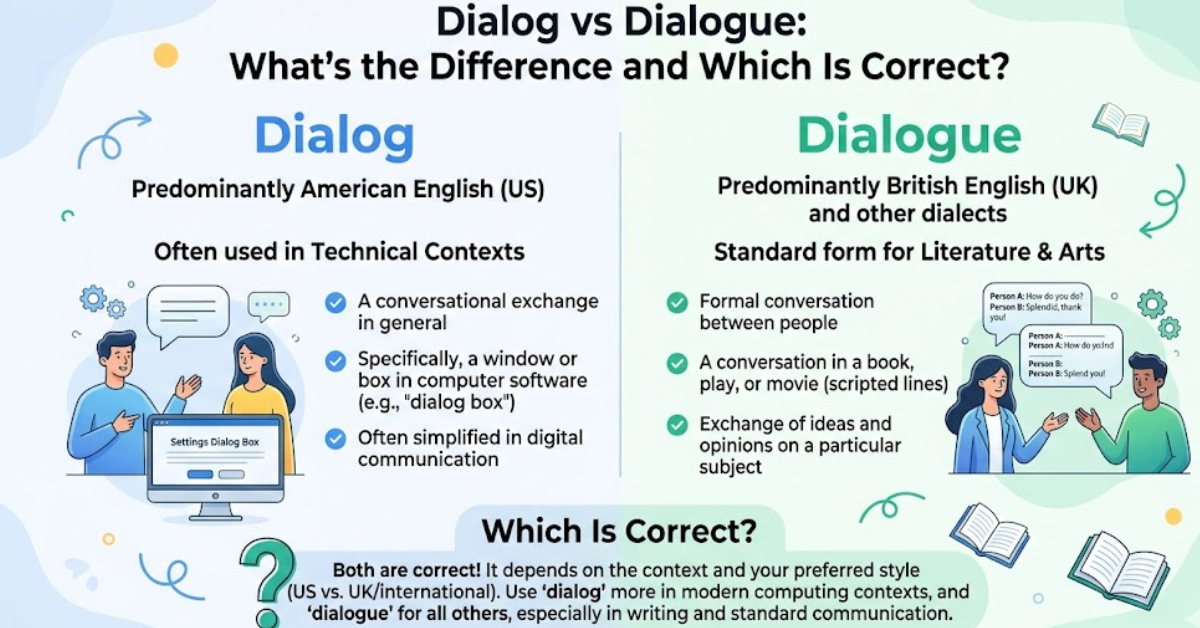
Dialog is a shorter variant of dialogue. While it can sometimes mean a conversation, it is most commonly used in the world of computing and technology.
For example, software developers often use the term dialog box to describe a small window that appears on a computer screen requesting information or displaying a message.
Examples of “Dialog” in Technology
- Click “OK” to close the dialog box.
- The application displays a settings dialog.
- The programmer created a new user input dialog.
In technical writing, “dialog” is often preferred because it is shorter and has become a standard term in many software environments.
Dialog vs Dialogue: The Main Differences
Although dialog vs dialogue is largely a matter of spelling and context, there are some important distinctions.
| Feature | Dialog | Dialogue |
| Common meaning | Conversation or computer interface | Conversation between people |
| Most common field | Technology and software | Literature, journalism, everyday writing |
| Formal writing | Less common | More common |
| British English | Rarely used | Preferred |
| American English | Used in tech contexts | Standard spelling |
The biggest takeaway is that dialogue remains the preferred spelling in general English, while dialog has found a strong place in technology.
Is “Dialog” or “Dialogue” Correct?
The answer is simple: both are correct, but they are used in different situations.
Use dialogue when writing:
- Novels and short stories
- Essays and academic papers
- Articles and news reports
- Conversations between people
- Discussions between groups or nations
Use dialog when referring to:
- Computer software
- User interfaces
- Dialog boxes
- Technical documentation
Choosing the right spelling helps your writing match your audience’s expectations.
Dialog vs Dialogue in American and British English
Regional differences also play a role in the dialog vs dialogue debate.
British English
British English strongly favors dialogue for nearly every meaning, including conversations and formal discussions.
Example:
The government encouraged a peaceful dialogue between opposing groups.
American English
American English also generally prefers dialogue, but the spelling dialog is accepted and commonly seen in computer-related contexts.
Example:
A warning dialog appeared before deleting the file.
Why Does Technology Prefer “Dialog”?
The popularity of dialog in computing developed because programmers often prefer shorter terms. During the early days of software development, shorter words were easier to use in commands, file names, and interface labels.
As computer technology evolved, terms like dialog box became industry standards, appearing in operating systems, programming languages, and software manuals.
How to Remember the Difference Between Dialog and Dialogue
A simple trick can help you choose the right word:
- Dialogue = Drama and discussion (books, movies, conversations)
- Dialog = Digital technology (software and computer interfaces)
While this rule is not absolute, it works in most everyday situations.
Common Mistakes When Using Dialog vs Dialogue
Many writers make the mistake of using dialog in formal essays or creative writing. Although it is technically acceptable in some dictionaries, it may appear unusual to readers.
Avoid these mistakes:
- The novel contained excellent dialog.
- The novel contained excellent dialogue.
- The teacher praised the character’s dialog.
- The teacher praised the character’s dialogue.
However:
- The software opened a settings dialog.
Context determines the correct choice.
Dialog vs Dialogue: Which One Should You Use?
If you are unsure which spelling to choose, dialogue is usually the safest option. It is the standard spelling in literature, journalism, education, and professional communication.
Choose dialog only when writing about computers, software design, or technical subjects where it is commonly accepted.
FAQs About Dialog vs Dialogue
Is “dialog” a misspelling of “dialogue”?
No, dialog is not a misspelling. It is a recognized alternative spelling, particularly in technology and computer science.
Which spelling is more common: dialog or dialogue?
Dialogue is much more common in general English, especially in books, articles, and formal writing.
Do software developers use dialog or dialogue?
Most software developers and technical writers prefer dialog, especially in phrases like “dialog box” or “settings dialog.”
Is dialogue used in British and American English?
Yes. Dialogue is the standard spelling in both British and American English, although American technical writing often uses dialog.
Can I use dialog in a novel or screenplay?
You can, but dialogue is the preferred and more widely accepted spelling for creative writing.
Conclusion
Understanding dialog vs dialogue is easier once you know the context. Dialogue is the traditional spelling used for conversations, literature, and formal writing, while dialog is mainly associated with computers and software interfaces.
When in doubt, choose dialogue because it is the more universally recognized form. For technology-related content, however, dialog may be the better fit. Knowing the difference will make your writing more accurate and professional.
For more grammar tips and writing guides, explore related articles on common word differences, spelling rules, and English usage.