Have you ever heard someone say, “I bought my favorite artist’s merch,” and wondered what exactly they mean? The word merch is everywhere—from concerts and YouTube channels to clothing brands and online stores—but many people still aren’t completely sure what it includes.
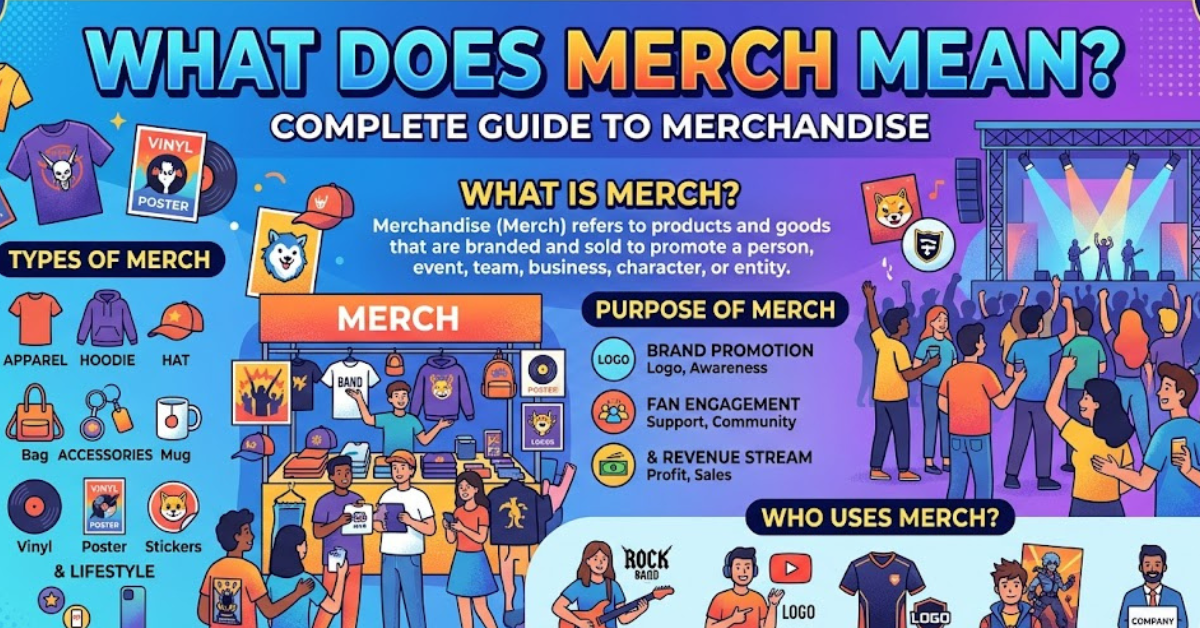
Simply put, what does merch mean? Merch is short for merchandise, a term used to describe products sold by a brand, artist, company, or creator. It can include anything from T-shirts and hoodies to posters, accessories, collectibles, and other branded items. In this guide, you’ll discover the meaning of merch, its different types, how it became popular, and why it plays such a major role in modern culture and business.
Understanding the Meaning of Merch
The term merch is an informal abbreviation of the word merchandise. Merchandise refers to goods that are made available for sale to customers. While the word can apply to almost any product sold in a store, “merch” is commonly associated with branded products connected to celebrities, musicians, sports teams, influencers, movies, and businesses.
For example:
- A Taylor Swift concert T-shirt is merch.
- A YouTuber’s branded hoodie is merch.
- A football team’s jersey and cap are merch.
- A company’s promotional water bottle is merch.
These products often display a logo, slogan, artwork, character, or design that represents a specific person, brand, or community.
The Origin and History of Merch
To fully understand what merch means today, it helps to look at its history.
The word “merchandise” comes from the French word marchandise, meaning goods that are bought and sold. Over time, English speakers shortened the term to “merch,” especially in casual conversation and business settings.
Branded merchandise became especially popular in the music industry during the 20th century. Bands began selling T-shirts, posters, and souvenirs at concerts as a way to earn extra income and strengthen their connection with fans.
Today, merch has expanded far beyond music. Social media influencers, gaming personalities, streaming platforms, and global companies all use merchandise to build communities and increase brand recognition.
Different Types of Merch
Merchandise can come in many forms depending on the audience and purpose.
Clothing and Apparel
Apparel is one of the most common forms of merch.
Examples include:
- T-shirts
- Hoodies
- Hats
- Jackets
- Socks
- Jerseys
Many fans enjoy wearing these items because they allow them to show support for a favorite artist, team, or brand.
Accessories and Everyday Items
Not all merch is clothing. Many brands create practical products that people can use daily.
Popular examples include:
- Phone cases
- Tote bags
- Mugs
- Water bottles
- Keychains
- Stickers
These affordable items often make merchandise accessible to a wider audience.
Collectibles and Limited Editions
Some merchandise is designed to be rare or exclusive.
Examples include:
- Signed posters
- Limited-edition figures
- Special album packages
- Event-exclusive products
Because they are available for a short period, these items can become valuable to collectors.
Digital Merch
The digital world has introduced new forms of merchandise, including:
- Exclusive online content
- Digital artwork
- Gaming skins
- Virtual collectibles
As online communities continue to grow, digital merch has become an important part of modern fan culture.
Why Is Merch So Popular?
Merch has become a powerful tool because it creates a connection between people and the brands they admire.
Some key reasons for its popularity include:
It Builds a Sense of Belonging
Wearing a piece of merchandise can make fans feel like they are part of a community. A concert shirt or team jersey represents shared interests and experiences.
It Supports Creators and Artists
For musicians, YouTubers, podcasters, and independent creators, merch provides an additional source of income beyond advertising, ticket sales, or streaming revenue.
It Strengthens Brand Identity
Companies use branded products to increase visibility. Every time someone uses a branded mug or wears a logo shirt, they are effectively promoting that brand.
Merch in Modern Business and Marketing
Today, merchandise is much more than a souvenir. It has become a major marketing strategy.
Large companies like Nike, Disney, and Marvel generate significant revenue through branded products. Smaller businesses also use merch to establish recognition and create loyal customer communities.
Successful merchandise usually has these qualities:
- High-quality materials
- Unique and attractive designs
- A strong connection to the brand’s identity
- Products that customers genuinely want to use
Businesses often release limited collections or collaborate with artists to create excitement and increase demand.
Merch vs Merchandise: Is There a Difference?
Many people wonder whether merch and merchandise are different terms.
The answer is simple: merch is just a shortened version of merchandise.
However, in everyday conversation, “merch” usually refers to branded products associated with entertainment, creators, sports, or companies. The word “merchandise” is broader and can describe any goods sold by a retailer.
For example:
- A grocery store’s products are considered merchandise.
- A band’s logo T-shirt is commonly called merch.
How to Create Successful Merch
Whether you are an artist, entrepreneur, or content creator, launching merchandise requires careful planning.
Here are some useful tips:
- Understand your audience and what they would actually buy.
- Choose quality products that represent your brand well.
- Create original designs rather than simply placing a logo on everything.
- Offer limited editions to generate excitement.
- Select reliable manufacturers or print-on-demand services.
Great merch combines creativity, quality, and a strong emotional connection with customers.
Key Takeaways
- Merch is a shortened term for merchandise.
- It usually refers to branded products sold by artists, companies, teams, and creators.
- Common merch items include clothing, accessories, collectibles, and digital products.
- Merchandise helps build communities and provides additional income for brands and creators.
- Modern merch has become a major part of marketing and fan culture.
Frequently Asked Questions FAQs
What does merch mean in slang?
In slang and casual conversation, merch simply means merchandise. It usually refers to branded products like clothing, accessories, or collectibles connected to a person, company, or event.
What is the difference between merch and products?
Products can refer to any item that is sold or used, while merch generally refers to items connected to a specific brand, creator, team, or entertainment property.
Why do musicians sell merch?
Musicians sell merchandise to generate income, promote their brand, and give fans a way to remember concerts or express their support.
What does merch mean on social media?
On social media, merch usually refers to products created by influencers, content creators, streamers, or online personalities for their followers to purchase.
Can a small business create merchs?
Yes. Small businesses can create merchandise such as branded clothing, packaging, accessories, and promotional items to increase awareness and build customer loyalty.
Conclusion
Understanding what merch means is simple once you know its origin and purpose. Merch is short for merchandise and generally refers to branded items that allow people to support and connect with their favorite creators, teams, companies, or communities.
From concert T-shirts and sports jerseys to digital collectibles and custom accessories, merch has become a huge part of modern culture and business. Whether you’re a fan looking to buy your first item or a creator considering launching a product line, understanding how merchandise works helps you make smarter choices and appreciate the value behind every item.