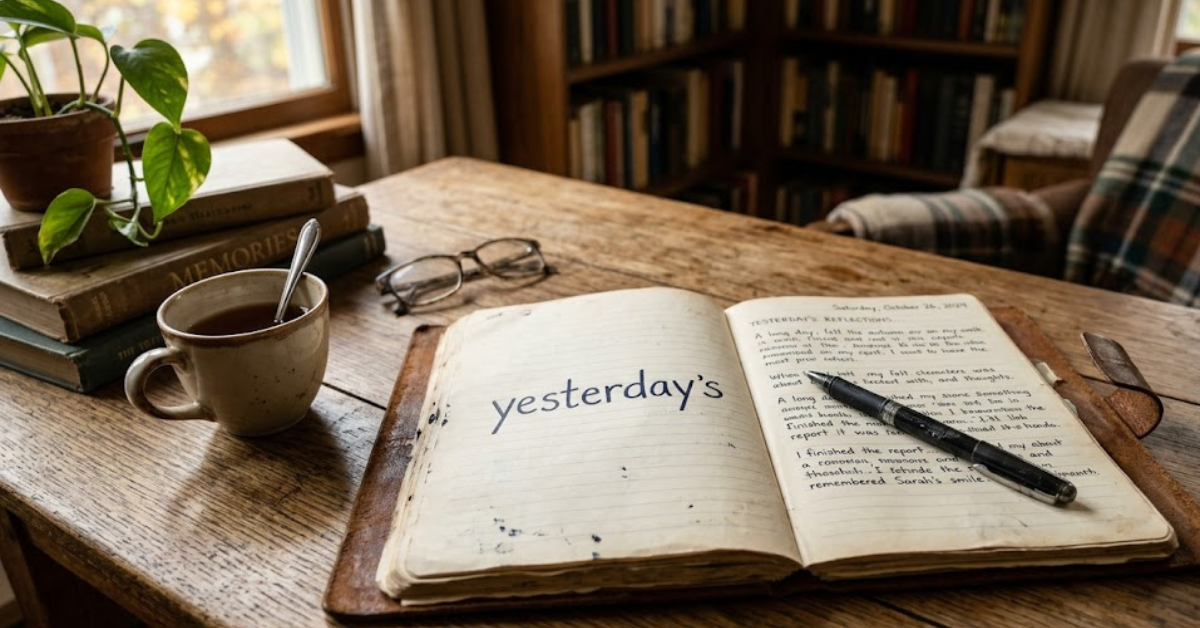
Language can be tricky, especially when small punctuation marks completely change meaning. One of the most common grammar confusions people search for is “yesterdays or yesterday’s”. At first glance, they look almost the same—but only one is usually correct in standard English.
So what’s the difference? And how do you know which one to use? Let’s break it down in a simple, practical way.
What Does “Yesterday’s” Mean?
The term “yesterday’s” (with an apostrophe) is a possessive form. It shows that something belongs to or is related to yesterday.
Examples of “yesterday’s” in use:
- Yesterday’s news was surprising.
- I forgot yesterday’s meeting notes.
- Yesterday’s weather was much colder.
In all these examples, the apostrophe shows possession—something from or belonging to the day before today.
Key idea: “Yesterday’s” = belonging to yesterday
Is It “Yesterdays” or “Yesterday’s”?
This is where most confusion happens.
1. “Yesterday’s” (Correct in most cases)
Used when referring to something belonging to the previous day.
- Yesterday’s events
- Yesterday’s results
- Yesterday’s discussion
2. “Yesterdays” (Rare and context-specific)
“Yesterdays” without an apostrophe is a plural noun, and it is very uncommon in modern English.
It is sometimes used in poetic or literary writing to refer to multiple past days.
Example:
- She lived in the yesterdays of her childhood.
Key idea:
- Yesterday’s = possessive (standard usage)
- Yesterdays = plural (rare, poetic, abstract use)
Grammar Rule Behind “Yesterday’s”
Understanding the grammar makes it easier to avoid mistakes.
Possessive form rule:
For singular nouns, we add:
- ’s (apostrophe + s)
So:
- Yesterday → Yesterday’s
- Student → Student’s
- Day → Day’s
Even though “yesterday” is an adverb in some cases, it can act like a noun when forming possessives.
Why People Get Confused
There are a few reasons this mistake is so common:
- Spoken English doesn’t show apostrophes
- Autocorrect often ignores grammar context
- Similar words like “todays,” “tomorrows,” etc., appear online incorrectly
- Fast typing leads to missing punctuation
Common Mistakes with “Yesterday’s”
Here are examples of incorrect usage:
Yesterdays news was shocking
Yesterday’s news was shocking
I missed yesterdays class
I missed yesterday’s class
Yesterdays weather was nice
Yesterday’s weather was nice
Quick Usage Guide
To make it even simpler, here’s a quick reference:
Use “yesterday’s” when:
- Talking about events from the previous day
- Referring to news, meetings, weather, results
Avoid “yesterdays” unless:
- You are writing poetry
- You are referring to multiple past days in a creative or abstract way
FAQs About “Yesterdays or Yesterday’s”
1. Is it yesterdays or yesterday’s correct?
“Yesterday’s” is correct in most everyday English usage. It shows possession or relation to the previous day.
2. What does yesterday’s mean in grammar?
It means something belonging to or related to yesterday, such as events, news, or activities.
3. Can I ever use “yesterdays”?
Yes, but rarely. It is mostly used in poetry, literature, or expressive writing to refer to past days in general.
4. Why does yesterday need an apostrophe?
The apostrophe shows possession, meaning something from or belonging to that day.
5. What is a simple way to remember the difference?
Think of it like this:
- Yesterday’s = one day owning something
- Yesterdays = multiple past days (rare usage)
Conclusion
Understanding yesterdays or yesterday’s meaning comes down to one simple rule: apostrophes matter. In standard English, “yesterday’s” is almost always the correct choice, especially when referring to news, events, or anything connected to the previous day.
“Yesterdays” exists, but it’s uncommon and mostly used in creative writing rather than everyday communication.
If you’re aiming for clear, correct English, stick with “yesterday’s”—it will keep your writing accurate and professional.