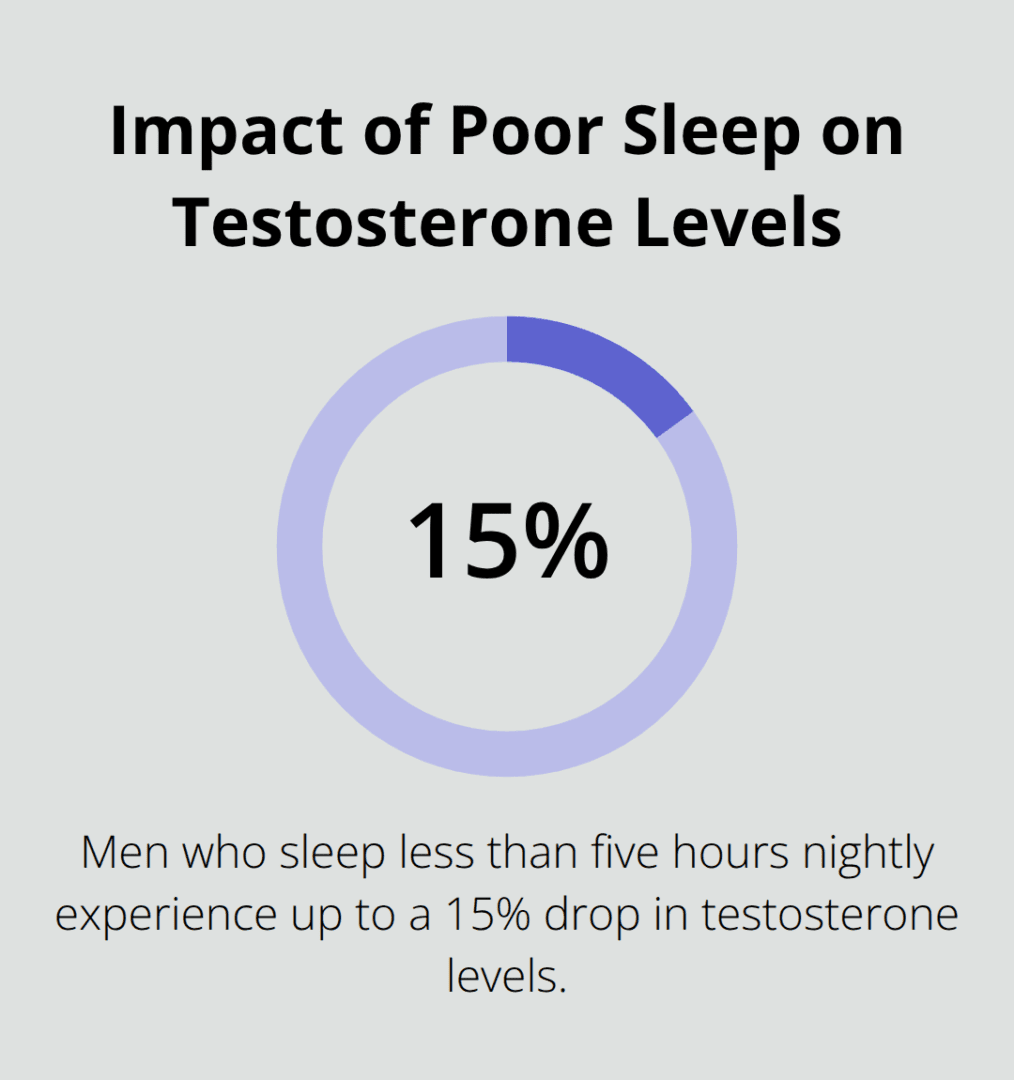
Sleep is far more than a period of rest. During deep, uninterrupted sleep, the body performs essential hormonal and metabolic functions, including regulating testosterone production. When obstructive sleep apnea (OSA) repeatedly interrupts breathing throughout the night, that process can become seriously disrupted. Instead of moving smoothly through restorative sleep cycles, the body repeatedly wakes or partially wakes to restore airflow. Over time, this combination of fragmented sleep and intermittent oxygen deprivation may contribute to lower testosterone levels in men. Research has found a significant association between OSA and reduced serum testosterone, particularly in men with more severe sleep apnea.
That makes Why Sleep Apnea Can Destroy Testosterone Levels an important topic for men dealing with unexplained fatigue, reduced libido, poor concentration, or changes in body composition. However, the relationship is more complicated than simply saying that sleep apnea automatically causes low testosterone. Age, obesity, metabolic health, sleep quality, and other medical conditions can also influence testosterone. Still, the evidence gives men a strong reason to take persistent snoring, nighttime breathing interruptions, and excessive daytime sleepiness seriously rather than treating them as harmless inconveniences.
The Connection Between Sleep and Testosterone
The body follows a carefully coordinated hormonal rhythm, and sleep plays a major role in maintaining it. Testosterone production normally increases during sleep, particularly as a person progresses through healthy sleep cycles. Consequently, repeatedly interrupted sleep can interfere with the conditions the body needs for normal hormone regulation. Sleep apnea creates exactly this kind of disruption because the airway repeatedly becomes blocked, causing breathing pauses followed by brief arousals that may happen dozens or even hundreds of times during a night.
The problem goes beyond simply getting fewer hours of sleep. A person with sleep apnea may spend enough time in bed while still receiving poor-quality, fragmented sleep. Each breathing interruption can trigger physiological stress responses as the body works to reopen the airway and restore normal breathing. Over time, this repeated disruption may interfere with the hormonal signals involved in testosterone production. Research reviews have found an inverse association between obstructive sleep apnea and testosterone levels in men, with particularly noticeable reductions among men with severe OSA.
How Oxygen Drops Can Affect Hormonal Health
One of the defining characteristics of obstructive sleep apnea is intermittent hypoxia, meaning oxygen levels repeatedly fall and then recover during sleep. These fluctuations place additional physiological stress on the body. At the same time, frequent awakenings activate systems designed to keep a person alert and breathing rather than allowing the body to remain in a deeply restorative state.
This repeated stress may influence several biological pathways associated with testosterone production. Moreover, sleep apnea commonly occurs alongside obesity and metabolic problems, which can independently contribute to lower testosterone. Researchers therefore continue to investigate how much of the hormonal change comes directly from OSA and how much comes from related factors. A 2022 meta-analysis found significantly lower testosterone in men with OSA, while also noting substantial differences among the studies included.
The Sleep Fragmentation Problem
Imagine trying to repair your body overnight while someone repeatedly interrupts the process. That is essentially what severe sleep apnea can do. Instead of maintaining long, uninterrupted periods of restorative sleep, the brain repeatedly shifts toward wakefulness when breathing becomes restricted.
As a result, a person can wake up feeling exhausted despite spending seven or eight hours in bed. Poor sleep can also affect mood, energy, concentration, exercise performance, and sexual health. Since many of these symptoms overlap with symptoms of low testosterone, men may incorrectly assume that their hormones are the only problem. In reality, untreated sleep apnea may be an important piece of the puzzle.
Signs That Should Not Be Ignored
Low testosterone does not always announce itself clearly. Instead, symptoms can develop gradually and become easy to blame on stress, aging, a demanding schedule, or simply “not sleeping enough.” When sleep apnea exists at the same time, however, the combination can become particularly frustrating.
Common warning signs can include:
- Persistent daytime fatigue
- Reduced sexual desire
- Erectile difficulties
- Morning headaches
- Difficulty concentrating
- Mood changes or irritability
- Loud, persistent snoring
- Gasping or choking during sleep
- Waking repeatedly throughout the night
- Feeling unrefreshed after sleeping
These symptoms do not prove that someone has low testosterone or sleep apnea. Nevertheless, they provide a good reason to speak with a healthcare professional. Proper testing can distinguish between sleep-related problems, hormonal deficiency, lifestyle factors, and other medical conditions instead of relying on symptoms alone.
Does Treating Sleep Apnea Restore Testosterone?
This is where the subject becomes especially interesting. It would be convenient to say that treating sleep apnea automatically raises testosterone, but the scientific evidence is more nuanced. Some research associates untreated OSA with lower testosterone, yet studies examining whether CPAP treatment directly increases testosterone have produced inconsistent findings.
For example, a meta-analysis of studies involving men with OSA found that CPAP treatment did not produce a statistically significant overall increase in total testosterone. That does not make treating sleep apnea unimportant. Quite the opposite: treating OSA can address the breathing interruptions and sleep fragmentation that cause numerous health problems, even if testosterone does not immediately rise.
Therefore, the smarter approach is to treat the underlying sleep disorder while separately evaluating testosterone when symptoms and laboratory results justify it. This avoids expecting one treatment to solve every aspect of a complex hormonal problem.
Where TRT Fits Into the Picture
TRT, or testosterone replacement therapy, is sometimes considered when a man has persistent symptoms of testosterone deficiency alongside repeatedly confirmed low testosterone levels. However, TRT should not be treated as a shortcut for diagnosing or treating sleep apnea. Clinical guidelines recommend diagnosing hypogonadism using both appropriate symptoms and consistently low testosterone measurements, generally beginning with morning testing and confirming an abnormal result.
There is another important reason to approach TRT carefully when sleep apnea is involved. Testosterone therapy may worsen sleep-disordered breathing in some men, particularly when sleep apnea remains severe and untreated. The Endocrine Society specifically recommends against starting testosterone therapy in men with untreated severe obstructive sleep apnea. A recent review similarly emphasizes that TRT and sleep apnea have a complicated relationship, suggesting that treatment decisions should be individualized rather than based on a one-size-fits-all approach.
| Situation | Sensible approach |
| Suspected sleep apnea | Discuss sleep evaluation with a healthcare professional |
| Symptoms of low testosterone | Obtain appropriate medical evaluation |
| Confirmed low testosterone | Investigate the underlying cause |
| Untreated severe OSA | Address the sleep disorder before considering TRT |
| TRT already prescribed | Monitor symptoms, testosterone, and relevant safety markers |
| Persistent symptoms despite OSA treatment | Reassess sleep, hormones, lifestyle, and other possible causes |
Why Treating the Root Problem Makes More Sense
One of the biggest mistakes men can make is focusing exclusively on testosterone numbers while ignoring the quality of their sleep. If a person snores heavily, repeatedly gasps during sleep, wakes exhausted, and struggles with daytime fatigue, simply assuming the answer is testosterone may miss an underlying sleep disorder.
Instead, addressing sleep apnea can create a stronger foundation for overall health. Depending on the individual, treatment may involve CPAP, weight management, positional strategies, oral appliances, or other approaches recommended by a qualified healthcare professional. Although CPAP does not consistently increase testosterone on its own, it remains an important treatment for OSA and can improve the breathing and sleep disruption caused by the condition.
This is why Why Sleep Apnea Can Destroy Testosterone Levels should not be interpreted as a claim that sleep apnea is the only cause of low testosterone. Rather, it highlights a potentially overlooked relationship. When poor sleep, obesity, metabolic health, and hormonal changes overlap, treating the underlying problems together can produce a much more sensible strategy.
The Positive Outlook: Better Sleep Creates Better Possibilities
The encouraging part is that sleep apnea is a condition that can be recognized and treated. Men do not have to accept constant exhaustion, poor sleep, or declining quality of life as inevitable. A proper sleep evaluation can identify whether breathing interruptions are occurring, while appropriate blood testing can determine whether testosterone deficiency actually exists.
Furthermore, testosterone therapy can be useful for appropriately diagnosed men when a clinician determines that its benefits outweigh its risks. Guidelines recommend monitoring men who receive testosterone treatment, rather than treating TRT as a simple “boost.” The most positive strategy is therefore not chasing testosterone at any cost; it is finding the reason levels are low and addressing the broader health picture.
A Better Way to Think About Testosterone and Sleep
The relationship between sleep apnea and testosterone is best understood as a two-way health conversation rather than a simple cause-and-effect equation. Sleep apnea may contribute to hormonal disruption through fragmented sleep and intermittent hypoxia, while low testosterone and related metabolic factors can exist alongside the condition. Research supports an association, particularly in men with more severe OSA, but it does not mean every man with sleep apnea will develop testosterone deficiency.
Ultimately, Why Sleep Apnea Can Destroy Testosterone Levels matters because it encourages men to look beyond a single laboratory number. Better sleep, appropriate medical testing, healthy weight management, and evidence-based treatment can work together to improve overall well-being. If low testosterone remains after addressing relevant underlying factors, a healthcare professional can determine whether TRT is appropriate and how it should be monitored.
Frequently Asked Questions
Can sleep apnea really lower testosterone?
Evidence suggests that obstructive sleep apnea is associated with lower testosterone levels in men, particularly when OSA is severe. However, researchers also recognize that age, obesity, and metabolic health can influence the relationship.
Can CPAP increase testosterone?
Not necessarily. A meta-analysis found that CPAP did not significantly increase total testosterone overall. However, CPAP remains an important treatment for sleep apnea because it addresses the breathing interruptions and fragmented sleep caused by OSA.
Should men with sleep apnea take TRT?
Men with untreated severe sleep apnea should not start TRT without medical evaluation and management of the sleep disorder. Current Endocrine Society guidance recommends against testosterone therapy in men with untreated severe OSA.
What symptoms could indicate low testosterone?
Possible symptoms include reduced libido, erectile difficulties, reduced energy, changes in body composition, decreased muscle strength, and mood changes. However, symptoms alone cannot establish a diagnosis. Testosterone deficiency requires appropriate laboratory confirmation alongside compatible symptoms.
Is sleep apnea the only reason testosterone becomes low?
No. Testosterone levels can be influenced by aging, obesity, metabolic disorders, medications, other medical conditions, inadequate sleep, and disorders affecting hormone production. That is why identifying the underlying cause is more useful than immediately assuming that TRT is necessary.
Can treating sleep apnea solve low testosterone?
Sometimes improving sleep and overall health may help, but treatment of sleep apnea does not reliably restore testosterone levels in every man. Current evidence supports treating OSA for its own health benefits while evaluating persistent testosterone deficiency separately.