
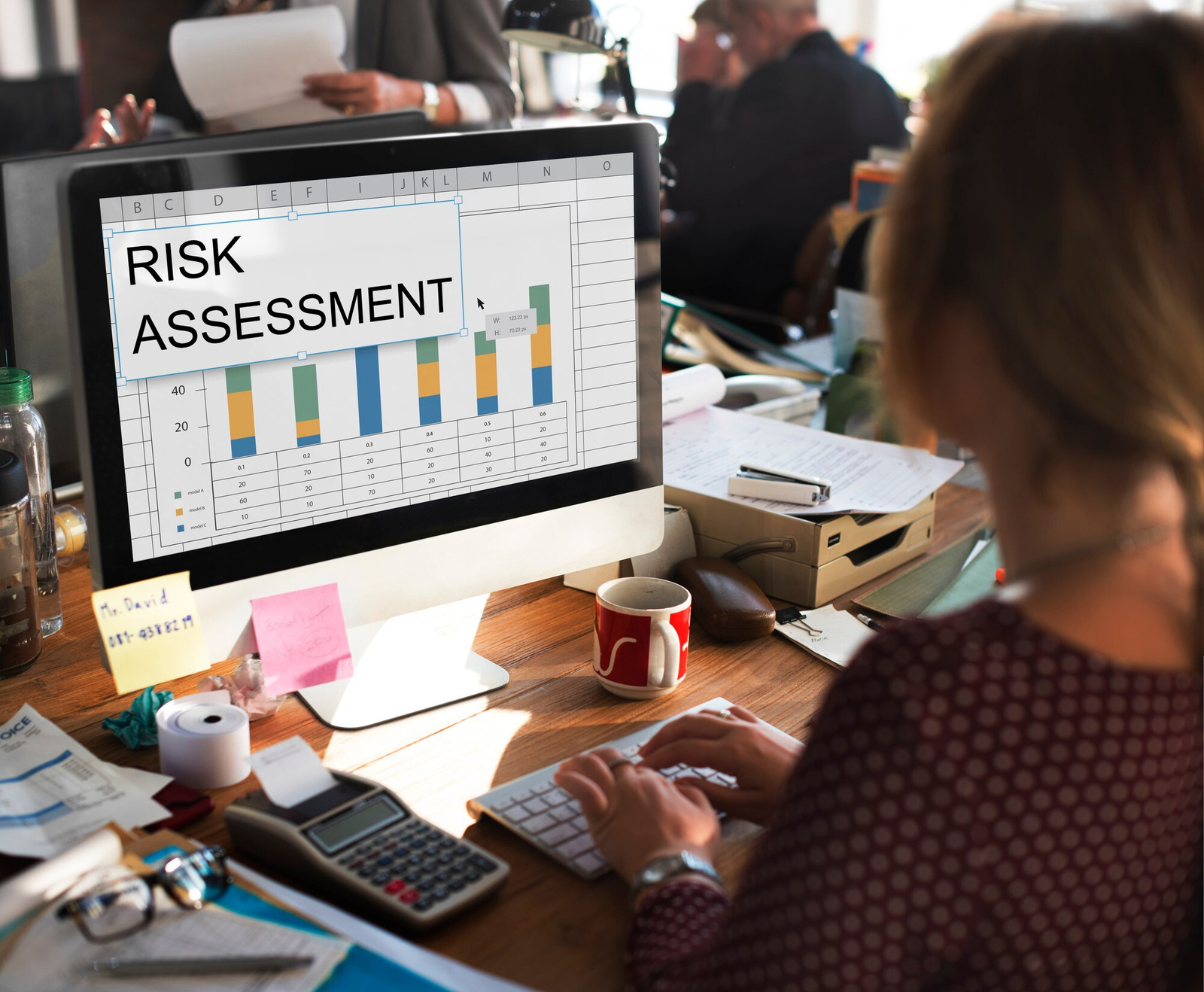
Every workplace, from a small warehouse to a sprawling manufacturing plant carries some level of risk. The difference between an organization that stays safe and one that ends up writing an incident report, often comes down to how seriously it treats Hazard Identification and Risk Assessment. It kinda sounds like a compliance checkbox, but if it’s done right, it becomes the backbone of a safety culture that actually holds up under pressure, or at minimum, it should.
This article breaks down a practical framework you can apply regardless of your industry , and it brings clarity on one question that trips up a lot of teams: who is responsible for conducting a hazard assessment?
Why Hazard Identification and Risk Assessment Deserves More Attention
Most safety failures aren’t caused by freak accidents. They’re caused by hazards that were known, ignored, or never properly assessed in the first place. A loose railing, an untrained forklift operator, a chemical stored right next to an incompatible substance those aren’t usually surprises. More often, they are gaps that a solid hazard identification and risk assessment process would’ve caught long before anyone got hurt.
The process isn’t only about ticking a regulatory requirement. It’s about building a habit of looking at your workplace with a critical eye, spotting what could go wrong before it does, and putting realistic controls in place instead of generic ones copied from a template.
Who Is Responsible for Conducting a Hazard Assessment?
This question comes up constantly, and the honest answer is that it’s rarely just one person’s job. Employers carry the legal responsibility for ensuring assessments happen, but the actual work usually involves supervisors, safety officers, and even frontline workers who know the day to day risks better than anyone sitting in an office.
Figuring out who exactly is responsible for conducting a hazard assessment also involves admitting that the “who” can change, depending on the organization size, and the overall intricacy of the tasks. In a smaller setup, you might see a designated safety coordinator handle most of it, yet in a larger facility, it’s often more like a cross functional team, with engineering, operations, and EHS folks working together (and not just signing off after the fact).
Getting the ownership thing right matters more than people guess ,because assessments carried out by someone without the right training or real authority tend to overlook the real risks. Or even worse , they can conjure up a false sense of safety that sticks around until something finally breaks, and then everyone wonders why it was missed.
Building a Practical Framework
A good framework doesn’t have to be overly complicated. It just needs to stay consistent , be repeatable and actually get used for real, not quietly stuffed away after some audit and then forgotten until the next cycle rolls around.
Step 1: Identify the Hazards
Walk the work area, like actually, not from behind a desk. Talk with the folks doing the job day to day. Hazards end up in a few broad buckets physical, chemical, biological, ergonomic, and psychosocial and each one basically asks for a slightly different lens. If you skip this, or you speed through it, that’s usually where most assessments start to fall apart in silence.
Step 2: Assess the Risk
Once the hazards are identified, the next step is figuring out how likely harm is, and how bad the outcome could turn out to be. A basic risk matrix can help teams sort through it, by mapping likelihood against severity, so priorities stay clear, and not everything gets treated as if it’s equally urgent.
Step 3: Decide on Controls
And yeah, not every hazard calls for the exact same response. The hierarchy of controls elimination, substitution, engineering controls, administrative controls, and personal protective equipment sets a sensible order for deciding what to do. Elimination is usually the strongest lever in the room, and PPE should really be a last line of defense not the first option someone grabs.
Step 4: Document and Communicate
An assessment that lives in someone’s notebook helps nobody. Findings need to be documented clearly and shared with the people actually exposed to the risk. This is also where many organizations lean on structured guidance, and if you want a more detailed breakdown of the process itself, this guide on hazard identification and risk assessment covers the methodology step by step.
Step 5: Review and Update
Workplaces don’t stay still. New equipment shows up, processes shift, and people get reassigned or move into different roles. An assessment from two years ago might not match what’s happening now. So reviewing on a set rhythm, or whenever something meaningful changes, keeps the whole thing relevant, instead of turning into a dusty document nobody believes anymore.
Common Mistakes That Undermine the Process
Even organizations with good intentions get this wrong sometimes. A few patterns show up again and again, quietly weakening an otherwise solid safety program:
- Treating hazard assessment as a once-a-year event instead of an ongoing practice
- Assigning the task to someone without proper training in risk evaluation
- Focusing only on obvious physical hazards while ignoring ergonomic or psychosocial risks
- Failing to involve workers who actually perform the tasks being assessed
- Documenting hazards but never following through on the recommended controls
Each of these mistakes chips away at the credibility of the entire safety program, which makes it harder to get buy-in for future assessments.
Making the Framework Stick
Also, the best framework in the world doesn’t really do much if it isn’t embedded into day to day operations. A few patterns usually separate the organizations where this works in practice from the ones where it fails quietly.
Leadership openly backs the process, and not by dumping it as paperwork “somehow” connected to compliance. Workers get trained so they can catch and report hazards themselves, rather than just waiting for the calendar inspections to show up. And internally there’s a clear, well communicated answer to who is responsible for conducting a hazard assessment, so nobody keeps assuming it’s a different department’s responsibility.
Organizations that manage this well often use structured systems to track hazards, assign corrective actions, and keep records audit-ready year-round. If you’re exploring how to formalize this internally, this resource on who is responsible for conducting a hazard assessment walks through role clarity across different organizational structures, which is often the missing piece teams overlook.
A Quick Look at Regulatory Expectations
Regulatory bodies like OSHA in the United States have long emphasized that hazard identification is a shared responsibility , though the employer ultimately bears the accountability for making sure it gets done consistently.
Final Thoughts
Hazard Identification and Risk Assessment isn’t a one time event, or a simple checkbox right before an audit. It’s an ongoing habit that basically mirrors how much an organization values the people inside it. If you get clear on who is responsible for conducting a hazard assessment, use a structured framework, and sidestep the common traps, then what used to feel like routine compliance can actually help prevent harm.
The organizations that get this right don’t necessarily have more resources than everyone else. They just treat the process as something worth doing properly, again and again, rather than something to survive until the next audit rolls around.