
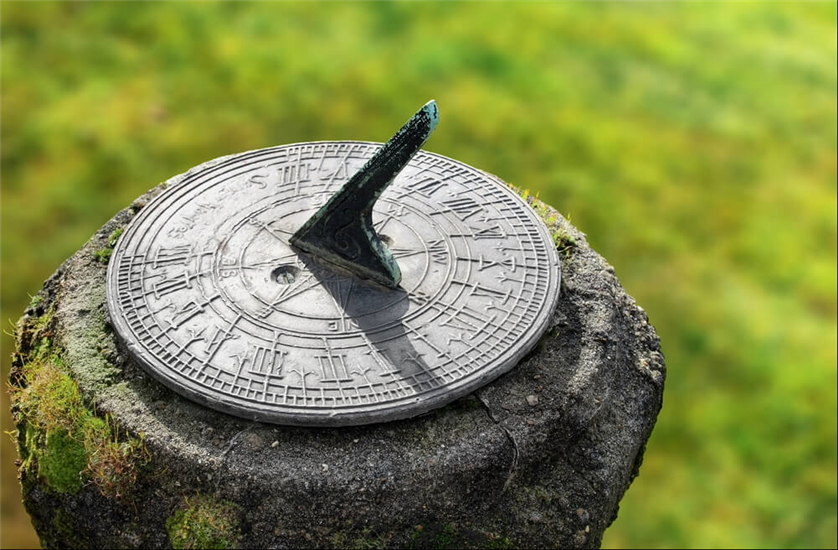
The sun sundial is one of humanity’s oldest and most fascinating tools for measuring time. Long before digital clocks, smartphones, and wristwatches became part of everyday life, people looked toward the sky to understand the passing hours. A sundial uses the apparent movement of the sun and the shadow it creates to indicate the time, combining simple geometry with careful observation of nature.
What makes the sun sundial particularly interesting is its simplicity. There are no batteries, screens, gears, or electronic components involved. When sunlight strikes a raised object known as a gnomon, it creates a shadow that moves across a marked surface throughout the day. By reading the position of that shadow, people can estimate the time.
Even in the modern world, sundials continue to attract historians, scientists, gardeners, educators, and anyone interested in astronomy. They are reminders that timekeeping began with observing the natural world. The sun sundial may be ancient technology, but the scientific principles behind it remain as relevant and impressive as ever.
Understanding How a Sun Sundial Works
At its most basic level, a sun sundial works through the changing position of the sun in the sky. As Earth rotates on its axis, the sun appears to move from east to west. This apparent movement causes the shadow cast by the sundial’s gnomon to change direction and length over the course of the day.
The gnomon is usually positioned at a specific angle based on the geographic location of the sundial. In many traditional designs, it points toward the celestial pole, meaning that its angle is related to the latitude of the location. This careful positioning helps the shadow move across the hour lines in a predictable way.
The marked surface beneath the gnomon is often called the dial plate. It contains lines representing different hours. When the sun shines, the shadow falls across these markings. The result is a remarkably elegant system in which the movement of the planet itself effectively powers the clock.
The Ancient Origins of the Sun Sundial
The history of the sun sundial reaches back thousands of years. Ancient civilizations studied the movement of shadows and the position of the sun long before modern scientific instruments existed. Early timekeeping methods often involved observing how shadows changed throughout the day.
Ancient Egyptians are commonly associated with some of the earliest known shadow clocks and sundial-like devices. These early instruments helped people organize daily activities and understand the natural rhythm of daylight. Similar ideas later appeared in other civilizations, including Greek, Roman, Chinese, and Islamic societies.
As knowledge of mathematics and astronomy improved, sundials became increasingly sophisticated. Different cultures developed designs suited to their own geographic locations and scientific understanding. This history demonstrates that the sun sundial was not simply a decorative object; it was an important scientific instrument for understanding time and the relationship between Earth and the sky.
Why the Sun Is Essential to a Sundial
The sun is the true engine behind every traditional sundial. Without direct sunlight, the instrument cannot cast the shadow needed to indicate the time. This means a conventional sun sundial works best outdoors during daylight hours and becomes less useful during heavy cloud cover or at night.
The changing angle of sunlight also explains why the shadow behaves differently throughout the day. In the morning, the sun is relatively low in the eastern sky, creating a long shadow. As the sun rises higher, the shadow generally becomes shorter. Later in the afternoon, it lengthens again as the sun moves toward the western horizon.
This direct relationship between sunlight and shadow makes a sundial a powerful educational tool. It visually demonstrates Earth’s rotation and the apparent movement of the sun. Instead of simply reading numbers from a screen, a person can watch the passage of time unfold physically across the surface of the dial.
Different Types of Sun Sundials
There is no single design that defines every sun sundial. Over the centuries, inventors and astronomers have created numerous variations. The most familiar design is the horizontal sundial, which has a flat dial plate positioned parallel to the ground.
Vertical sundials are another popular type. These are often mounted on walls or buildings and can be found on historic architecture around the world. Because the orientation of a wall affects the movement of the shadow, a vertical sundial must be carefully designed for the direction in which the wall faces.
There are also equatorial, polar, analemmatic, and portable sundials. Some designs are highly decorative, while others are intended primarily for scientific accuracy. The variety of designs shows how adaptable the basic concept of the sun sundial can be when geometry and astronomy are applied creatively.
The Difference Between Sundial Time and Clock Time
One important detail about using a sun sundial is that the time it shows does not always match the time displayed on a modern clock. A sundial generally follows apparent solar time, which is based on the actual position of the sun in the sky.
Modern civil time, on the other hand, is based on standardized time zones. A single clock time is used across a large geographic area, even though the exact position of the sun changes depending on longitude. This is why solar noon does not necessarily occur at exactly 12:00 on a clock.
Seasonal factors can also create small differences between apparent solar time and mean solar time. The equation of time describes variations caused by Earth’s axial tilt and its elliptical orbit around the sun. For a traditional sun sundial, these differences are part of what makes the instrument scientifically interesting.
How to Read a Sun Sundial Correctly
Reading a sun sundial may seem complicated at first, but the basic process is straightforward. First, the sundial must be properly positioned. If it is not aligned correctly, the shadow will not fall accurately across the hour markings.
The gnomon usually needs to point in the correct north-south direction and be adjusted according to the local latitude. A sundial that works accurately in one location may need adjustment before it can provide reliable readings somewhere else. Geographic position matters more than many people realize.
Once the sundial is correctly installed, the shadow indicates the approximate solar time by crossing the marked hour lines. The closer the shadow falls to a specific line, the closer the solar time is to that hour. Modern clock time may still require additional adjustments depending on location, time zone, and seasonal clock changes.
Building a Simple Sun Sundial at Home
Creating a basic sun sundial can be an enjoyable science project for students, families, and anyone interested in astronomy. A simple version can be made using a flat surface and an upright object that casts a clear shadow. A pencil, stick, or similar object can serve as a temporary gnomon.
The simplest method involves observing and marking the position of the shadow at known times during a sunny day. By recording where the shadow falls each hour, it is possible to create a personalized set of hour markings for that specific location.
A more advanced project can involve calculating the correct angle of the gnomon and designing hour lines mathematically. This approach introduces geometry, latitude, solar movement, and astronomy. What begins as a simple shadow experiment can quickly become a detailed lesson about the science behind timekeeping.
The Scientific Value of the Sun Sundial
Although modern technology has made traditional timekeeping instruments unnecessary for daily life, the sun sundial still has considerable scientific value. It offers a direct and visible connection to astronomy that electronic clocks cannot provide.
A well-designed sundial demonstrates that time is closely connected to the movement of Earth. The shadow does not move because the sun travels around Earth each day; rather, the apparent movement results primarily from Earth’s rotation. Observing this process can help make an abstract scientific concept easier to understand.
Sundials are also useful for teaching mathematics. Their construction involves angles, circles, geographic coordinates, and spatial relationships. In this way, the sun sundial brings together several areas of knowledge, including history, physics, mathematics, and astronomy.
Sun Sundials as Garden and Landscape Features
Many modern sun sundials are installed primarily for their visual appeal. Gardens, courtyards, parks, and historic properties often use them as decorative features. A carefully designed sundial can serve as both a functional object and a piece of outdoor art.
Materials such as stone, brass, steel, bronze, and wood can be used to create different styles. Some sundials have simple and minimalist designs, while others include elaborate engravings, sculptures, or astronomical symbols. Their appearance can be customized to suit both traditional and contemporary landscapes.
A garden sun sundial also creates a sense of connection with the natural environment. Its function depends on sunlight, weather, and the movement of the sky. Rather than separating time from nature, it makes the changing conditions of the day part of the experience of reading time.
Why the Sun Sundial Still Matters Today
The continued popularity of the sun sundial proves that older technology does not necessarily lose its value simply because newer technology exists. Digital clocks may be more convenient and precise, but they cannot offer the same physical connection between time, sunlight, and Earth’s movement.
Sundials encourage people to slow down and observe their surroundings. Watching a shadow gradually move across a dial can make time feel more tangible. In a world filled with instant notifications and constantly changing screens, this simple experience can be surprisingly refreshing.
The sun sundial also reminds us of the creativity and intelligence of earlier civilizations. Long before modern electronics, people developed practical systems for measuring the day by studying the sky. That achievement remains worth appreciating.
Final Thoughts on the Sun Sundial
The sun sundial is much more than an ancient method of telling time. It represents the relationship between human curiosity, scientific observation, and the natural world. Its basic principle is simple, yet its design can involve sophisticated knowledge of astronomy and mathematics.
Whether it is displayed in a garden, studied in a classroom, or examined as part of ancient history, a sundial continues to have educational and cultural value. It helps explain how humans first transformed observations of the sky into practical systems for organizing daily life.
Ultimately, the lasting appeal of the sun sundial comes from its connection to something fundamental. Every movement of its shadow reflects the rotation of Earth and the changing position of the sun in the sky. In that sense, this ancient instrument is not merely a clock—it is a small scientific model of our relationship with the universe.
You May Also Read: Wordmaticz