
Timber can add warmth, character, and natural beauty to almost any interior or exterior space. However, untreated or poorly finished timber can become vulnerable to moisture, stains, scratches, fading, and general wear. Choosing the right finish is therefore an important part of protecting the wood while enhancing its appearance. Whether you are working on timber floors, furniture, doors, cabinets, decking, or other wooden surfaces, the right finishing products can make a significant difference.
When choosing timber stain and varnish, it is important to understand what each product does and how they work together. Timber stain is primarily used to enhance, deepen, or change the colour of wood while allowing its natural grain and texture to remain visible. Varnish provides a protective coating that helps shield the timber from moisture, dirt, scratches, and everyday wear. Understanding these differences will help you select the right combination for your project.
Understand the Difference Between Stain and Varnish
One of the first things to understand is that stain and varnish serve different purposes. A timber stain penetrates the wood and changes or enhances its colour. It is available in various shades, allowing you to achieve anything from a subtle natural appearance to a darker, richer finish.
Varnish is generally applied over the timber to create a protective surface. It can help protect against moisture, abrasion, dirt, and other sources of damage. Varnish is also available in different sheen levels, such as matte, satin, semi-gloss, and gloss.
In some projects, you may use stain first and varnish afterward. However, the products must be compatible, and the manufacturer’s application instructions should always be followed.
Consider Where the Timber Will Be Used
The location of the timber is one of the most important factors when selecting a finish. Interior and exterior timber are exposed to very different conditions.
For indoor furniture, doors, cabinets, and decorative timber, you may prioritise appearance and a smooth finish. Timber flooring, however, requires a more durable coating because it experiences regular foot traffic.
Outdoor timber has additional challenges. Decking, fences, pergolas, and other exterior surfaces may be exposed to rain, sunlight, humidity, and changing temperatures. In these situations, select products specifically designed for exterior use and capable of providing appropriate protection against weathering.
Choose the Right Stain Colour
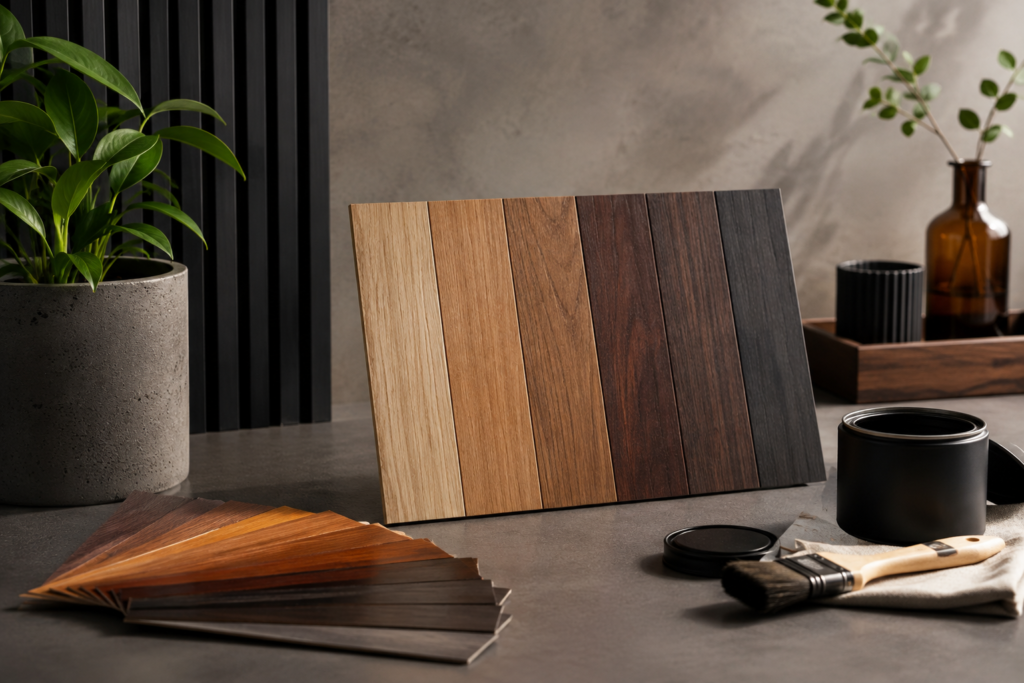
Selecting the right stain colour can dramatically change the appearance of timber. Popular options include natural, oak, walnut, mahogany, cedar, and darker brown tones.
When choosing a colour, consider the existing design of your property. Lighter stains can help create a bright and natural appearance, while darker shades can provide a more dramatic and sophisticated look.
It is always advisable to test your selected stain on a small, inconspicuous section before applying it across the entire surface. The final result can vary depending on the species, age, condition, and natural colour of the timber.
Consider the Type of Timber
Different types of timber absorb stain differently. Some woods have open grain and can absorb products relatively quickly, while others may require additional preparation to achieve an even finish.
The natural grain of the wood should also influence your choice. If you want to highlight the timber’s character, choose a stain that enhances rather than completely hides the grain.
Previously painted, stained, or varnished timber may require additional preparation. Removing loose coatings and properly sanding the surface can help create a better base for the new finish.
Choose the Right Varnish Finish
Varnish is available in different finishes, and each creates a different visual effect.
A matte finish provides a subtle, natural appearance with limited shine. It can be suitable when you want the timber to retain a more understated look.
A satin finish provides a moderate level of sheen and is a popular choice for many interior timber applications. It offers a balance between appearance and practicality.
A gloss finish creates a highly reflective appearance and can make timber look polished and vibrant. However, glossy finishes may also make surface imperfections more noticeable.
Your choice should depend on the appearance you want as well as the practical requirements of the surface.
Water-Based or Oil-Based Finish?
Another important consideration is whether to choose a water-based or oil-based product.
Water-based finishes generally dry faster and often have lower odour. They can be a practical choice for many interior applications where quick drying is important.
Oil-based finishes can provide a rich appearance and may enhance the depth and character of natural timber. They can, however, take longer to dry.
Neither option is automatically better for every project. Consider the timber type, location, required appearance, drying time, durability, and manufacturer’s recommendations before choosing a product.
Prepare the Timber Before Application
Proper preparation is essential for achieving a professional-looking result. Applying stain or varnish to a dirty, greasy, dusty, or damaged surface can result in uneven coverage and poor adhesion.
Start by cleaning the timber and removing dirt, dust, grease, and loose coatings. If necessary, sand the surface to create a smooth and consistent base.
After sanding, remove all remaining dust before applying the finish. Dust particles left on the surface can become trapped in the coating and affect the final appearance.
For previously finished timber, determine whether the old coating needs to be completely removed or simply prepared for recoating. The correct preparation method will depend on the existing finish and condition of the wood.
Apply the Product Correctly
Even a high-quality stain or varnish can produce poor results if it is applied incorrectly. Always read the manufacturer’s instructions before starting.
Use suitable brushes, rollers, or applicators recommended for the particular product. Apply the product evenly and avoid leaving excessive amounts in corners or along edges.
Depending on the product, multiple coats may be required. Allow each coat to dry properly before applying the next one. Rushing the process can result in marks, uneven texture, poor adhesion, or other finishing problems.
Good ventilation is also important, particularly when working with products that produce strong odours.
Think About Durability and Maintenance
The right finish should match the amount of use the timber receives. High-traffic surfaces such as floors require more durable protection than decorative timber that is rarely touched.
Outdoor timber also requires regular maintenance because of exposure to weather and sunlight. Even a high-quality finish can eventually deteriorate and require cleaning, sanding, recoating, or refinishing.
Before choosing a product, check its expected lifespan and maintenance requirements. Selecting a finish based only on its colour or price may result in higher maintenance costs later.
Avoid Common Mistakes
There are several mistakes homeowners can avoid when staining and varnishing timber. One common mistake is applying the product without testing the colour first. Another is failing to sand and clean the surface properly.
Using an interior product outdoors is another potential problem. Exterior timber requires products designed to withstand environmental exposure.
Applying thick coats instead of following the recommended application method can also affect drying and the final appearance. Always follow the manufacturer’s instructions and allow sufficient drying time between coats.
When Should You Hire a Professional?
Timber finishing may appear straightforward, but achieving a consistent, durable result can require experience and proper preparation. If the timber is heavily weathered, damaged, previously coated, or covers a large area, professional assistance can save time and help prevent costly mistakes.
For homeowners who want reliable timber preparation, staining, varnishing, and painting services, Panther Painter can provide professional assistance tailored to the specific timber surface and project requirements. Proper preparation and application can help ensure an attractive finish that complements the property.
Final Thoughts
Choosing the right timber stain and varnish requires careful consideration of the timber type, location, colour, finish, durability, and maintenance requirements. A suitable stain can enhance the natural character of the wood, while the right varnish can provide an additional layer of protection against everyday wear.
Take time to prepare the timber correctly, test your chosen colour, select products suitable for the intended environment, and follow the application instructions carefully. When the right products and techniques are used together, you can achieve a beautiful timber finish that improves the appearance of your property while helping the wood remain protected for longer.