
Key Takeaways
- Safety and medical care should come before photographs, paperwork, or discussions of fault.
- Commercial truck crashes may involve the driver, motor carrier, vehicle owner, maintenance company, cargo loader, or other parties.
- Electronic logs, onboard data, maintenance records, dispatch messages, and camera footage may be important evidence.
- Insurance companies may request statements or releases before the full impact of an injury is known.
- Early legal guidance can help preserve evidence and clarify deadlines that may apply to a Las Vegas truck accident claim.
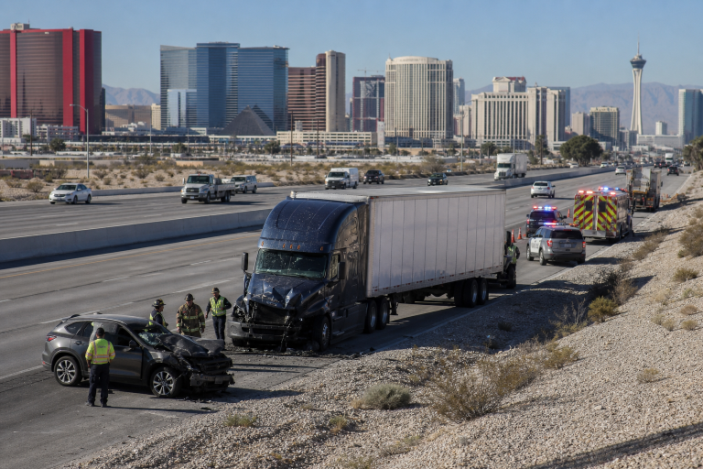
A collision with a commercial truck can leave a Las Vegas driver or passenger facing serious injuries, vehicle damage, missed work, and confusing calls from insurance companies. Because trucking claims often involve company records, federal safety rules, and multiple potentially responsible parties, speaking with Steve Dimopoulos semi-truck injury attorneys can help an injured person understand the next steps and protect important information.
Legal representation is not only about filing a claim. It can also involve investigating how the crash occurred, identifying the businesses associated with the truck, preserving records before they are lost, and handling communications while the injured person focuses on medical care and recovery.
First Steps After a Truck Crash
The minutes after a crash can be chaotic, especially on busy roads such as Interstate 15, U.S. 95, the Las Vegas Beltway, or streets near the Strip. Move to a safer location if possible, turn on hazard lights, call 911, and report injuries, blocked lanes, fires, spills, or other hazards. Do not stand near traffic, leaking fuel, unstable cargo, or heavily damaged vehicles.
If conditions are safe, take photographs or video of the vehicles, damage, road layout, lane markings, traffic signals, debris, weather, lighting, and nearby businesses or cameras. Obtain names and contact details for witnesses. Record the truck driver’s name, employer, license plate, trailer number, insurance information, and the carrier’s USDOT number if it is visible.
Medical Care and Recovery Records
Prompt medical evaluation matters even when pain seems manageable at the scene. Some crash-related conditions, including concussions, soft-tissue injuries, internal injuries, and spinal problems, may not be obvious immediately. Tell medical providers about all symptoms, including headaches, dizziness, numbness, sleep disruption, anxiety, pain, or reduced mobility.
Continue treatment as recommended and maintain a simple recovery file. Save medical bills, visit summaries, prescriptions, physical therapy records, repair estimates, towing bills, receipts for travel to appointments, and proof of missed income. A dated journal describing symptoms and limitations can also help show how the collision affected everyday activities, work responsibilities, and family life.
Evidence in Commercial Trucking Cases
Truck accident evidence is often more complex than evidence in an ordinary passenger-vehicle collision. A truck may have event data recorder data, forward-facing camera footage, electronic logging device data, GPS information, dispatch messages, inspection reports, maintenance records, cargo documents, and records related to the driver’s hiring, training, or qualifications.
Why fast preservation matters
Some records may be overwritten during normal business operations, while damaged vehicles can be repaired, moved, or dismantled. A lawyer may send a preservation letter requesting that relevant physical and electronic evidence be retained. This is particularly important when a case may involve fatigue, speeding, improper maintenance, overloaded cargo, distracted driving, or a mechanical failure.
Driver hours may also be relevant. Federal hours-of-service rules limit driving and on-duty time for many commercial drivers and require specified rest periods. A possible violation does not automatically establish liability, but logs and related records can help investigators evaluate whether fatigue or scheduling pressure played a role.
Who May Be Responsible?
A commercial truck may be driven by one person, owned by another entity, dispatched by a motor carrier, maintained by a separate vendor, and loaded by a shipper or warehouse. That structure can make responsibility less straightforward than it is in a typical two-car crash. The proper parties depend on the facts, contracts, insurance coverage, and applicable law.
Potentially responsible parties can include the truck driver, motor carrier, truck owner, maintenance provider, cargo-loading company, parts manufacturer, broker, or a government entity responsible for a dangerous roadway condition. An investigation should examine the complete chain of events rather than assuming that the driver is the only party involved.
Insurance and Settlement Communications
Notify your own insurer as required by your policy, but stick to basic, accurate facts. Avoid guessing about speed, distances, injuries, or fault. The trucking company’s insurer may contact you quickly, sometimes requesting a recorded statement, broad medical authorization, or signature on a release.
It is reasonable to ask for requests in writing and to review documents before signing. A fast settlement offer may not account for future treatment, lost earning capacity, rehabilitation needs, or the lasting effect of a serious injury. Careful communication can reduce the risk of unintentionally limiting available options.
What Legal Representation Can Do
Truck accident legal representation in Las Vegas can provide practical support during a difficult period. An attorney may gather police reports and witness statements, review available video, identify all relevant companies and insurance policies, consult qualified experts when appropriate, and calculate documented losses. Representation can also create a single point of contact for insurers and corporate representatives.
A careful legal review should be tailored to the specific case. It should account for the crash location, the nature of the injuries, the available evidence, insurance coverage, and whether the collision involved interstate trucking regulations or Nevada-specific issues. No attorney can ethically promise a particular outcome, but early investigation may make a meaningful difference in the evidence available later.
Nevada Deadlines and Common Mistakes
Time limits matter. Nevada law generally provides a two-year deadline for many personal-injury claims, although exceptions and different rules can apply depending on the claim and parties involved. Waiting until the deadline approaches can make it harder to locate witnesses, obtain records, and preserve physical evidence.
Errors to avoid after a Las Vegas trucking collision
- Leaving the scene without reporting the collision.
- Delaying medical care because symptoms initially seem minor.
- Admitting fault before all evidence is reviewed.
- Deleting photos, messages, dashcam footage, or social media posts.
- Posting detailed comments about the crash online.
- Giving a recorded statement or signing a release without understanding its effect.
- Accepting payment before the full medical picture is known.
A truck crash can alter a person’s health, transportation, income, and daily routine in seconds. Prioritizing safety, following through with medical care, preserving records, and seeking informed legal guidance can help a Las Vegas crash victim make decisions based on evidence rather than pressure or uncertainty.