If you’ve ever followed a recipe and wondered all purpose flour means exactly what, you’re not alone. Whether you’re baking cookies, making homemade bread, or preparing crispy fried chicken, all-purpose flour is one of the most common ingredients you’ll find in the kitchen. But despite its popularity, many people don’t fully understand what it is or why recipes rely on it so heavily.
In this guide, we’ll explain what all purpose flour means, how it differs from other types of flour, when to use it, and what you can substitute if you don’t have any on hand. By the end, you’ll have the confidence to choose the right flour for almost any recipe.
What Does All Purpose Flour Mean?
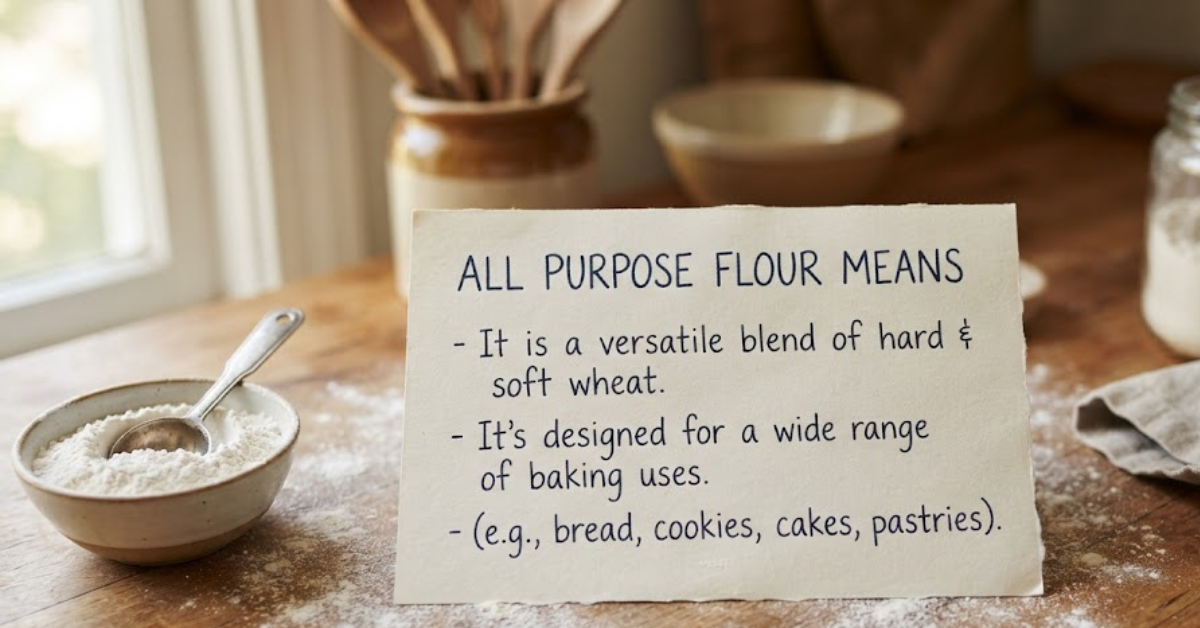
The term all purpose flour means a versatile wheat flour designed to work well in a wide variety of recipes. As the name suggests, it’s intended for “all purposes,” making it suitable for both baking and cooking.
All-purpose flour is made by milling wheat and removing the bran and germ, leaving mostly the starchy endosperm. It has a moderate protein content—typically between 10% and 12%—which makes it flexible enough for cakes, cookies, muffins, pancakes, pie crusts, and many bread recipes.
Because of its balanced protein level, it creates enough gluten for structure without making baked goods overly dense.
How Is All-Purpose Flour Made?
The production process involves several steps:
- Wheat grains are cleaned thoroughly.
- The bran and germ are separated from the kernel.
- The remaining endosperm is finely ground.
- The flour is sifted for consistency.
- Some manufacturers enrich the flour with vitamins and minerals.
In many countries, all-purpose flour is fortified with nutrients such as:
- Iron
- Folic acid
- Niacin
- Riboflavin
- Thiamine
These nutrients help replace some of what is lost during the milling process.
Why Is It Called All-Purpose Flour?
The name comes from its remarkable versatility.
Unlike specialty flours designed for one specific purpose, all-purpose flour performs well across many different recipes, including:
- Cookies
- Cakes
- Muffins
- Brownies
- Pancakes
- Waffles
- Biscuits
- Pizza dough
- Homemade bread
- Thickening soups and sauces
- Coating foods before frying
This flexibility makes it a pantry staple in homes around the world.
Protein Content and Why It Matters
One of the biggest differences between flour types is protein content.
Higher protein creates more gluten, resulting in chewier textures. Lower protein creates softer baked goods.
| Flour Type | Protein Content | Best For |
| Cake Flour | 7–9% | Cakes, cupcakes |
| Pastry Flour | 8–10% | Pie crusts, pastries |
| All-Purpose Flour | 10–12% | Everyday baking |
| Bread Flour | 12–14% | Bread, pizza dough |
| Whole Wheat Flour | 13–15% | Whole grain baking |
This middle-ground protein level is exactly why all-purpose flour is so useful.
Common Uses of All-Purpose Flour
One reason people search for all purpose flour means is to understand where it can be used.
Here are its most popular applications.
Baking
All-purpose flour works beautifully for:
- Cookies
- Cakes
- Brownies
- Muffins
- Quick breads
- Cinnamon rolls
- Pancakes
- Waffles
Bread Making
Although bread flour often gives better chew and rise, all-purpose flour still works well for:
- Sandwich bread
- Dinner rolls
- Flatbread
- Pizza dough
- Homemade buns
Cooking
It’s also widely used outside baking.
Examples include:
- Thickening gravies
- Making white sauces
- Dusting countertops for dough
- Creating roux
- Frying chicken
- Coating vegetables
- Batter for seafood
Is All-Purpose Flour Plain Flour?
In many countries, yes.
The United States, “all-purpose flour” is the common name.
In countries like the United Kingdom and Australia, it’s often referred to as plain flour.
The terms usually describe nearly the same product, although protein percentages may vary slightly depending on the manufacturer.
Is All-Purpose Flour Self-Raising?
No.
This is one of the most common misconceptions.
All-purpose flour does not contain:
- Baking powder
- Baking soda
- Salt
Self-rising flour already contains these leavening ingredients, making it unsuitable as a direct replacement unless the recipe is adjusted.
Can You Substitute All-Purpose Flour?
Yes, although results may vary depending on the recipe.
Cake Flour
Use cake flour when you want:
- Softer cakes
- Tender cupcakes
- Light sponge cakes
Bread Flour
Choose bread flour for:
- Artisan bread
- Pizza crust
- Bagels
- Pretzels
Whole Wheat Flour
Whole wheat flour offers:
- More fiber
- Richer flavor
- Higher nutrient content
However, it often produces denser baked goods.
Gluten-Free Flour
Those with gluten intolerance or celiac disease should use specially formulated gluten-free flour blends rather than regular all-purpose flour.
Storage Tips
Proper storage helps preserve freshness.
Store flour in:
- An airtight container
- A cool, dry pantry
- Away from moisture
- Away from direct sunlight
For long-term storage, refrigerating or freezing flour can significantly extend its shelf life.
Nutritional Value
A typical serving (about 30 grams or ¼ cup) of all-purpose flour contains approximately:
- Calories: 110
- Carbohydrates: 23 g
- Protein: 3 g
- Fat: Less than 1 g
- Fiber: Less than 1 g
Enriched flour also provides small amounts of important B vitamins and iron.
Tips for Baking with All-Purpose Flour
Getting the best results doesn’t require professional skills.
Keep these tips in mind:
- Measure flour correctly using the spoon-and-level method.
- Sift flour when recipes recommend it.
- Avoid overmixing batter after adding flour.
- Store flour properly to prevent moisture absorption.
- Use fresh baking powder or yeast for better results.
Small changes in technique can make a noticeable difference in your finished baked goods.
Advantages of All-Purpose Flour
There are several reasons it’s considered the go-to flour for home kitchens.
Benefits
- Extremely versatile
- Widely available
- Affordable
- Easy to use
- Works for both sweet and savory recipes
- Reliable for beginner bakers
- Suitable for everyday cooking
When Should You Choose Another Flour?
Although all-purpose flour works well in most situations, specialty flours sometimes deliver better results.
Choose another flour when:
- You want ultra-soft cakes (cake flour)
- You’re making chewy artisan bread (bread flour)
- You prefer higher fiber (whole wheat flour)
- You need gluten-free baking (gluten-free blends)
Using the right flour for the recipe can improve texture, flavor, and overall quality.
Read also <<< Peace vs Piece
Frequently Asked Questions
What does all purpose flour mean?
All-purpose flour is a versatile wheat flour with a moderate protein content that works well for baking, cooking, thickening sauces, and making dough.
Is all-purpose flour the same as plain flour?
Generally, yes. In many countries, plain flour and all-purpose flour refer to nearly identical products, though protein levels can vary slightly.
Can I use all-purpose flour instead of bread flour?
Yes. Bread made with all-purpose flour may be slightly softer and less chewy, but it still produces excellent results for many recipes.
Is all-purpose flour good for cakes?
Yes. It works well for most cakes, although cake flour produces a finer, lighter texture.
Does all-purpose flour contain baking powder?
No. It contains only flour unless specifically labeled otherwise.
Can all-purpose flour be used for frying?
Absolutely. It’s commonly used to coat chicken, fish, vegetables, and other foods before frying to create a crispy crust.
How long does all flour last?
When stored properly in an airtight container, unopened flour can last around one year, while refrigeration or freezing can extend its freshness even further.
Conclusion
Understanding all purpose flour means understanding one of the most useful ingredients in the kitchen. Its balanced protein content, versatility, and consistent performance make it ideal for everything from cookies and cakes to bread, sauces, and fried foods.
Whether you’re a beginner learning to bake or an experienced cook experimenting with new recipes, all-purpose flour is a dependable pantry staple that delivers reliable results. Explore more baking guides, ingredient comparisons, and cooking tips to continue building your confidence in the kitchen and elevate every meal you prepare.