Key Takeaways
- Choose flooring based on the gym’s sports, events, traffic, and daily activities.
- Compare hardwood, synthetic, rubber, and specialty flooring systems.
- Consider traction, shock absorption, durability, ball response, and comfort.
- Inspect subfloor, moisture, and installation conditions before choosing a system.
- Plan for furniture, equipment, events, and protective floor covers.
- Compare long-term maintenance and lifecycle costs, not just installation price.
- Follow regular cleaning, inspection, and repair routines to protect the floor.
- Consider safety, accessibility, and the needs of different users.
Choosing a gymnasium floor involves more than selecting a color or comparing installation quotes. The right surface needs to support the way the building operates, from basketball practices and physical education classes to assemblies, fitness programs, community events, and daily foot traffic. Facilities reviewing gym flooring by Miller Sports Construction should begin by defining how the space will be used before narrowing down material options.
A school gym, college fieldhouse, recreation center, and private training facility can have very different priorities. Athletic performance may be the deciding factor in one building, while durability under tables, chairs, rolling equipment, and frequent events may matter most in another. The visible surface is important, but the subfloor, moisture control, installation method, cleaning process, and protection plan also affect the floor’s long-term performance.
Why Gym Floor Selection Takes More Than One Question
No single gym floor is ideal for every facility. A court used primarily for competitive basketball and volleyball may require a different system than a room that also serves lunch, hosts graduation ceremonies, or accommodates adult fitness classes. A practical selection process weighs athletic performance, safety, appearance, maintenance capacity, event demands, and the available budget together.
Start With The Facility’s Daily Schedule
Create a simple use profile before comparing samples. List every sport played in the gym, along with physical education periods, practices, tournaments, open recreation, and after-hours programs. Include non-sport activities such as assemblies, dances, concerts, voting, graduations, and community gatherings.
- Identify footwear, including athletic shoes, casual shoes, and outdoor footwear risks.
- Document bleachers, carts, tables, chairs, stages, scoreboards, and sound equipment.
- Estimate normal traffic, peak-use periods, and how often the room must be converted.
- Note whether staff have time and equipment for regular cleaning and inspections.
For example, a school gym may function as a lunchroom during the day, a basketball court in the afternoon, and an event venue on weekends. That schedule calls for athletic qualities, but it also requires dependable floor protection and clear rules for moving furniture and equipment.
Review Key Performance Needs
Performance is not limited to how a floor looks on game day. Traction should support controlled starts, stops, and changes of direction without feeling excessively sticky. Shock absorption can improve comfort during repeated running and jumping, while ball response is important in basketball, volleyball, and similar court sports.
- Resilience: The surface should recover from ordinary activity and light impacts.
- Wear resistance: The finish or wear layer should suit expected traffic and cleaning.
- Noise control: Flooring is one part of the room’s acoustic environment, especially in schools and multi-level buildings.
- Visual clarity: Court markings, boundaries, and transitions should remain easy to identify.
Sound concerns deserve attention early because walls, ceilings, equipment, and floor materials all contribute to the room’s overall acoustics. Guidance on acoustics in gymnasium spaces can help facility teams consider sound as part of a broader interior design plan.
Compare Common Gym Flooring Materials
Hardwood Flooring
Hardwood is a familiar choice for basketball and volleyball courts because it provides a traditional appearance and consistent ball response when properly installed and maintained. It also requires routine dust removal, appropriate cleaning products, indoor climate management, and periodic refinishing. Facilities that host frequent non-sport events should plan for covers and careful equipment handling.
Vinyl And Synthetic Sports Flooring
Synthetic sports surfaces can work well in schools and multipurpose facilities. Depending on the system, they may offer cushioning, color options, integrated game lines, and cleaning routines suited to busy schedules. Review the wear layer, seams, warranty conditions, repair approach, and ability to handle anticipated rolling loads before making a selection.
Rubber Flooring
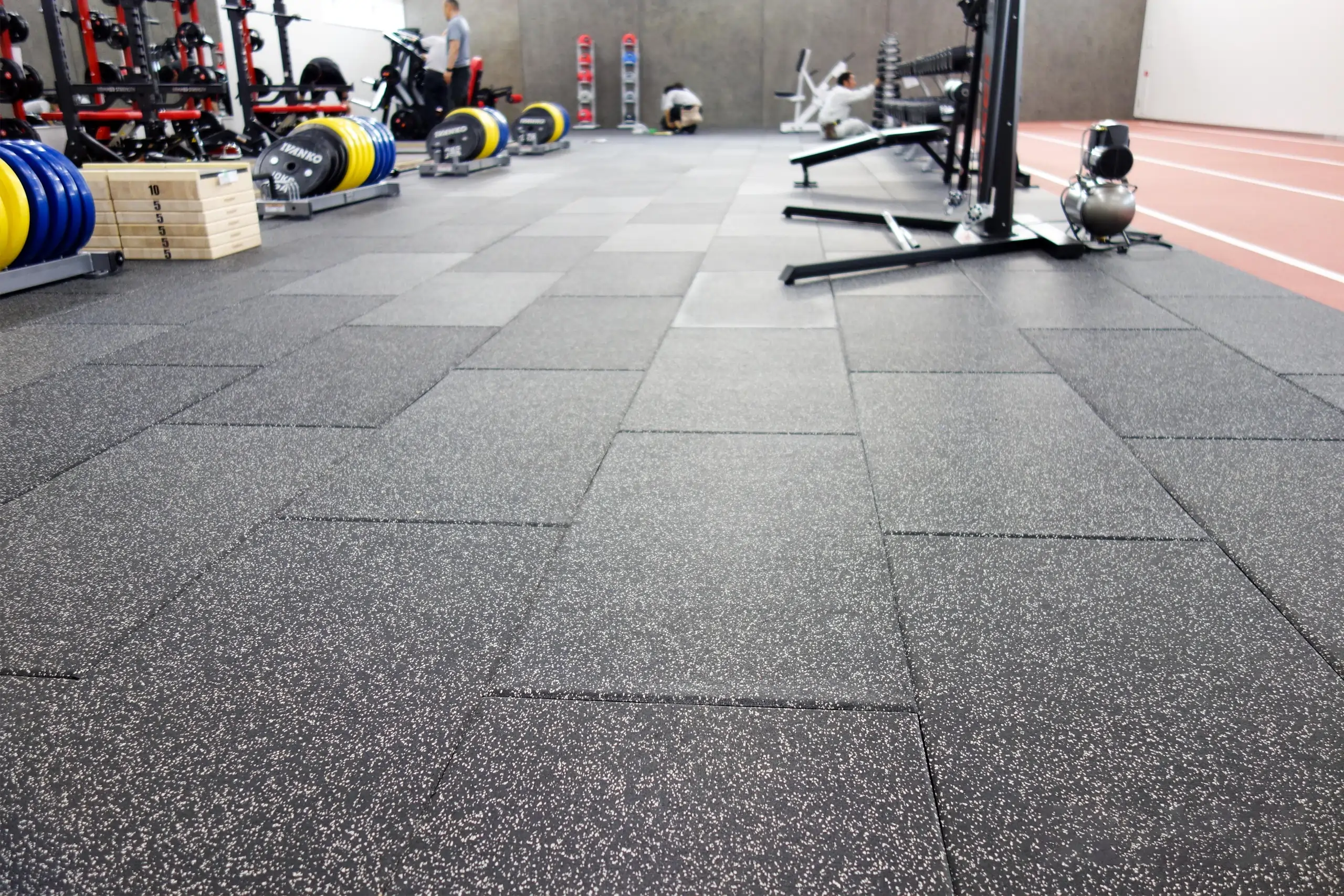
Rubber flooring is commonly used in fitness rooms, weight areas, and training zones where equipment impact, heavy traffic, and sound reduction are major concerns. It may be an excellent fit for those activities, but it does not necessarily deliver the ball response desired for every court sport.
Poured Polyurethane And Specialty Systems
Poured polyurethane and other specialty systems can provide seamless coverage and flexible design options. Their success depends heavily on proper slab preparation, environmental conditions during installation, curing, and adherence to the manufacturer’s maintenance requirements.
Plan For Multipurpose Gym Use
A floor chosen solely for athletic play can experience avoidable wear when ceremonies and gatherings are not part of the planning process. Keep approved protective covers available for major events, use furniture glides and suitable wheels, and establish rules for food, drinks, outdoor shoes, and equipment movement. Inspect the surface after every major event to promptly address scratches, moisture, damaged seams, or finish issues.
Check The Subfloor And Moisture Conditions
The surface cannot perform as intended if the slab or subfloor has unresolved problems. Before installation, evaluate moisture conditions, flatness, cracks, drainage concerns, and required surface preparation. The selected system may also require vapor protection, adhesives, resilient pads, or space for normal expansion and contraction. Keep written records of testing, preparation, installation conditions, and curing procedures.
Consider Safety, Comfort, And Accessibility
Consistent traction, smooth transitions, and prompt repairs support safer daily use. Review thresholds, ramps, door clearances, accessible routes, floor-height changes, and visibility of court lines. Raised edges, loose seams, wet areas, and uneven surfaces should be treated as maintenance priorities rather than cosmetic concerns. Consider the needs of young children, older adults, athletes, staff members, and spectators who use the building in different ways.
Compare Total Cost Over Time
The initial price is only one part of the decision. Compare the full lifecycle cost, including:
- Material, installation, and subfloor preparation
- Moisture mitigation or repairs needed before installation
- Cleaning labor, equipment, and approved cleaning products
- Recoating, refinishing, seam repair, or replacement work
- Protective covers and equipment for event conversion
- Facility downtime during installation and maintenance
A lower upfront cost may offer less value if the surface cannot withstand the building’s actual schedule or requires frequent corrective work.
Build A Simple Maintenance Plan
- Daily: Remove dust, grit, and spills as soon as possible.
- Weekly: Clean the surface with products approved for that flooring system.
- Monthly: Inspect seams, edges, markings, finish wear, and high-traffic areas.
- Seasonally: Review humidity, equipment movement, event damage, and building conditions.
- Annually: Schedule a professional inspection and evaluate upcoming service needs.
Avoid harsh cleaners, unapproved machines, dragging heavy equipment, and allowing outdoor debris to accumulate. Practical maintenance guidance for keeping gymnasium floors in good shape reinforces the value of routine care and early problem detection.
Questions To Ask Before Choosing A Floor
- What activities will take place in the gym each week?
- Will the room regularly host events beyond sports?
- Which performance features matter most for the primary activities?
- What moisture, temperature, and humidity conditions affect the building?
- What maintenance work can staff realistically complete?
- How will chairs, carts, bleachers, stages, and other equipment be managed?
- What testing records, warranties, and care instructions are included?
- What is the expected lifecycle cost and closure time for future repairs?
Final Decision Checklist
- Map every sport, class, event, and equipment use.
- Rank performance, safety, durability, appearance, and maintenance needs.
- Inspect the slab, subfloor, moisture conditions, and access routes.
- Compare material samples, system details, and lifecycle costs.
- Document cleaning rules, event protection procedures, inspections, and repair plans.
The best gymnasium floor is the one that fits the facility’s complete schedule. A thoughtful decision can support athletic activity, reduce preventable wear, simplify maintenance, and keep the space ready for everyday programs and community events.