
Key Takeaways
- Construction and demolition projects produce materials with different reuse, recycling, and disposal requirements.
- Sorting materials early helps protect their value and reduces contamination.
- Concrete, asphalt, metals, clean wood, cardboard, gypsum, and some plastics may have recovery options.
- A successful recovery plan considers containers, hauling, facility requirements, crew training, and documentation before work begins.
- Recovery can support waste-reduction goals, but costs and accepted materials vary by location and processor.
Table Of Contents
- Why Material Recovery Matters On Modern Job Sites
- Which Construction Materials Have Recovery Value?
- How Sorting Changes The Outcome
- A Step-By-Step Recovery Workflow
- Common Contamination Problems To Avoid
- How Recovery Can Support Project Budgets
- The Role Of Recovery Infrastructure
- A Practical Job Site Checklist
- Final Thoughts
Why Material Recovery Matters On Modern Job Sites
Construction, renovation, and demolition work can generate concrete, wood, metal, drywall, packaging, roofing materials, fixtures, and general debris in a short period of time. Those materials should not automatically follow one disposal route. A clean concrete load may be processed into aggregate, while a stack of dry cardboard may be recycled separately. By contrast, painted wood, liquids, insulation, and regulated materials may require a different handling plan.
For project teams in and around Abilene, Texas, construction recycling support from SiteLine Services can provide a practical starting point for planning material collection and recovery. SiteLine Services focuses on recyclable-material collection, processing, and mill-direct recycling, which sends suitable material directly to a mill rather than adding another handling step. That job site-focused approach can be useful when contractors need to identify workable outlets for recoverable loads before containers arrive.
Recovery keeps useful materials in circulation when a local end market and acceptable material condition are available. It can also reduce the amount of debris sent for disposal. The U.S. Environmental Protection Agency reports that construction and demolition debris is a significant national waste stream, with 600 million tons generated in the United States in 2018. Its guidance on managing construction and demolition materials also emphasizes source reduction, salvage, reuse, recycling, and purchasing recovered materials where appropriate.
Which Construction Materials Have Recovery Value?
The right recovery route depends on the material, its condition, local facility rules, transportation distance, and available markets. Before promising a diversion rate or ordering dedicated containers, confirm what the receiving facility accepts.
- Concrete and asphalt: Clean loads are often crushed and processed into aggregate, base material, or new paving-related products.
- Metals: Steel, aluminum, copper, and brass commonly have established scrap recovery markets. Separating metal from mixed debris can improve handling efficiency.
- Clean wood: Untreated, unpainted wood may be reused, chipped, or processed into products such as mulch, depending on local requirements.
- Cardboard: Boxes and packaging are more likely to be accepted when they are dry and kept free of food waste, insulation, and mixed trash.
- Gypsum and drywall: Some processors accept clean gypsum loads for recovery, but paper, moisture, fasteners, and mixed debris can affect acceptance.
- Plastics: Plastic film, rigid containers, pipe, and other plastics may require separate handling because resin types and processor requirements differ.
- Reusable components: Doors, hardware, cabinetry, fixtures, windows, and appliances may be candidates for salvage when they can be removed without excessive damage.
How Sorting Changes The Outcome
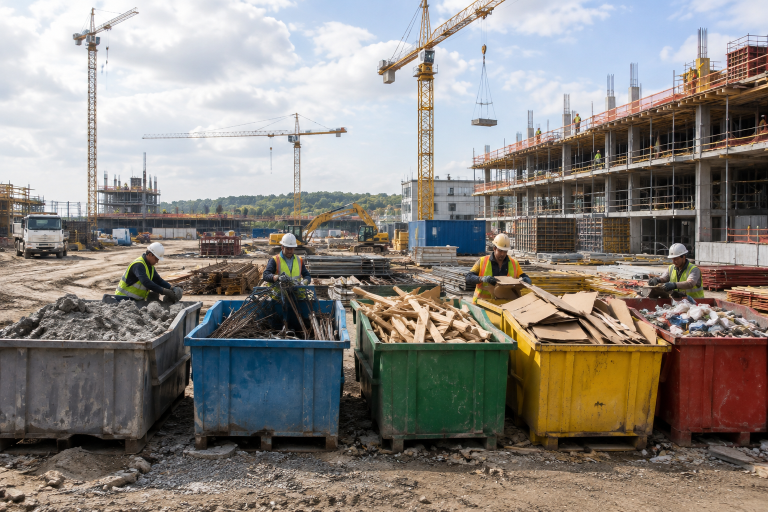
Sorting at the point where debris is generated is usually more reliable than trying to recover materials from a heavily mixed container later. Separate containers do require space and coordination, but they can help keep a material stream clean enough for its intended processor.
Clean Streams Versus Mixed Loads
- Clean metal container: A load made up primarily of scrap metal may have a straightforward recycling path.
- Mixed debris container: Metal combined with concrete, food waste, plastic film, insulation, and general trash may require additional sorting or may not qualify for the same recovery outlet.
Clear labels matter. Use large wording, simple images when helpful, and placement that crews can see from active work areas. A short toolbox talk at the start of the project can prevent repeated sorting mistakes.
A Step-By-Step Recovery Workflow
- Review the scope: Estimate the main materials expected from demolition, site clearing, framing, roofing, packaging, or finish work.
- Identify reuse first: Determine whether fixtures, doors, lumber, equipment, or other components can be salvaged before demolition begins.
- Confirm facility requirements: Ask processors about accepted materials, contamination limits, load preparation, minimum quantities, and documentation.
- Create sorting zones: Put containers close enough to work areas that proper sorting does not slow the crew unnecessarily.
- Protect sensitive loads: Cover or store cardboard, gypsum, and other moisture-sensitive materials where they can stay dry.
- Train the team: Give workers a simple explanation of what belongs in each container and what must stay out.
- Track outgoing loads: Keep tickets, weights, material descriptions, destinations, and any recovery documentation provided by the hauler or facility.
- Review results: Compare actual material volumes and contamination issues with the original plan, then adjust the next project.
Common Contamination Problems To Avoid
Contamination can reduce the value of a recyclable load or cause a facility to reject it. Common examples include food waste in cardboard, soil mixed into concrete, wet drywall, treated wood mixed with clean lumber, and liquids or hazardous products placed in general debris containers.
- Keep food, liquids, and trash out of dry recyclable material streams.
- Separate hazardous or regulated materials from ordinary construction debris.
- Ask the receiving facility how it handles painted, stained, treated, composite, or adhesive-covered materials.
- Inspect containers before pickup, when correcting the issue is still easier.
- Do not assume every facility accepts the same materials or contamination levels.
How Recovery Can Support Project Budgets
Recovery is not automatically the lowest-cost option on every project. It may reduce disposal volume, preserve the value of scrap metal, or avoid some hauling and landfill charges. At the same time, dedicated containers, labor for sorting, storage space, and transportation may add costs.
The practical comparison is the full cost of each option. Consider container rental, pickups, tipping charges, labor, rework caused by contamination, and the availability of a nearby processor. A recovery plan is strongest when it is built around real material volumes and confirmed outlets rather than assumptions about savings.
The Role Of Recovery Infrastructure
Material recovery facilities, direct-to-processor shipments, and specialized recycling outlets can expand the choices available to contractors, but infrastructure differs widely by region. Some projects benefit from source-separated containers, while others may use a mixed construction and demolition processing facility that sorts eligible materials after collection.
Policy and facility changes can also affect a project’s planning. For example, changes to construction and demolition material acceptance in Montgomery County show how local systems can direct larger loads toward recycling and recovery options. Contractors should verify requirements before work starts because facility rules, accepted materials, and documentation needs may change.
A Practical Job Site Checklist
- Have the project’s main material streams been identified?
- Has the team considered reuse before recycling or disposal?
- Are separate containers available where they are needed?
- Are labels visible, specific, and easy for crews to understand?
- Have cardboard, gypsum, and similar materials been protected from moisture?
- Have hazardous and regulated materials been separated?
- Has the receiving facility confirmed what it accepts?
- Will the project retain tickets, weights, destinations, and recovery records?
Final Thoughts
Better construction material recovery usually comes from several routine decisions rather than one major change. Identify materials early, salvage what can be reused, separate recoverable loads, protect them from contamination, and confirm the destination before pickup. When those practices become part of normal project planning, teams can make more informed disposal decisions and keep more useful materials in circulation.