
Key Takeaways
- Implant crowns do not get cavities, but the gums and bone around implants can still develop inflammation or infection.
- Brushing twice daily and cleaning between teeth or beneath restorations helps control plaque.
- Professional visits are important because some implant concerns are not obvious at home.
- Bleeding, swelling, drainage, pain, bite changes, and looseness should be reported promptly.
- Smoking, teeth grinding, and using teeth to bite hard objects can place implant treatment at greater risk.
Dental implants are designed to restore comfortable chewing and a natural-looking smile, but their long-term health depends on consistent care. For people seeking implant maintenance Catoosa, OK, the goal is straightforward: keep the crown, surrounding gums, and supporting bone as healthy as possible through daily cleaning and regular professional care. Whether you have a single-implant crown, an implant-supported bridge, or a full-arch restoration, maintenance should become part of your routine. A few careful habits can help you protect your investment while enjoying meals, conversations, community events, and everyday life in Catoosa.
Why Implant Care Matters After Healing
An implant replaces a missing tooth root, while the visible crown, bridge, or denture replaces the part used for chewing. The artificial tooth surface cannot decay like natural enamel. However, plaque can still collect near the gum line and around the restoration. When it is not removed, the soft tissue and bone that support the implant may become irritated. Daily care also makes it easier to notice changes early. Regular cleaning of implants and surrounding teeth is important for long-term implant success, along with routine dental visits and timely attention to any pain or looseness.
A Simple Daily Cleaning Routine
Implant maintenance does not have to be complicated. Consistency matters more than using excessive force or adding unnecessary products. A practical routine includes the following steps:
- Brush twice each day with a soft-bristle toothbrush.
- Angle the brush gently toward the gum line around the implant crown and nearby natural teeth.
- Clean between teeth every day, including around the implant restoration.
- Clean beneath a bridge or full-arch restoration if your dental team has shown you how.
- Rinse with water after meals when brushing is not convenient.
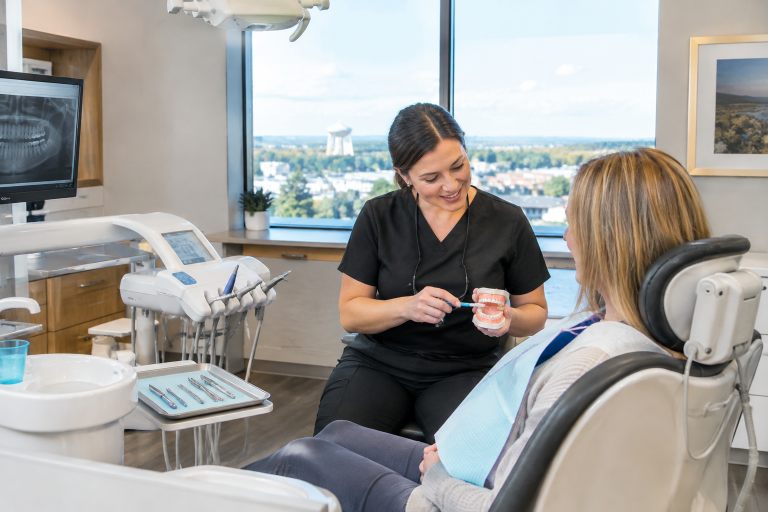
A hygienist or dentist can demonstrate the best approach for your specific restoration. The method for a single implant may differ from that for an implant-supported bridge or a removable overdenture.
Helpful Cleaning Tools
The right tools depend on the shape of the restoration, the spaces between teeth, and the condition of your gums. Your dental team may recommend one or more of these options:
- Soft toothbrush: Cleans the visible crown, gum line, and neighboring teeth without aggressive pressure.
- Interdental brush: May help clean wider spaces where a standard toothbrush cannot reach.
- Floss designed for bridges: Can be useful for cleaning underneath connected restorations when recommended.
- Water flosser: May be a helpful addition for some patients, particularly when used with an appropriate tip and pressure setting.
- Rinse: A dental professional may recommend a rinse for a specific concern, but it should not replace brushing or between-tooth cleaning.
Do not use sharp tools, pins, or improvised objects to remove food around an implant. They can injure gum tissue or damage the restoration.
Professional Follow-Up Visits
Home care is essential, but it cannot replace an examination. At follow-up visits, a dental team can evaluate the gum tissue, check how the teeth come together, inspect the restoration, and determine whether imaging is needed to assess the supporting bone. Your ideal recall schedule is personal. It may be influenced by your cleaning routine, history of gum disease, tobacco use, diabetes management, grinding or clenching habits, and the type of implant restoration you have. Ask which areas need special attention between visits and how often your implant should be reviewed.
Warning Signs to Watch For
Changes to discuss soon
- Bleeding that occurs repeatedly while cleaning
- Redness, tenderness, or swelling near the implant
- A persistent bad taste or unusual odor
- Food is becoming trapped in the same spot
- New discomfort when chewing or a change in your bite
- Gum recession or a visible change around the restoration
Changes that need prompt evaluation
- A crown, bridge, denture, or implant that feels loose
- Increasing pain or swelling
- Pus or drainage around the implant area
- A cracked, shifted, or unstable restoration
- Sudden difficulty chewing on that side
Do not wait for severe pain before calling. Some implant-related concerns can begin with subtle bleeding, a slight change in bite, or a restoration that feels different.
Lifestyle Habits That Protect Implants
Healthy routines extend beyond the bathroom sink. Avoid tobacco because smoking can interfere with healing and may reduce long-term implant success. If you clench or grind your teeth, ask whether a nightguard is appropriate. Also, avoid chewing ice, opening packages with your teeth, or biting pens and other non-food items. General health matters, too. Keep medical conditions under control with your healthcare providers, and tell your dental team about any medication or health changes. For sports and other activities with a risk of facial impact, use a properly fitted mouthguard.
Common Maintenance Mistakes
- Assuming an implant needs no attention because it cannot get a cavity.
- Skipping checkups because the restoration feels normal.
- Brushing hard enough to irritate the gum line.
- Ignoring regular bleeding or food traps.
- Trying to tighten a loose crown or restoration at home.
- Waiting until discomfort becomes severe before seeking care.
For example, mild bleeding or a new chewing sensitivity may come from plaque buildup, a bite issue, or a restoration concern. A timely examination can help identify the cause before the problem becomes more difficult to manage.
Common Questions About Implant Maintenance
Do dental implants need to be brushed?
Yes. The crown and the tissues surrounding it require regular cleaning, just as nearby natural teeth do.
Can an implant get a cavity?
The implant crown does not decay like a natural tooth. Nearby teeth can still develop cavities, and the gum and bone around an implant can still develop disease.
Is bleeding around an implant normal?
Repeated bleeding deserves attention. It may indicate irritation or inflammation and should be discussed with a dental professional if it continues.
What if an implant feels loose?
Contact your dental office promptly, avoid chewing on the area, and do not attempt to adjust the restoration yourself. Professional discussions of implant monitoring emphasize that inflammatory signs, including swelling and bleeding, should not be ignored because untreated problems can progress.
With steady home care, sensible habits, and regular follow-up visits, Catoosa patients can help maintain the comfort, function, and appearance of their dental implants for years to come.
Conclusion
Dental implant maintenance is an ongoing part of protecting the health, comfort, and function of an implant restoration. While implant crowns cannot develop cavities like natural teeth, the gums and supporting bone can still be affected by plaque, inflammation, and other oral health concerns. Consistent brushing, daily cleaning between teeth and around restorations, and regular professional checkups can help monitor these areas and identify changes early. Catoosa patients should also pay attention to warning signs such as repeated bleeding, swelling, drainage, pain, bite changes, or looseness and contact their dental team when these occur. Avoiding smoking, managing grinding or clenching, and protecting the restoration from excessive forces can also support long-term care. With realistic expectations and a consistent maintenance routine, patients can better protect their implants and address potential concerns before they become more difficult to manage.