Hair has always been an important part of an actor’s appearance. Whether a performer is playing a romantic lead, an action hero, a serious dramatic character, or a completely different role, the hairline can subtly influence how old, energetic, or confident someone appears on screen. That is one reason the topic of hair transplant famous actors continues to attract so much attention.
Some actors have openly discussed hair restoration, while others have never confirmed whether they have undergone a procedure. This distinction matters because celebrity hairlines are frequently analyzed from photographs, television appearances, and movie roles, but a visual change alone cannot prove that someone had a transplant. Hair styling, medication, cosmetic fibers, lighting, weight changes, and natural aging can all affect how hair looks.
Still, the interest is understandable. Famous actors are constantly photographed, often over decades, giving fans an unusual opportunity to observe changes in their appearance. Their experiences have also helped make hair restoration more mainstream and less associated with embarrassment or secrecy.
Why Famous Actors Choose Hair Transplants
Actors work in an industry where appearance can have a direct relationship with professional opportunities. Casting directors may look for a particular age range or physical appearance, and hair can play a surprisingly significant role in creating a character. A receding hairline can make an actor appear older, while a fuller hairline may create a younger or more energetic look.
For some performers, the decision is not necessarily about looking dramatically younger. It can simply be about restoring a hairline that has changed gradually over time. Male pattern hair loss is common, and actors experience the same biological process as everyone else. The difference is that their appearance is often viewed by millions of people.
Another reason hair restoration has become popular among celebrities is that modern techniques can produce relatively natural-looking results when performed appropriately. Earlier generations of hair transplantation sometimes created an obvious “plug” appearance. Contemporary approaches generally focus on placing individual follicular units in a pattern that follows the natural direction and density of existing hair.
Actors Who Have Been Associated With Hair Restoration
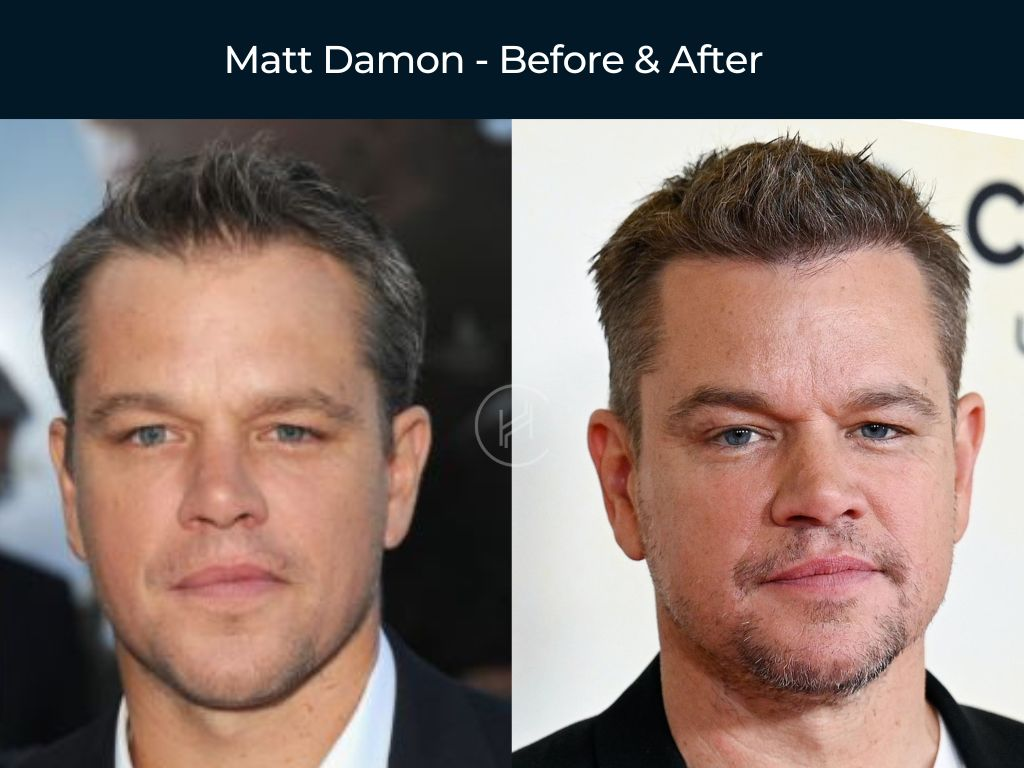
When discussing hair transplant famous actors, it is important to separate confirmed procedures from speculation. A celebrity may have noticeably changed his hairstyle without ever undergoing surgery. Likewise, an actor may have received a hair transplant but chosen not to discuss it publicly.
Actors such as Wayne Rooney, while primarily known as a footballer rather than an actor, helped popularize public conversations about hair transplantation. In entertainment, numerous male celebrities have been linked by media outlets and fans to hair restoration, including actors whose hairlines appeared different at various points in their careers.
However, photographs alone are not sufficient evidence. A comparison between an actor’s appearance at age 25 and age 45 can be misleading because hair density naturally changes, hairstyles evolve, and photographs may have very different lighting conditions.
The safest approach is therefore to discuss celebrity hair restoration as a broader trend rather than presenting every suspected procedure as an established fact. If an actor has personally confirmed undergoing a transplant, that is considerably stronger evidence than internet speculation.
How Hair Transplants Work
A modern hair transplant generally involves moving healthy hair follicles from a donor area, usually toward the back or sides of the scalp, to areas affected by hair loss. The goal is to redistribute permanent or relatively resistant follicles rather than create entirely new hair.
One widely used technique is follicular unit extraction, commonly called FUE. In this method, individual follicular units are removed from the donor region and then implanted into carefully prepared recipient sites. Because the follicles are transferred individually, the surgeon can pay close attention to the direction, angle, spacing, and design of the new hairline.
Another technique is follicular unit transplantation, or FUT. Instead of extracting individual follicular units directly, a strip of scalp is removed from the donor area and divided into individual grafts for transplantation. FUT can still be appropriate for certain patients, although it leaves a linear donor scar and is therefore different from FUE in terms of extraction and scarring.
Why Celebrity Hair Transplants Often Look Natural
One of the biggest lessons from successful celebrity hair restoration is that subtlety usually matters more than extreme density. A natural hairline is not perfectly straight. It contains irregularities, varying follicle angles, and gradual changes in density.
Experienced surgeons typically consider facial proportions when designing a hairline. Simply placing grafts as low as possible on the forehead may produce an unnatural appearance, particularly as the patient gets older. A conservative design can often age more gracefully.
Hair thickness also matters. Transplant surgery does not necessarily restore the exact density someone had as a teenager. Instead, the objective is to create enough coverage to improve the overall appearance. When transplanted hair blends with existing hair, the result can be difficult to notice.
The Role of Hair Styling in Celebrity Transformations
Not every impressive celebrity hair transformation is the result of surgery. Professional hairstylists have access to numerous techniques that can dramatically alter the appearance of thinning hair.
A carefully selected haircut can make a receding hairline look less noticeable. Hair fibers and styling products can temporarily increase the appearance of density. Blow-drying techniques can add volume, while strategic lighting can make hair appear considerably fuller.
Actors also routinely change their hairstyles for movie roles. A performer may wear a hairpiece, wig, extensions, or other cosmetic solutions depending on the character. Consequently, comparing two movie appearances without considering styling and production techniques can lead to incorrect conclusions about whether a transplant occurred.
What Fans Can Learn From Famous Actors
The biggest takeaway from celebrity hair restoration is not that everyone should try to reproduce a particular actor’s hairline. Instead, it demonstrates how individualized hair loss treatment needs to be.
A transplant that looks excellent on one actor may not be appropriate for another person. Donor density, hair texture, age, facial structure, family history, and the pattern of future hair loss all influence the treatment plan.
Another important lesson is that hair restoration should be viewed as a long-term process. Transplanted follicles may continue growing for many years, but untreated native hair can continue thinning. For that reason, a qualified hair-loss specialist may discuss medical treatments or other strategies alongside surgery.
Choosing a Hair Transplant Surgeon
Anyone considering a hair transplant should focus on the surgeon’s qualifications and results rather than celebrity comparisons. A famous actor may have access to highly experienced specialists, but the same procedure does not automatically produce the same result for every patient.
Before committing to treatment, prospective patients should research the surgeon’s training, experience, approach to hairline design, and examples of genuine patient outcomes. Before-and-after photographs are useful, but they should be evaluated carefully. Consistent lighting, similar angles, and long-term follow-up images provide much more meaningful information than carefully selected photographs.
A consultation is equally important. The surgeon should evaluate the scalp, donor area, degree of hair loss, and likely future progression. A trustworthy professional should also explain limitations rather than promising an unrealistic transformation.
Hair Transplant Recovery and Results
Hair transplantation is a surgical procedure, so recovery should not be treated as an instant makeover. Patients commonly experience some redness, swelling, crusting, or sensitivity during the early recovery period. The exact experience varies according to the technique used and the individual.
The transplanted hairs may temporarily shed after surgery. This can surprise people who expect immediate growth, but temporary shedding can be part of the normal hair-transplant process. New growth generally takes time, and visible improvement develops gradually rather than overnight.
The final result can take many months to develop. Patience is therefore essential. Comparing the appearance at two weeks with the expected final outcome is not meaningful because the follicles need time to establish a new growth cycle.
Are Hair Transplants Permanent?
A common misconception is that every transplanted hair is guaranteed to remain unchanged forever. The reality is more complicated. Transplanted follicles are generally selected from areas that are more resistant to androgenetic hair loss, but the long-term outcome depends on several factors.
The underlying pattern of hair loss can continue to progress in the untreated areas. Someone may have an excellent transplant but later experience thinning behind or around the transplanted region. This is why surgeons often consider the patient’s likely future hair loss when planning the initial procedure.
Age is also important. A hairline designed for someone in their twenties should not necessarily be copied from a celebrity who had restoration later in life. Good planning aims for an appearance that remains believable as the person ages.
The Growing Popularity of Hair Restoration
The popularity of hair transplant famous actors as a search topic reflects a broader change in attitudes toward cosmetic procedures. Hair loss is no longer something many people feel compelled to hide. Public figures have contributed to that shift by discussing appearance, grooming, and hair restoration more openly.
Social media has accelerated this trend. People can now see long-term transformations, follow recovery journeys, and compare different techniques. At the same time, social media can spread exaggerated claims, edited photographs, and unverified celebrity rumors.
That makes reliable information especially valuable. A successful hair transplant depends much more on appropriate patient selection, surgical technique, donor management, and realistic expectations than on simply copying a famous person.
Final Thoughts on Hair Transplant Famous Actors
The fascination with hair transplant famous actors is understandable because celebrities provide visible examples of how hair can influence appearance. Some actors may have undergone confirmed hair restoration, while others are simply benefiting from excellent styling, changing hairstyles, medication, cosmetic products, or natural differences in photography.
The most important point is that celebrity photographs should inspire research, not replace professional medical advice. Every person has a different pattern of hair loss, donor supply, hair characteristics, and long-term outlook.
Modern transplantation can provide impressive and natural-looking results when carefully planned and performed by a qualified professional. Rather than chasing a celebrity’s exact hairline, the better goal is a result that suits the individual’s face, age, existing hair, and future needs. In the end, the most successful hair restoration is often the one that looks completely natural—and simply makes the person feel more comfortable and confident about their appearance.
You May Also Read: Wordmaticz