

Table of Contents
- Why the Choice Matters
- Start With a Real Diagnosis
- Compare the Main Repair Options
- Review the Full Cost
- Balance Downtime and Service Life
- Check Compatibility Before Ordering
- Review Warranty Terms
- Use a Simple Decision Process
- Avoid Common Mistakes
- Final Inspection Checklist
When a heavy-duty engine develops serious problems, the right answer is not always a complete replacement. Whether the vehicle uses a Cummins ISX engine or another diesel platform, owners should compare the actual failure, the condition of the truck or machine, and the cost of returning it to dependable service.
An engine decision affects more than the shop invoice. It can affect route coverage, production schedules, driver availability, customer commitments, and the useful life of the equipment. A low parts price may become the most expensive choice if it creates repeat repairs, compatibility issues, or extended downtime.
Why the Choice Matters
The engine is only one part of the asset. Before approving major work, consider the vehicle’s age, frame and cab condition, transmission, driveline, cooling system, fuel system, aftertreatment equipment, and expected remaining service life. Investing in a full rebuild may be sensible for a well-maintained truck that will stay in the fleet, but less sensible when several other high-cost systems are near the end of their usable life.
Major repair estimates should also account for diagnostic labor, freight, fluids, programming, installation materials, and core charges. Comparing only the advertised price of an engine assembly can hide major differences in what is included.
Start With a Real Diagnosis
Low power, smoke, hard starting, a warning light, coolant loss, or excessive oil consumption does not automatically mean the whole engine has failed. A fuel-system issue, a failed turbocharger, a cooling-system problem, a sensor fault, a wiring fault, or an emissions-system restriction can produce symptoms that resemble internal engine damage.
- Document symptoms, fault codes, operating history, oil pressure, coolant condition, and visible leaks.
- Ask the shop to distinguish an internal engine problem from a fuel, air, cooling, electrical, or aftertreatment issue.
- Request appropriate test results, such as compression or leak-down testing, oil analysis, borescope findings, and cooling-system checks.
- Ask what failed, why it failed, and whether related components may have been damaged.
- Get a written estimate that separates parts, labor, machining, testing, fluids, freight, and core deposits.
Compare the Main Repair Options
Component Repair
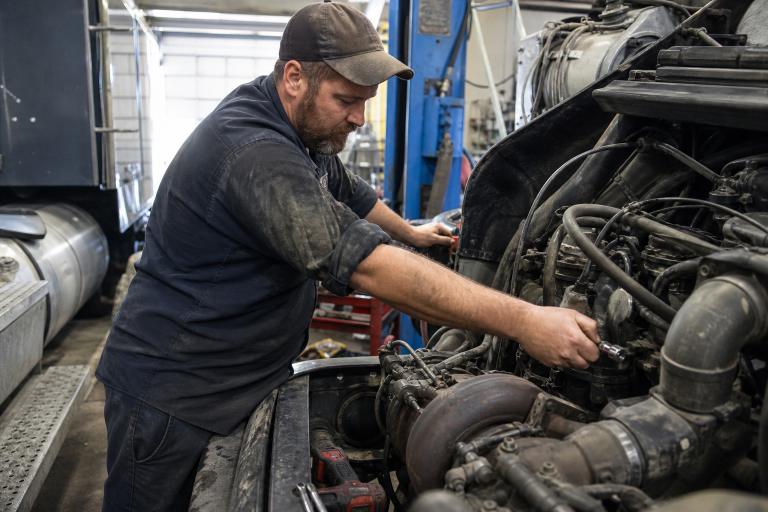
Component repair is often the best value when the failure is isolated, and the engine otherwise shows an acceptable internal condition. Repairs may address injectors, turbochargers, pumps, sensors, wiring, cooling parts, or emissions components. This option becomes less attractive when poor oil pressure, metal contamination, severe blow-by, or repeated failures suggest broader internal wear.
In-Frame Overhaul
An in-frame overhaul can replace wear items such as liners, pistons, rings, bearings, and gaskets without removing the engine from the chassis. It may reduce removal and installation work, but it does not provide the same access as a fully removed engine. If the crankshaft, block, head, or rods need extensive inspection or machining, an in-frame job may not be enough.
Complete Rebuild
A complete rebuild involves removing and disassembling the engine so the block, crankshaft, cylinder head, rods, and other major components can be cleaned, measured, inspected, and machined when necessary. It is often worth considering when multiple internal components are worn, but the core is suitable for restoration.
Remanufactured Engine
A remanufactured engine is rebuilt through a controlled process that typically includes inspection, machining, replacement of specified wear components, and testing. It can offer a more predictable path when the existing core has major damage or when uptime matters. Available scopes range from repair kits to long blocks and replacement assemblies, as explained in the different heavy-duty engine repair options.
Used Engine
A used engine may cost less initially, but its maintenance history, actual mileage or hours, storage conditions, and internal condition may be uncertain. Confirm the serial number, configuration, included accessories, test documentation, warranty, and return policy before ordering. A used unit with the wrong electronics or emissions configuration can create expensive installation delays.
New Replacement Engine
A new replacement engine generally provides the greatest certainty in component condition, but it can also require the largest upfront investment. It may suit equipment with a long planned service life, demanding duty cycles, or strict uptime requirements. Confirm whether mounts, accessory drives, wiring, software, and emissions equipment will match the vehicle.
Review the Full Cost
Compare complete installed costs, not just engine prices. Use this list when reviewing estimates:
- Engine or parts: Is the quote for a repair kit, bare engine, long block, dressed engine, or installed package?
- Labor: Does it include removal, installation, startup, road testing, and final calibration?
- Machining: Are block, crankshaft, head, rod, or injector-related services included if needed?
- Supporting components: Have the turbocharger, injectors, fuel pump, oil cooler, water pump, starter, and cooling components been inspected?
- Core charges: What must be returned, and what damage could reduce the refund?
- Downtime: What revenue, rental expense, or scheduling disruption results while the unit is unavailable?
Balance Downtime and Service Life
A component repair may return equipment to service quickly when parts are available. An in-frame overhaul can limit removal work, while a complete rebuild may require more shop and machine time. A remanufactured engine can reduce uncertainty about a badly damaged core, and a used engine may be quick to source but can add risk if inspection or fitment issues arise after delivery.
Consider the expected service life after the work is complete. A less expensive repair can be the right decision for equipment nearing retirement, while a more comprehensive solution may be better for a truck that must perform reliably for years. Seasonal demand also matters. Downtime during a busy hauling, construction, agricultural, or delivery period may carry a larger business cost than the difference between two repair quotes.
Check Compatibility Before Ordering
- Confirm the engine model, serial number, and original rating.
- Match the replacement to the transmission, duty cycle, and vehicle application.
- Check mounts, oil pan, flywheel housing, accessory drive, and cooling connections.
- Verify differences in the turbocharger, fuel system, injector, wiring, and control module.
- Confirm emissions and aftertreatment requirements.
- Determine whether programming, parameter changes, or software updates are required after installation.
Two engines with similar names can still differ in hardware, calibration, sensors, wiring, and emissions equipment. Verify fitment before placing an order, not after the old engine has been removed.
Review Warranty Terms
Read the warranty before approving the job. Confirm the coverage period, mileage or hour limits, included parts, labor allowance, freight responsibility, maintenance requirements, and installation rules. Also, ask who performs the diagnosis if a problem develops after installation, and whether unrepaired cooling, fuel, or air intake issues could affect coverage.
Use a Simple Decision Process
- Confirm the failure with a documented diagnosis.
- Determine whether the block, crankshaft, head, and rods are reusable.
- Inspect the rest of the vehicle or machine for other major needs.
- Compare total installed costs and expected downtime.
- Match the option to the budget, duty cycle, and planned ownership period.
- Choose the option that provides the lowest practical risk, not simply the lowest initial price.
Avoid Common Mistakes
- Approving replacement work without a complete diagnostic report.
- Comparing a bare long block with a fully equipped replacement engine.
- Failing to correct the cause of the original failure.
- Reusing contaminated or damaged supporting components.
- Buying a used engine without serial-number and configuration verification.
- Ignoring core returns, freight, fluids, programming, taxes, and shop supplies.
- Skipping startup checks, break-in procedures, and follow-up service.
Final Inspection Checklist
- Written diagnosis received
- Engine serial number and configuration confirmed
- Root cause of failure identified
- Repair, rebuild, remanufacture, use, and new options compared
- Total installed costs reviewed
- Downtime estimate confirmed
- Compatibility verified
- Warranty terms reviewed
- Supporting systems inspected
- Post-installation testing planned
Conclusion
There is no universal answer to a heavy-duty engine failure. The strongest decision combines accurate diagnosis, clear pricing, verified compatibility, realistic downtime planning, and an honest assessment of the vehicle’s overall condition. With those details in hand, owners can select a repair, rebuild, remanufactured engine, used engine, or new replacement with greater confidence.