
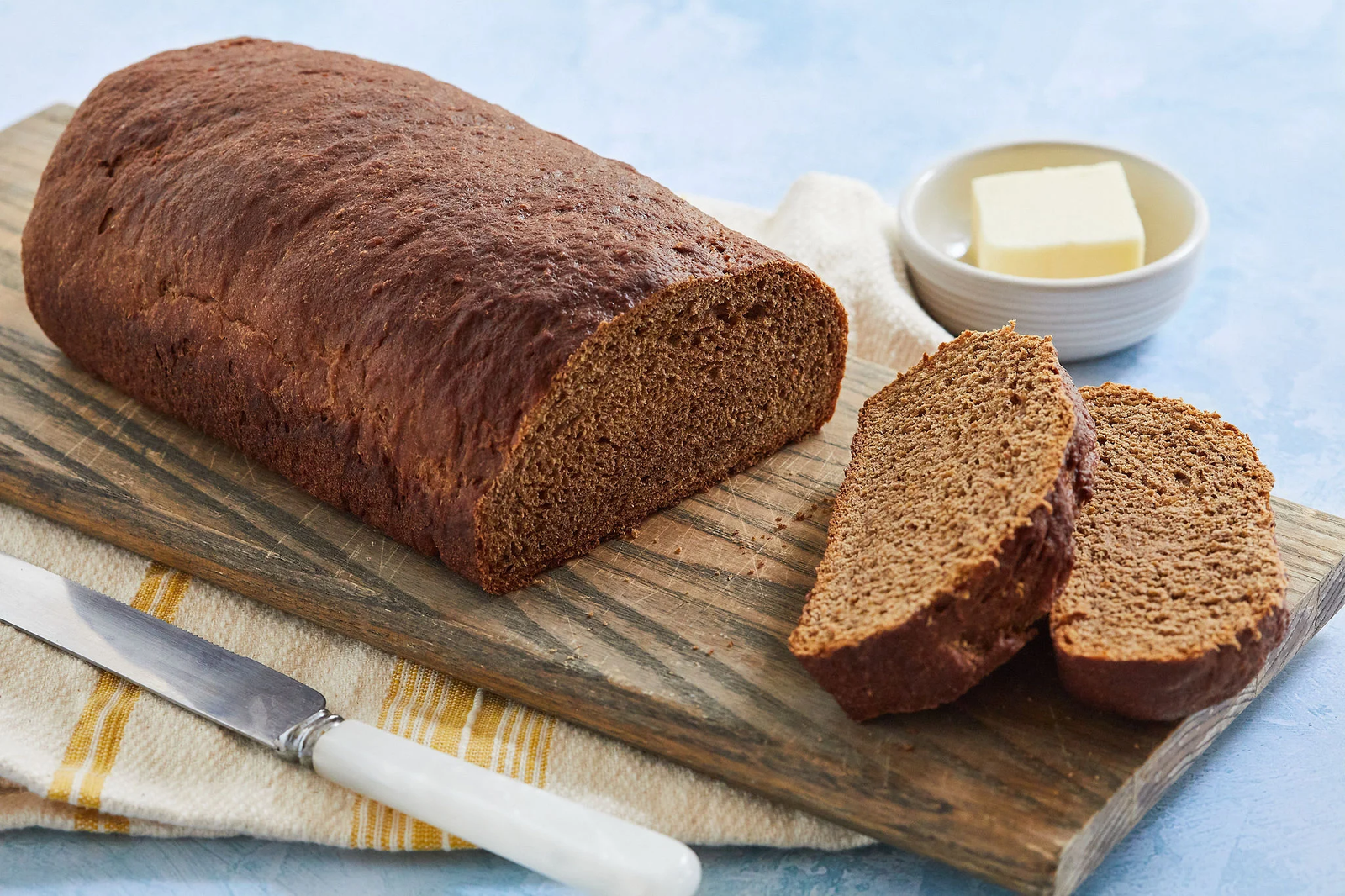
What Is Pumpernickel?
Pumpernickel is a traditional dark rye bread best known for its deep brown color, dense texture, rich flavor, and unmistakable aroma. It originated in Germany and has become one of the most recognizable styles of rye bread around the world. Unlike ordinary wheat bread, pumpernickel is made primarily from rye, which gives it a distinctive earthy character and a satisfying chew.
The word pumpernickel is often associated with bread that is hearty, wholesome, and rustic. Traditional German versions are particularly dense because they are made with coarsely ground whole rye meal and baked slowly at a relatively low temperature. This long baking process helps develop the bread’s characteristic dark color and complex flavor.
Modern versions can vary considerably. Some commercial loaves use rye flour, wheat flour, molasses, cocoa, coffee, or other ingredients to create a darker appearance and sweeter flavor. While these breads can still be delicious, traditional pumpernickel has a character of its own that comes from rye, fermentation, moisture, and slow baking rather than simply from added coloring ingredients.
The History Behind Pumpernickel
The history of pumpernickel is closely connected with Westphalia, a historic region of Germany. Traditional Westphalian pumpernickel was developed as a practical bread made from rye, a grain that grew well in northern European climates. It was particularly useful in areas where wheat was less readily available or more expensive.
One of the defining features of traditional pumpernickel is its unusually long baking time. Instead of being baked quickly like many modern breads, authentic versions can spend many hours in a warm oven. This extended cooking period allows the natural sugars in the rye to undergo browning reactions, producing the bread’s dark color and distinctive sweet, malty flavor.
There are several stories and theories surrounding the unusual name. Its exact origin remains debated, and explanations range from old regional expressions to humorous interpretations. Regardless of the linguistic mystery, the name has become firmly attached to this particular style of rye bread and is now recognized far beyond Germany.
What Makes Pumpernickel Different From Other Rye Breads?
Although pumpernickel is a rye bread, not every rye bread is pumpernickel. Rye bread can range from light and airy loaves to dense, sour varieties, depending on the flour, fermentation method, and baking process. Pumpernickel generally stands out because of its dense structure, dark appearance, moist crumb, and strong rye flavor.
Traditional pumpernickel typically uses whole rye meal or coarsely ground rye rather than relying exclusively on finely milled rye flour. The rye absorbs a considerable amount of water, resulting in a loaf that feels substantial. It also develops a slightly sweet, earthy flavor during its long baking period.
American-style pumpernickel can be quite different from its German counterpart. Many American recipes combine rye flour with wheat flour and may include ingredients such as molasses, cocoa powder, or coffee. These additions create a darker loaf with a sweeter and sometimes softer texture. Both styles can be enjoyable, but they represent different approaches to the same general bread tradition.
How Does Pumpernickel Taste?
The flavor of pumpernickel is one of its biggest attractions. It tends to have an earthy, slightly sour, mildly sweet taste that becomes more noticeable as you chew. Rye contributes a distinctive grain flavor that is more pronounced than what you usually experience with standard white or whole-wheat bread.
Traditional pumpernickel can also have subtle malty and caramel-like notes. The long baking process is partly responsible for this complexity. Rather than tasting simply like toasted grain, a well-made loaf can offer layers of flavor that develop gradually.
Its flavor also makes it extremely versatile. Pumpernickel works beautifully with salty foods, creamy spreads, smoked fish, pickled vegetables, strong cheeses, and savory meats. At the same time, its mild sweetness means it can complement fruit preserves, honey, and certain softer cheeses.
How Is Traditional Pumpernickel Made?
Making traditional pumpernickel is a slow process, and patience is one of its most important ingredients. A classic loaf begins with rye meal or whole-grain rye and plenty of water. Depending on the recipe, sourdough fermentation may be used to develop flavor and help condition the rye.
The dough is usually much wetter and heavier than a typical wheat-bread dough. Rye behaves differently from wheat because it contains less gluten-forming protein. As a result, traditional pumpernickel does not depend on a strong elastic gluten network to create its structure.
The mixture is placed into a loaf pan or another suitable baking vessel and cooked slowly for many hours. During this time, moisture remains in the bread while the rye gradually develops its dark color and rich flavor. Once baked, the loaf is generally allowed to cool thoroughly before slicing because its texture continues to settle as it cools.
Pumpernickel and Sourdough Fermentation
Sourdough fermentation is an important part of many traditional rye breads, including authentic styles of pumpernickel. A sourdough starter contains naturally occurring yeasts and lactic-acid-producing bacteria. These microorganisms ferment the dough and contribute to its characteristic tang.
Fermentation also changes the overall flavor profile of the bread. Instead of having a flat grain taste, the loaf can develop layers of acidity, sweetness, and nuttiness. With rye, proper fermentation is particularly useful because the acidity helps create a more suitable environment for the bread’s structure.
Not every modern pumpernickel recipe requires a sourdough starter. Some faster recipes use commercial yeast instead, while others use a combination of yeast and fermented rye ingredients. These approaches can produce good bread, but the flavor and texture may differ from a long-fermented traditional loaf.
Is Pumpernickel a Healthy Bread?
Pumpernickel can be a nutritious addition to a balanced diet, particularly when it is made with whole-grain rye. Rye naturally provides dietary fiber, complex carbohydrates, vitamins, minerals, and various plant compounds. A dense slice can also be quite filling, which makes it useful for meals where you want lasting satisfaction.
The nutritional value depends heavily on the recipe. A traditional whole-rye loaf is not nutritionally identical to a commercial loaf made with refined flour, added sweeteners, and other ingredients. Reading the ingredient list and nutrition label is therefore more useful than judging a bread simply by its dark color.
It is also worth remembering that healthy eating is about the overall diet rather than one food. Pumpernickel can fit comfortably into many eating patterns when paired with nutritious toppings such as vegetables, eggs, fish, lean proteins, legumes, or moderate portions of cheese.
Popular Ways to Eat Pumpernickel
One of the easiest ways to enjoy pumpernickel is simply to toast it lightly and spread it with butter or cream cheese. Toasting brings out the bread’s natural aroma while adding a pleasant contrast between the crisp surface and dense interior.
Pumpernickel is particularly famous as a base for open-faced sandwiches. Smoked salmon, cream cheese, cucumber, dill, and pumpernickel make a classic combination. The bread’s strong flavor provides enough character to stand up to smoked fish without overwhelming it.
Another excellent option is pumpernickel with cheese. Sharp cheddar, Swiss-style cheese, goat cheese, or other flavorful varieties can work nicely. Add sliced apples, pears, pickles, mustard, or fresh herbs and you have a simple meal with plenty of contrasting textures and flavors.
Pumpernickel for Breakfast and Snacks
Pumpernickel does not have to be reserved for lunch or dinner. Its dense texture makes it a satisfying breakfast option, especially when paired with protein and healthy fats. A slice topped with avocado and a poached or boiled egg can create a simple, filling morning meal.
For a sweeter breakfast, try pumpernickel with natural nut butter and sliced banana. The earthy rye flavor contrasts nicely with the creamy texture and natural sweetness of the fruit. A small amount of honey can also work well if you enjoy a sweeter combination.
It can also make a convenient snack. Because pumpernickel is substantial and flavorful, you may find that one slice with a simple topping is enough to satisfy you between meals. The key is choosing toppings that complement rather than hide the bread’s distinctive character.
How to Store Pumpernickel Properly
Because pumpernickel contains considerable moisture, proper storage is important. A freshly baked loaf should be allowed to cool completely before being wrapped. Storing bread while it is still hot can trap excess condensation and negatively affect its texture.
For short-term storage, keep the bread well wrapped in a cool, dry place. Avoid unnecessary exposure to air because it can cause the surface to dry out. Unlike some light breads, a good pumpernickel can retain its moist texture for a surprisingly long time when stored correctly.
If you have more bread than you can eat within several days, freezing is a practical option. Slice the loaf before freezing so individual pieces can be removed as needed. Properly wrapped slices can then be thawed or toasted directly from frozen, making it easy to enjoy the bread without wasting leftovers.
Why Pumpernickel Remains Popular
Pumpernickel has survived for generations because it offers something that many modern breads do not: a distinctive identity. It is not bland, overly soft, or designed merely to act as a background for toppings. The bread itself contributes a significant part of the meal.
Its texture is another reason people continue to enjoy it. The dense crumb feels substantial without necessarily being heavy in flavor. When paired with crisp vegetables, creamy spreads, or tender proteins, it creates a satisfying contrast that works particularly well in sandwiches.
There is also something appealing about its traditional character. In an age of quick breads and highly processed food, a slow-baked rye loaf connects modern meals with an older European baking tradition. Whether you choose an authentic German-style loaf or a softer American interpretation, pumpernickel remains an excellent example of how simple grains can produce remarkably complex food.
Final Thoughts on Pumpernickel
Pumpernickel is much more than simply a dark slice of bread. Its history, rye-based ingredients, slow-baking methods, dense texture, and rich flavor give it a character that sets it apart from ordinary loaves. Traditional versions are especially interesting because their deep color and complex taste develop naturally through time, moisture, fermentation, and heat.
Whether you enjoy it with smoked salmon, cheese, eggs, vegetables, butter, or a sweet spread, pumpernickel offers plenty of possibilities. Its hearty nature makes it suitable for breakfast, lunch, dinner, or a simple snack, while its distinctive flavor can make even a basic sandwich feel special.
For anyone interested in traditional European breads, pumpernickel is well worth trying. It demonstrates that bread does not have to be light and airy to be delicious. Sometimes, a dense, dark, slowly baked loaf has far more personality—and that is exactly what makes pumpernickel so memorable.
You May Also Read: Wordmaticz