Have you ever received an invitation with the letters RSVP printed at the bottom and wondered exactly what they meant? You’re not alone. Many people ask about the RSVP meaning, especially when they receive wedding invitations, birthday party invitations, or corporate event invitations. While it’s a common term, not everyone knows its origin or why it’s so important.
In this guide, you’ll learn what RSVP stands for, what does RSVP mean, how to respond correctly, and why replying promptly helps event hosts plan successful gatherings.
What Is RSVP?
RSVP is a request for invited guests to let the host know whether they plan to attend an event.
When you see RSVP on an invitation, the host is asking for your response by a specific date. Your reply allows them to organize seating, catering, guest lists, and other important event details.
Whether you’re attending a wedding, dinner party, graduation, or business function, responding to an RSVP is considered good etiquette.
What Does RSVP Stand For?
Many people ask, what does RSVP stand for?
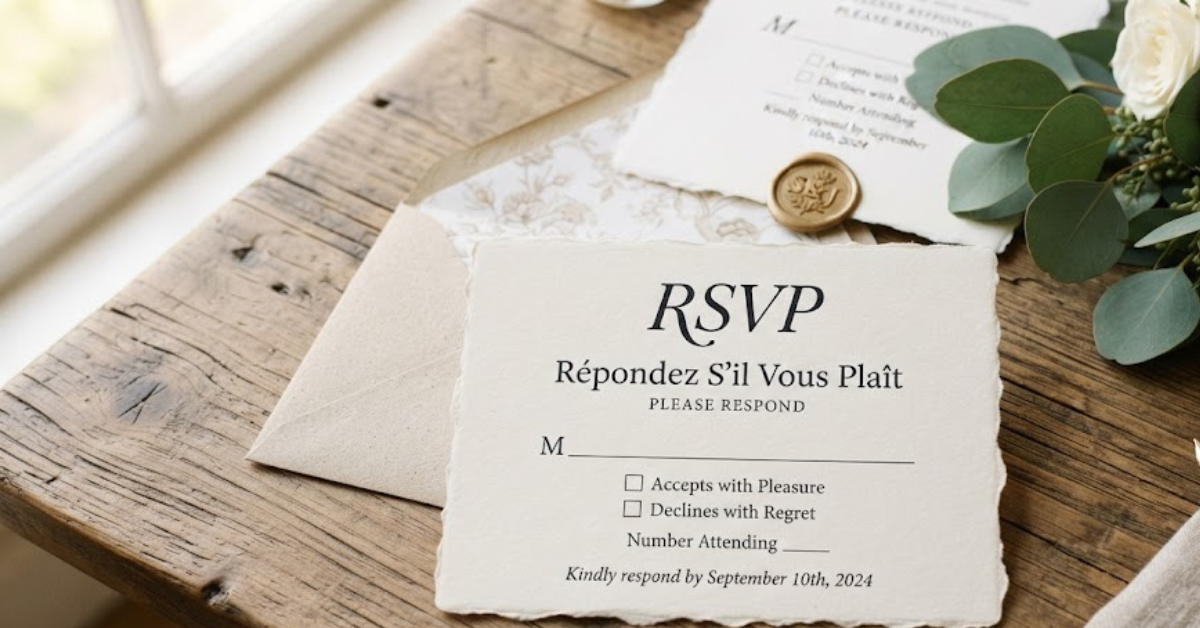
RSVP stands for the French phrase:
“Répondez s’il vous plaît.”
Translated into English, it means:
“Please respond.”
Although the phrase is French, RSVP has become an internationally recognized abbreviation used on invitations around the world.
What Does RSVP Mean?
So, what does RSVP mean in practical terms?
It simply means the event organizer wants to know if you’ll attend.
Your response should clearly indicate one of two things:
- Yes, I will attend.
- No, I won’t be able to attend.
Some invitations may also ask you to include:
- Number of guests attending
- Meal preferences
- Dietary requirements
- Song requests
- Accommodation needs
Why Is RSVP Important?
Some people assume RSVP is optional, but it’s actually an important part of event planning.
Hosts rely on accurate guest numbers to make informed decisions about:
- Catering
- Seating arrangements
- Venue size
- Decorations
- Party favors
- Transportation
- Budget
Without RSVPs, hosts often end up paying for guests who don’t attend or scrambling to accommodate unexpected attendees.
The History of RSVP
Although RSVP is now used worldwide, its roots date back several centuries.
French was once considered the language of diplomacy and formal society across Europe. As a result, many formal invitations included the phrase “Répondez s’il vous plaît.”
Over time, English-speaking countries adopted the abbreviation RSVP, and it remains one of the few French expressions still widely used in everyday event planning.
Wedding Invitations with RSVP
One of the most common places you’ll see RSVP is on wedding invitations with RSVP cards.
Wedding planning depends heavily on accurate guest counts because nearly every cost is calculated per person.
Wedding RSVP cards often include spaces for:
- Guest names
- Attendance confirmation
- Meal selection
- Dietary restrictions
- Number of attendees
- Personal messages to the couple
Many modern couples now offer digital RSVP options through wedding websites or QR codes, making it easier for guests to respond.
How to RSVP Correctly
Responding to an invitation is usually simple.
Follow these steps:
1. Reply Before the Deadline
Always respond by the date listed on the invitation.
2. Give a Clear Answer
Avoid uncertain replies like:
- Maybe
- I’ll try
- We’ll see
Instead, provide a definite yes or no whenever possible.
3. Include Requested Information
If the invitation asks about meals, guests, or dietary needs, answer every question.
4. Notify the Host if Plans Change
If an emergency prevents you from attending after you’ve already accepted, let the host know as soon as possible.
Different Ways to RSVP
Today, there are several ways to respond.
Traditional RSVP
Guests mail back a response card included with the invitation.
Phone RSVP
The invitation provides a phone number to call or text.
Email RSVP
Some invitations include an email address for responses.
Online RSVP
Many events now use:
- Wedding websites
- Event management platforms
- QR codes
- Mobile apps
Online RSVPs have become especially popular because they’re quick and convenient.
RSVP Etiquette for Guests
Good RSVP etiquette shows respect for the host’s time and effort.
Here are some simple rules to follow:
- Reply as soon as possible.
- Don’t ignore the invitation.
- Be honest about your availability.
- Don’t bring extra guests unless invited.
- Arrive on time if you’ve accepted.
These small actions help events run smoothly.
RSVP Etiquette for Hosts
If you’re hosting an event, make it easy for guests to respond.
Include:
- RSVP deadline
- Contact details
- Guest limit
- Meal options (if applicable)
- Dress code (optional)
Clear instructions reduce confusion and improve response rates.
Common RSVP Wording
Here are a few examples you might see.
Formal Invitation
RSVP by June 15, 2026
Casual Party
Please let us know if you can make it!
Wedding Invitation
Kindly RSVP by August 10, 2026
Although the wording changes, the purpose remains the same.
Common RSVP Mistakes
Avoid these common errors:
- Waiting until the last minute.
- Assuming the host knows you’ll attend.
- Bringing uninvited guests.
- Forgetting to respond after accepting.
- Ignoring meal selections or dietary questions.
Good communication helps everyone enjoy the event.
RSVP in the Digital Age
Technology has changed how people respond to invitations.
Today, many hosts use:
- Wedding planning websites
- Digital invitations
- Email invitations
- SMS confirmations
- QR code RSVPs
These methods save time while making guest management much easier.
FAQs
What does RSVP stand for?
RSVP stands for the French phrase “Répondez s’il vous plaît,” which means “Please respond.”
What does RSVP mean?
RSVP is a request asking invited guests to confirm whether they will attend an event.
What is RSVP used for?
It’s used to help hosts plan events by knowing exactly how many guests will attend.
Is RSVP mandatory?
While not legally required, responding is considered proper etiquette and shows respect for the host.
What happens if you don’t RSVP?
The host may assume you aren’t attending or may need to contact you for confirmation, making event planning more difficult.
What are wedding invitations with RSVP?
These are wedding invitations that include a response card, online response option, or contact details so guests can confirm attendance before the wedding.
Can I change my RSVP after responding?
Yes. If your plans change unexpectedly, notify the host as soon as possible so they can adjust their arrangements.
Conclusion
Understanding the RSVP meaning is more than just knowing what the letters stand for—it’s about recognizing the importance of timely communication and good etiquette. Whether you’re wondering what does RSVP stand for, what does RSVP mean, or planning to send wedding invitations with RSVP, the principle is the same: let the host know whether you’ll be attending. A simple response helps ensure events are well-organized, budgets stay on track, and everyone enjoys the occasion. The next time you receive an invitation with RSVP, you’ll know exactly what it means and how to respond with confidence.