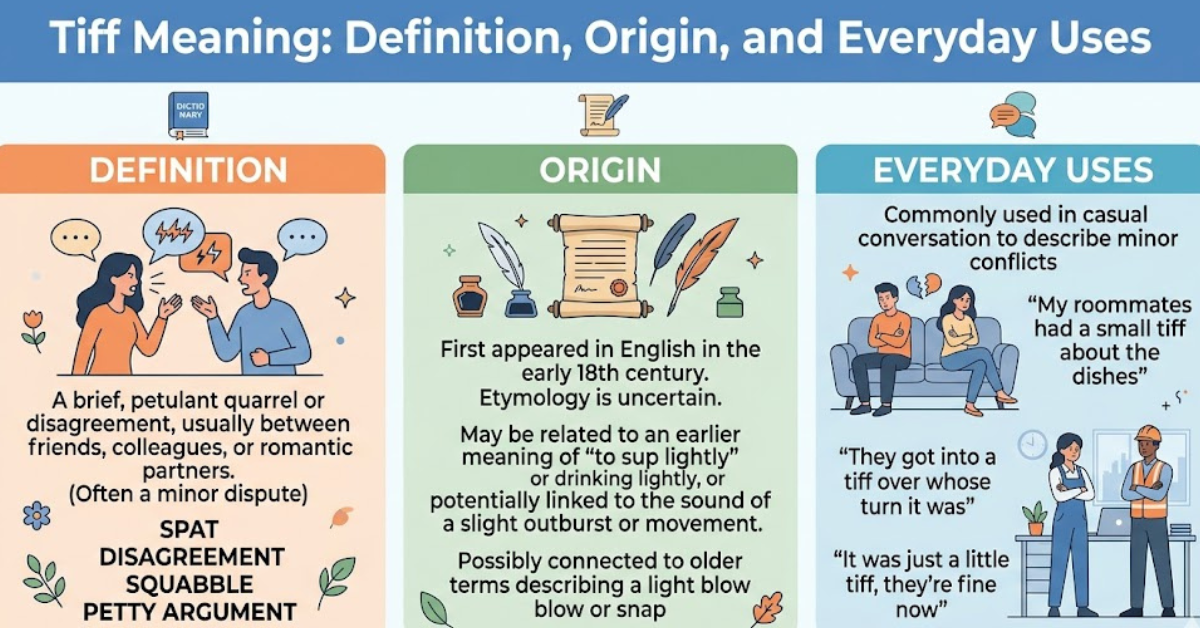
Have you ever heard someone say, “We had a little tiff,” and wondered what they actually meant? The tiff meaning is simple yet interesting. A tiff refers to a small, usually minor argument or disagreement between people, often between friends, family members, or romantic partners.
Unlike a serious fight or conflict, a tiff is generally short-lived and not considered a major problem. This article explores the meaning of tiff, its origin, examples of how it is used, and the difference between a tiff and a serious argument.
What Is the Meaning of Tiff?
The word tiff means a brief, petty quarrel or a small disagreement between two or more people. It often describes a conflict that is temporary and not deeply damaging to a relationship.
For example:
- “The couple had a little tiff over what movie to watch.”
- “My best friend and I had a tiff, but we made up quickly.”
- “Their disagreement was just a minor tiff, not a serious fight.”
A tiff can involve annoyance, misunderstandings, or differences of opinion, but it usually ends without long-term resentment.
The Origin and History of the Word Tiff
The exact origin of the word tiff is somewhat uncertain. It appeared in the English language around the 18th century. Early uses of the word described a small outburst of anger or a brief quarrel.
Some language experts believe it may have developed from an older expression that imitated the sound of a sudden emotional reaction, though its precise roots remain unclear.
Over time, the meaning of tiff became associated specifically with minor arguments, especially those between people who have a close relationship.
Tiff Meaning in Relationships
One of the most common ways people use the word tiff is when discussing relationships. A relationship tiff usually refers to a small disagreement between partners that does not threaten the bond they share.
Common causes of a tiff in relationships include:
- Differences in opinions
- Miscommunication
- Forgetting important dates or plans
- Small habits that annoy a partner
- Everyday stress or frustration
Many healthy relationships experience occasional tiffs because disagreements are a normal part of human interaction.
Tiff vs Fight: What Is the Difference?
Although the words “tiff” and “fight” both describe conflicts, they are not exactly the same.
| Tiff | Fight |
| Small disagreement | More serious conflict |
| Usually short-term | Can last for a long time |
| Less emotional intensity | Often involves stronger emotions |
| Easily resolved | May require significant effort to solve |
Calling an argument a “tiff” usually suggests that the issue is minor and that the people involved will likely reconcile soon.
How to Use Tiff in a Sentence
Learning how to use the word in everyday conversation can help you understand its meaning more clearly.
Here are some examples:
- “They had a small tiff about household chores.”
- “The siblings’ tiff was forgotten by the next day.”
- “A minor tiff should not ruin a strong friendship.”
- “After their little tiff, they apologized and moved on.”
The word is often paired with terms like small argument, petty disagreement, minor conflict, and brief quarrel.
Is a Tiff Always Negative?
Not necessarily. While a tiff involves disagreement, it is generally viewed as a normal and manageable part of relationships.
A tiff can sometimes lead to better communication because it encourages people to discuss their feelings and resolve misunderstandings.
However, frequent tiffs caused by unresolved issues may signal deeper problems that require honest conversations.
Similar Words and Synonyms for Tiff
Several words have meanings similar to tiff, including:
- Quarrel
- Disagreement
- Argument
- Squabble
- Spat
- Clash
- Dispute
Among these, spat and squabble are the closest in meaning because they also refer to minor conflicts.
Common Situations Where People Use the Word Tiff
You may hear the word tiff in many everyday situations, such as:
Family Tiffs
Family members may have small disagreements about chores, decisions, or personal habits.
Friendship Tiffs
Friends can have brief misunderstandings but often resolve them through communication and apology.
Romantic Tiffs
Couples commonly experience small arguments about daily matters, preferences, or expectations.
FAQs About Tiff Meaning
What does tiff mean in simple words?
In simple words, a tiff is a small argument or minor disagreement that usually ends quickly.
Is a tiff the same as a fight?
No. A tiff is usually less serious than a fight. It involves a small conflict rather than a major disagreement.
What does having a tiff with someone mean?
Having a tiff with someone means you had a brief argument or misunderstanding with them.
Is tiff a positive or negative word?
Tiff has a slightly negative meaning because it involves conflict, but it usually describes a minor issue that can be resolved easily.
Can couples have a tiff?
Yes. Couples often use the word tiff to describe small disagreements that happen during normal relationships.
Conclusion
Understanding the tiff meaning helps you recognize the difference between a minor disagreement and a serious conflict. A tiff is simply a short-lived quarrel, misunderstanding, or small argument that often occurs between people who share a close relationship.
Whether it happens between friends, family members, or couples, a tiff is usually a normal part of human interaction. If you enjoy exploring the meanings of common English words and phrases, consider reading more language guides to expand your vocabulary and improve your communication skills.