
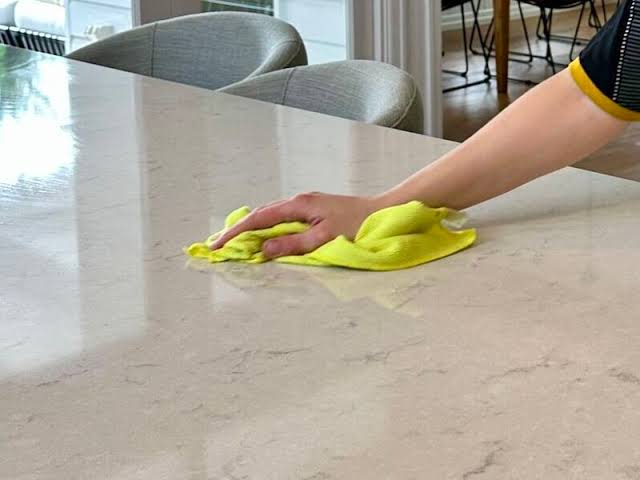
A dark patch on a benchtop that went in last week is alarming. The instinct is to grab whatever is under the sink and scrub. That instinct turns a fixable mark into a repair bill, because most household cleaners are wrong for stone.
Before you touch it, photograph it in daylight and send the photo to whoever supplied the slab. Experienced stone suppliers Sydney homeowners deal with can usually identify a mark from a photo and tell you whether it needs a poultice, a re-polish, or nothing more than a proper clean.
First, work out what you are looking at
Three different problems get called staining, and they need three different responses.
A stain is absorbed into the stone. Darker than the surface around it, soft edges, usually where oil, wine or food sat for a while.
An etch is not discolouration at all. Acidic things such as lemon, vinegar, wine and most supermarket sprays react with the calcium in marble, limestone and travertine, dulling the polish. The mark looks lighter and catches the light differently. Scrubbing does nothing, because the finish is damaged rather than dirty.
A residue is left behind by installation. Adhesive smears, silicone, polishing compound, stone dust dried in place. These look worse than they are and often wipe off.
Why marks show up in the first few weeks
- Sealer problems. An impregnating sealer needs clean, dry stone. Applied too early, applied unevenly, or skipped, and the surface absorbs whatever lands on it.
- Trapped moisture. Stone cut and installed in wet weather holds water. Dark patches appear, then fade over days as it dries out.
- Trade residue. Common in the handover week and usually harmless.
- Iron minerals. Some granites contain iron that oxidises with repeated wetting, showing as small rust-coloured spots.
- Normal porosity. Olive oil on unsealed marble marks within hours. That is the material behaving as it always has, not a fault.
If the mark is coming from underneath
A dark halo around the sink cutout, the tap base or a join usually means water is arriving from below. A slow tap leak, a loose sink clip or a poorly sealed cutout will do it.
Open the cupboard and look. Swollen chipboard, a musty smell or a damp cabinet base tells you where the problem is. Fix the leak first, because sealing the top while water keeps coming from underneath achieves nothing.
Worth knowing while you are down there: cabinetry that has been quietly damp for weeks is the kind of environment termites look for, and they are active across much of Sydney. If the leak has been running a while, having termite treatment Sydney specialists check the joinery costs far less than the damage they find late.
What to do now
Do this:
- Blot rather than scrub
- Clean with warm water and a pH-neutral stone cleaner
- For oil marks, try a poultice: bicarb soda and water to a paste, cover with plastic, leave 24 to 48 hours
- Raise it with your supplier or fabricator while it is fresh
Avoid this:
- Bleach, vinegar, lemon, bathroom spray, Gumption or Jif
- Scouring pads, magic erasers and abrasive powders, which score the surface and give future spills something to grip
- Sealing over a mark, which locks it in
The material decides how much of this you deal with
Marble, limestone and travertine are porous and reactive. They will mark and etch over time, and they need sealing every one to two years. Plenty of people choose them anyway, and there is nothing wrong with that as long as the trade-off was explained before the slab was cut.
Granite and quartzite are denser and handle daily kitchen use with less fuss. Porcelain and sintered stone are non-porous, resist staining and heat, and never need sealing.
None of these is the correct answer for everyone. The mistake is choosing a surface without being told how it behaves, which is why it pays to ask the supplier directly what a stone does in a working kitchen, and to see the slabs in person before deciding.
Frequently asked questions
Will the supplier fix it?
It depends on the cause. Installation residue, a missed sealer or a fabrication fault sit with the supplier or fabricator. A household spill on porous stone generally does not. Raising it in week one makes that conversation far easier than raising it in month six.
How do I test whether the sealer is working?
Put a few drops of water on the surface and wait several minutes. If the stone darkens where the water sat, it is absorbing and needs resealing.
Can an etch mark be repaired?
Often yes. Light etching on polished marble can be re-polished by a stone restoration technician. It is specialist work, not a DIY kit job.
Does honed or polished stain more easily?
Neither is more porous. Honed surfaces hide etching and water marks better because there is no gloss to lose, which is why they suit busy kitchens.
Getting it sorted
Identify the mark before you treat it, keep the supplier informed from day one, and stay away from anything acidic or abrasive in the meantime. Most early benchtop problems are fixable when they are handled properly, and a lot harder once someone has taken a scourer to them.