
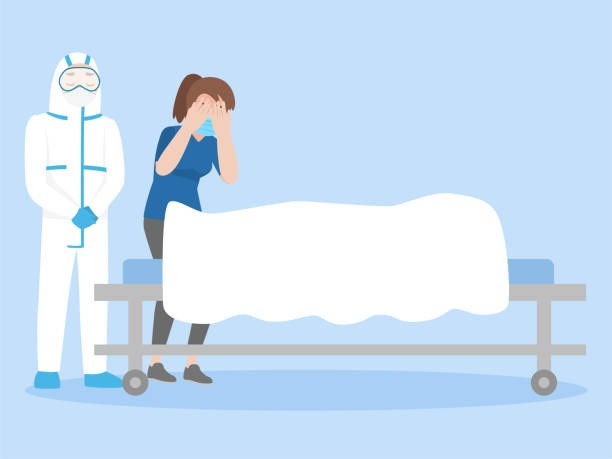
The claim that “when a person dies, they have 7 minutes” has become a surprisingly popular idea online. It often appears in social media posts, videos, blogs, and conversations about death, memory, and what happens to the brain at the moment of dying. The statement usually suggests that a person remains conscious for approximately seven minutes after death and may replay their happiest memories during that time.
It is an intriguing idea because it combines something scientific with something deeply emotional. Most people naturally wonder what happens inside the body and mind when life ends. The thought that the brain might provide one final sequence of memories can sound comforting, mysterious, or even frightening depending on how it is presented.
However, the important question is whether the seven-minute claim is actually supported by medical science. The short answer is that there is no established scientific rule saying that a dying person remains conscious for seven minutes after death. The reality is much more complicated, and understanding it requires looking at what doctors mean by death, how the brain responds when circulation stops, and what researchers have observed around the end of life.
Where the “7 Minutes” Idea Comes From
The phrase “when a person dies, they have 7 minutes” is often presented as if it were a proven medical fact. In many versions of the claim, the explanation goes even further: the brain supposedly remains active for several minutes and uses that time to replay important memories. Some versions describe it as a final movie of a person’s life.
There is a small connection between this popular story and real observations about brain activity around death. Scientists have recorded unusual electrical activity in some dying or recently deceased patients. In certain circumstances, brain activity can continue briefly after the heart stops, although its pattern and duration can vary significantly.
The problem is that these observations do not establish a universal seven-minute period of consciousness. Death is not a single switch that turns every biological process off at exactly the same moment. Different cells, organs, and biological systems stop functioning on different timelines. Turning these complex processes into a precise seven-minute rule is therefore misleading.
What Actually Happens When the Heart Stops?
When the heart stops pumping effectively, blood circulation to the brain is interrupted. The brain depends heavily on a continuous supply of oxygen and glucose, so a sudden loss of circulation can cause consciousness to disappear very quickly.
This does not necessarily mean every brain cell stops functioning instantly. Some cellular processes can continue for a short period after circulation has ceased. The exact timeline depends on numerous factors, including body temperature, the cause of death, medical intervention, oxygen levels, and the condition of the individual before the event.
This distinction is important because brain activity is not automatically the same thing as conscious experience. A monitor detecting electrical activity does not necessarily prove that a person is awake, aware, thinking normally, or experiencing memories in the way a living person does.
Medical professionals therefore evaluate death using established clinical criteria rather than relying on a stopwatch. Depending on the circumstances and jurisdiction, death may be determined by permanent cessation of circulatory and respiratory functions or by neurological criteria involving the irreversible loss of all brain function.
Does the Brain Stay Conscious for Seven Minutes?
There is currently no reliable scientific evidence showing that every person remains conscious for seven minutes after death. Consciousness depends on organized brain function, and that function is highly sensitive to interruptions in blood flow and oxygen delivery.
Some studies involving people near death have produced fascinating observations. Researchers have occasionally detected electrical patterns associated with brain activity around the time of cardiac arrest or shortly before and after death. These findings have generated legitimate scientific interest because they may provide clues about how the brain behaves during the final stages of life.
Still, these findings should not be transformed into a simple statement such as “everyone is conscious for seven minutes.” Individual cases differ, and researchers cannot assume that detected electrical signals represent ordinary conscious awareness. Science has not established a universal countdown beginning at the moment of death.
What About the Idea of Life Review?
The memory-replay portion of the claim is especially interesting. Many people have heard that dying people experience a rapid review of their lives, almost like watching a collection of personal memories. This idea is sometimes connected to reports from people who have experienced near-death experiences.
Some individuals who survive cardiac arrest or other life-threatening situations report vivid experiences, including memories, lights, sensations of peace, unusual perceptions, or a feeling of observing events from outside their bodies. These experiences are real reports from the people who describe them, but interpreting exactly what causes them remains a subject of scientific investigation.
A near-death experience also should not automatically be treated as evidence of what happens after irreversible death. A person who is successfully resuscitated has undergone a period of extreme physiological stress but has not necessarily experienced irreversible biological death. That distinction matters when discussing claims about consciousness after death.
Why Seven Minutes Became Such a Specific Number
People naturally like precise numbers. Saying that something happens for “seven minutes” sounds much more authoritative than saying that brain activity can vary after circulation stops. Unfortunately, precision can create a false sense of certainty.
There are many cultural, religious, and fictional traditions involving the number seven, which may also contribute to its popularity. Seven frequently appears in stories about time, transformation, spirituality, and mysterious events. When a scientific-sounding statement is combined with a familiar symbolic number, it can become especially memorable.
Social media can amplify this effect. A dramatic claim is more likely to be shared than a nuanced explanation. “Your brain replays your entire life for seven minutes after death” is emotionally powerful and easy to remember. “Neurological activity around death varies and does not establish continued consciousness” is scientifically more responsible but obviously less sensational.
What Scientists Have Observed Near the End of Life
Research into the dying brain has become increasingly interesting as medical technology has improved. Researchers can monitor brain activity using techniques such as electroencephalography, while intensive-care equipment can track heart rhythm, oxygen levels, blood pressure, and other physiological signals.
In some reported cases, researchers have observed organized electrical patterns around cardiac arrest. Certain brain-wave patterns can resemble activity associated with memory processing or other cognitive functions. These observations have raised fascinating questions about whether the brain can undergo complex activity during the transition toward death.
However, scientists are cautious about interpreting these findings. A brain showing electrical activity does not automatically mean the person is consciously experiencing thoughts. Researchers need more evidence to determine what particular patterns mean and whether they correspond to subjective experiences.
Why Memory Replay Is Difficult to Prove
Imagine trying to determine whether someone is experiencing memories while they are unable to communicate. It is an extraordinarily difficult scientific problem. Researchers cannot simply ask a person what they experienced if that person has died.
Survivors of cardiac arrest can provide valuable information because they may remember experiences from periods surrounding their medical emergency. Yet their memories can be influenced by many factors, including medication, oxygen deprivation, neurological changes, dreams, expectations, and the process of waking up after resuscitation.
This does not mean that near-death experiences are meaningless. They can be psychologically significant and deserve careful study. But they cannot currently establish a universal rule that every dying person watches their life memories for exactly seven minutes.
The Difference Between Dying and Being Dead
One of the biggest problems with the seven-minute claim is that it treats “dying” and “being dead” as exactly the same moment. In reality, the transition from life to death can involve a series of physiological changes.
A person may be critically ill and approaching death while some organs continue functioning. The heart may stop and later be restarted through resuscitation. Brain activity may change dramatically during cardiac arrest. In another situation, irreversible brain injury may lead to a determination of death even if machines continue supporting circulation and breathing.
Because these situations are medically different, there cannot be one universal timeline that applies to every person. The human body is a complex biological system, and the final stages of life can look very different from one case to another.
Why the Claim Continues to Fascinate People
Even though the seven-minute idea is not established medical fact, it continues to attract attention because it touches on one of humanity’s oldest questions: what happens to us when life ends?
There is also something emotionally appealing about the idea of a final memory sequence. It suggests that the mind might hold onto the people, places, and moments that mattered most. For someone grieving a loved one, that possibility can feel comforting.
At the same time, it is important not to turn comforting ideas into scientific facts. People can appreciate the emotional meaning of the concept while recognizing that researchers have not demonstrated a universal seven-minute period of consciousness after death.
What You Should Take Away From the Seven-Minute Claim
If you encounter a post saying “when a person dies, they have 7 minutes”, it is best to treat it as an interesting popular claim rather than an established medical fact. There is no scientifically proven seven-minute countdown that applies to everyone who dies.
What science does tell us is much more nuanced. Brain function depends on circulation and oxygen, consciousness can be lost rapidly after circulation stops, and some forms of cellular or electrical activity may continue for a period after cardiac arrest. Researchers are still studying what these patterns mean.
The most accurate conclusion is therefore not that people definitely replay seven minutes of memories after death. Instead, the dying brain remains an area of active scientific research, and discoveries about brain activity around death may eventually help us understand consciousness more clearly.
Final Thoughts on “When a Person Dies, They Have 7 Minutes”
The statement “when a person dies, they have 7 minutes” is compelling because it sounds both scientific and mysterious. But a catchy claim should not be confused with established evidence. There is no universal scientific rule proving that a person remains conscious for seven minutes or experiences a complete replay of their memories after death.
What happens around death is considerably more complicated. The heart, brain, and other biological systems do not necessarily stop all activity at precisely the same instant. Modern research has revealed intriguing patterns of brain activity around cardiac arrest and the end of life, but researchers are still working to understand their significance.
Ultimately, the seven-minute story says more about our fascination with consciousness and mortality than it does about a confirmed biological countdown. The science is fascinating enough without adding a number that research has not established. As scientists continue investigating the dying brain, we may learn more about those final moments—but for now, the idea of exactly seven minutes of consciousness remains a popular myth rather than a proven fact.
You May Also Read: Wordmaticz