
Knowing the tide times Littlehampton can make a surprisingly big difference to a day by the coast. Whether you are planning a beach walk, heading out on a boat, enjoying some fishing, taking photographs, or simply wondering when the sea will be at its highest, the tide can completely change the character of the shoreline.
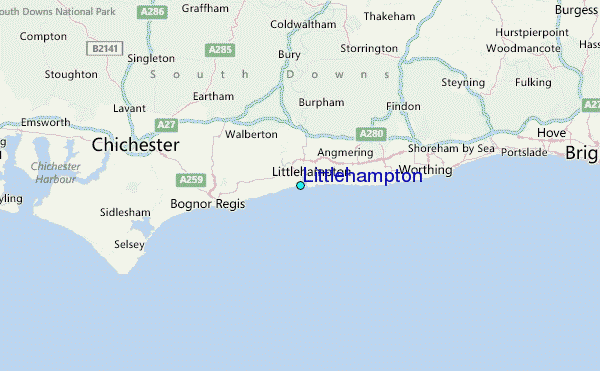
Littlehampton sits on the West Sussex coast at the mouth of the River Arun, where the river meets the English Channel. Because of this location, the movement of the tide is particularly noticeable around the harbour, beach and riverfront. Littlehampton Harbour provides official tide information using Admiralty data supplied through the UK Hydrographic Office, making it an important reference for anyone who needs reliable local information.
It is also worth remembering that a tide table is a prediction rather than a guarantee of exactly what you will experience on the beach. Weather, wind, waves and local conditions can all influence the practical situation. For that reason, checking tide times alongside the latest weather and sea conditions is always the sensible approach.
Understanding Tide Times in Littlehampton
Tide times describe the expected periods of high water and low water. High tide is when the sea reaches its predicted maximum level during a tidal cycle, while low tide is when the water reaches its predicted minimum. At Littlehampton, these changes happen throughout the day and can alter the appearance and accessibility of the coastline quite dramatically.
A typical day can have two high tides and two low tides, although the exact timing changes from one day to the next. The interval between successive high tides is roughly twelve hours, while low tides occur between them. This means that the tide is constantly moving rather than simply being high during the day and low at night.
For example, the official Littlehampton Harbour information lists September 6, 2026, with low water at 00:31 at 1.81 metres, high water at 07:08 at 4.32 metres, low water at 13:21 at 1.92 metres and high water at 19:53 at 4.41 metres. These figures show why checking the actual date matters rather than relying on a general statement about when the tide usually comes in.
Why Tide Times Matter for Littlehampton Beach
For visitors, one of the biggest reasons to check tide times is simply to understand how much beach will be available. At low tide, areas that are covered by water later in the day can become exposed, creating a very different landscape. Sand, shingle and other coastal features become more visible, while the shoreline can extend considerably farther out.
A low tide can be appealing for walking and exploring, but it is important not to become so focused on the exposed beach that you forget the water will eventually return. The incoming tide can move surprisingly quickly in some coastal areas, particularly around channels, inlets and river mouths. Littlehampton’s position beside the River Arun makes awareness of changing water levels particularly useful.
High tide creates a different experience. The sea comes much closer to the promenade and coastal structures, and the beach can become narrower. For photographers, high tide can produce attractive reflections and changing views of the harbour, while visitors simply enjoying the waterfront may prefer the atmosphere of the sea being close to the shore.
Tide Times Littlehampton for September 2026
If you are looking at tide times Littlehampton for September 2026, the pattern becomes especially interesting during the middle of the month. On September 7, the official harbour table predicts high water at 08:50 at 4.54 metres and again at 21:21 at 4.75 metres, with low water at 02:13 and 14:52.
The following days show a noticeable increase in tidal range. On September 8, high water is predicted at 10:01 at 5.05 metres and 22:23 at 5.23 metres, while the low tides are expected at 03:29 and 15:56. On September 9, the predicted high tides rise to 5.56 metres and 5.65 metres, with low tides of around 0.86 and 0.80 metres.
By September 10, the predicted high tides reach about 5.94 metres at 11:40 and 23:57, while low water is around 0.52 metres and 0.51 metres. The following day has an even larger range, with a predicted high tide of 6.16 metres at 12:23. These changing figures demonstrate why a tide table should always be checked for the specific date you plan to visit.
High Tide and Low Tide: What Is the Difference?
High tide is the easiest part of the tidal cycle to understand because it represents the point when the water reaches its predicted highest level. At Littlehampton, high tide can bring the sea noticeably closer to the shore and can also influence conditions around the harbour entrance.
Low tide occurs when the water reaches its predicted lowest level. This can expose sections of beach and mud, change the appearance of the river mouth and create more room for some forms of coastal exploration. However, low tide does not automatically mean every area is safe to enter or walk across.
The difference between high and low water is known as the tidal range. Littlehampton experiences substantial tidal variation. The harbour’s own information gives mean spring high water around 5.9 metres and mean spring low water around 0.4 metres, compared with approximately 4.4 metres and 1.7 metres during neap conditions.
How Tide Times Affect Littlehampton Harbour
Tides are particularly important around Littlehampton Harbour because the area is not simply a recreational beach. It is also a working harbour used by commercial vessels, fishing boats and leisure craft. The harbour authority therefore places considerable emphasis on tide levels, tidal streams and changing sea conditions.
The entrance bar is an important consideration for vessels. Littlehampton Harbour explains that the controlling depth is associated with the entrance bar, which extends roughly 600 metres south from the end of the West Pier and is 0.9 metres above chart datum. The harbour advises users to consider real-time swell and to check instruments when entering or leaving.
Tidal streams can also become significant. The harbour notes that an east-to-west stream occurs outside the harbour entrance from around one and a half hours before high water until four hours after high water. Another stream operates during the period leading toward high water. These details are especially relevant to boat users because the direction and strength of moving water can affect manoeuvrability.
Best Time to Visit Littlehampton Beach
There is no single “best” tide for everyone visiting Littlehampton. The ideal time depends entirely on what you want to do. If you enjoy exploring the beach and seeing more of the exposed shoreline, checking the time around low water may be useful.
For a traditional seaside experience, however, the period around high tide can be equally attractive. The water comes closer to the promenade, and the changing sea can create a more dramatic coastal atmosphere. Photographers may also find different lighting and compositions depending on the state of the tide.
The important point is to plan around the tide rather than treating it as an afterthought. A beach that looks spacious at low tide can look completely different several hours later. Checking the forecast before leaving home gives you a better idea of what the coastline is likely to look like when you arrive.
Tide Times and Coastal Safety
Tide information is useful, but it should never be treated as the only safety information you need. The tide table tells you when high and low water are predicted, but it does not tell you everything about waves, wind, currents or the condition of the sea.
The Met Office specifically warns that tide information is based on the nearest tidal station and that times may vary slightly from the actual beach location. Its Littlehampton beach forecast also combines tide information with sea and wind conditions, giving visitors a broader picture of the conditions they may encounter.
This matters particularly if you are taking part in water activities. Strong winds can affect balance and direction, while larger waves and currents can make apparently calm conditions more challenging. If conditions look unsuitable, it is better to change your plans than to rely solely on a tide prediction.
How to Check Tide Times Littlehampton Accurately
The easiest way to check tide times Littlehampton is to look at a reliable source shortly before your visit. Littlehampton Harbour publishes local tide information based on Admiralty Tides API data from the UK Hydrographic Office. This is especially useful for people interested in harbour conditions and boating.
The Met Office is another useful source because its beach forecast combines tide information with weather and sea conditions. It also explains that the tide information comes from a tidal station located approximately one mile from the beach, meaning small differences at the exact point you visit are possible.
Third-party tide tables can also be useful for planning, but they should not replace official navigation information when safety or boating is involved. Some services calculate local predictions using adjustments from nearby tidal stations. For example, one Littlehampton tide service states that its times are adjusted from Shoreham data and clearly warns that its tables should not be used for navigation.
Planning a Day Around the Tides
Once you know the tide times, planning a day in Littlehampton becomes much easier. You might start with a morning walk when the tide is moving in, spend some time around the waterfront, have lunch locally and return toward the beach later as the water changes.
If your main interest is photography, consider visiting at more than one stage of the tidal cycle. The same stretch of coastline can look completely different at low tide, mid-tide and high tide. Reflections, exposed sand, boats and harbour structures all change as the water moves.
Families should also build some flexibility into their plans. Children can become absorbed in exploring the shoreline, and it is easy to lose track of time. Knowing when the tide is expected to turn gives adults a useful reference point and helps avoid wandering too far across an unfamiliar section of beach.
Tide Times Littlehampton for Walkers, Anglers and Water Users
Walkers can use tide information to choose a comfortable time for exploring the coast. Low water may reveal more shoreline, while a rising tide can make certain routes less practical. If you are unfamiliar with the area, it is sensible to avoid relying on a route that depends on the beach remaining exposed for a long period.
Anglers also pay close attention to tidal movement because changing water levels can affect where fish are found and how accessible particular areas become. The most productive time can vary depending on the species, location, weather and fishing method, so the tide should be viewed as one part of the wider picture.
For paddleboarders, boaters and other water users, the situation is even more important. Littlehampton Harbour has specific navigation information and advises users to check conditions and instruments before entering or leaving. Tide predictions should therefore be combined with current harbour guidance rather than used in isolation.
Final Thoughts on Tide Times Littlehampton
Understanding tide times Littlehampton is one of the simplest ways to make a coastal visit more enjoyable and better planned. The tide influences the appearance of the beach, the amount of shoreline available, harbour conditions and the experience of being beside the River Arun.
The key is to check the tide for the exact day you intend to visit rather than relying on general assumptions. Official Littlehampton Harbour information provides detailed predictions, while the Met Office adds useful weather and sea-condition information. Together, these sources provide a much clearer picture than a tide time alone.
Most importantly, remember that predicted tide times are not a substitute for common sense or local safety advice. Conditions can change, and the actual experience at the beach may differ slightly from the prediction. Check the latest information before setting out, allow plenty of time around changing tides and respect the sea. With a little preparation, understanding the tides can help you get much more from a visit to Littlehampton.
You May Also Read: Wordmaticz