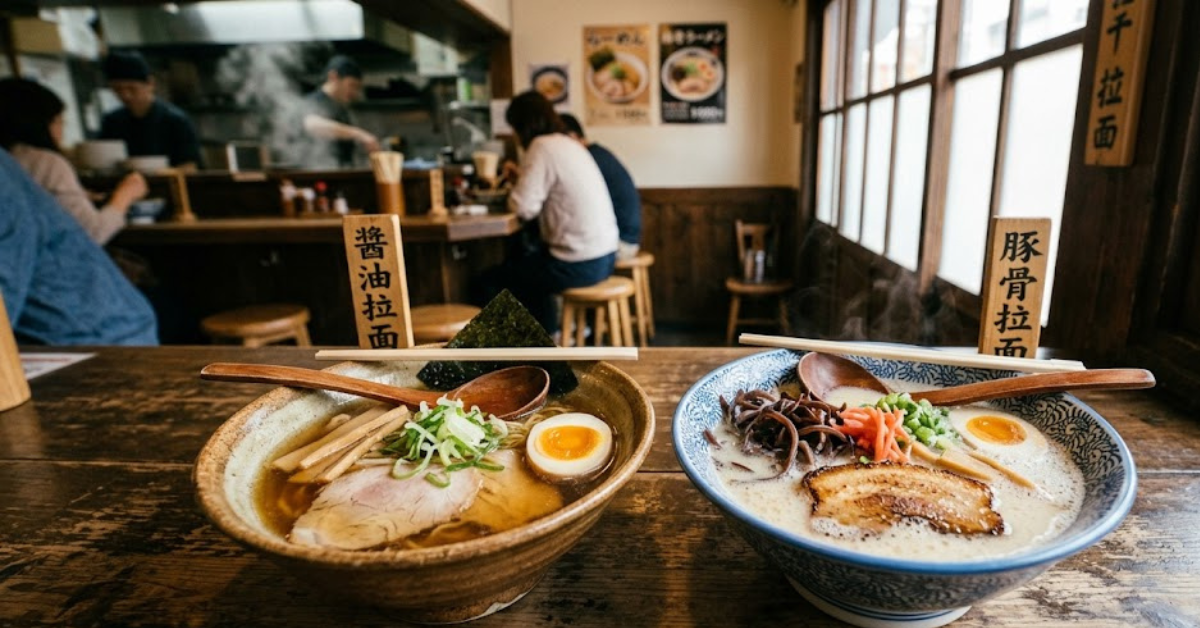
Few foods inspire as much passion as a steaming bowl of Japanese ramen. Walk into a ramen shop, glance at the menu, and you’ll likely face a delicious dilemma: shoyu vs tonkotsu. While both are beloved ramen styles, they offer completely different eating experiences.
For newcomers, the choice can be confusing. One broth is light, savory, and soy sauce-based, while the other is rich, creamy, and made from simmered pork bones. Understanding the differences between shoyu vs tonkotsu can help you choose the bowl that best matches your taste preferences.
In this guide, we’ll explore their origins, ingredients, flavor profiles, nutritional differences, and the situations where each style truly shines.
What Is Shoyu Ramen?
Shoyu ramen is one of Japan’s oldest and most widely enjoyed ramen varieties.
The word shoyu means soy sauce in Japanese. In this style of ramen, soy sauce serves as the primary seasoning, known as the tare, which gives the broth its characteristic brown color and savory flavor.
Key Characteristics of Shoyu Ramen
- Soy sauce-based seasoning
- Clear brown broth
- Light to medium body
- Balanced umami flavor
- Often made with chicken, seafood, or pork stock
Shoyu ramen originated in the Tokyo region and remains one of the most traditional ramen styles in Japan.
What Is Tonkotsu Ramen?
Tonkotsu ramen comes from Japan’s Kyushu region, particularly Fukuoka Prefecture.
The word tonkotsu translates to “pork bone.” Unlike shoyu ramen, tonkotsu broth is created by boiling pork bones for many hours, sometimes more than 12 hours, until collagen, marrow, and fat dissolve into the liquid.
Key Characteristics of Tonkotsu Ramen
- Pork bone-based broth
- Rich, creamy texture
- Milky white appearance
- Deep pork flavor
- High collagen content
Tonkotsu is often considered one of the richest and most indulgent styles of ramen.
Shoyu vs Tonkotsu: The Biggest Differences
When comparing shoyu vs tonkotsu, several factors stand out immediately.
Broth Base
Shoyu
- Soy sauce-seasoned broth
- Usually chicken, seafood, pork, or mixed stock
- Clear appearance
Tonkotsu
- Pork bone broth
- Long cooking process
- Opaque white appearance
The broth is the most obvious distinction between these two ramen styles.
Flavor Profile
Shoyu Flavor
Shoyu ramen delivers:
- Savory umami
- Slight saltiness
- Clean finish
- Delicate complexity
The soy sauce enhances the stock without overpowering it.
Tonkotsu Flavor
Tonkotsu ramen offers:
- Rich pork flavor
- Creamy mouthfeel
- Deep umami
- Hearty character
The broth is significantly heavier and more intense.
Shoyu vs Tonkotsu Texture Comparison
Texture plays a major role in the ramen experience.
Shoyu Texture
Shoyu broth tends to be:
- Light
- Smooth
- Refreshing
- Easy to sip
It feels less filling than tonkotsu.
Tonkotsu Texture
Tonkotsu broth is:
- Thick
- Velvety
- Creamy
- Coating on the palate
Many ramen lovers describe tonkotsu as almost soup-like in richness.
Common Toppings for Each Style
Although toppings vary by restaurant, certain ingredients are commonly paired with each broth.
Popular Shoyu Ramen Toppings
- Chashu pork
- Bamboo shoots (menma)
- Green onions
- Nori seaweed
- Soft-boiled eggs
- Spinach
Popular Tonkotsu Ramen Toppings
- Chashu pork
- Wood ear mushrooms
- Green onions
- Pickled ginger
- Garlic
- Sesame seeds
Tonkotsu ramen often features stronger toppings that complement its bold broth.
Which Is More Authentic?
A common misconception is that one style is more authentic than the other.
The truth is both are authentic Japanese ramen traditions.
Shoyu Origins
- Associated with Tokyo-style ramen
- One of the earliest ramen varieties
Tonkotsu Origins
- Originated in Fukuoka
- Regional specialty of Kyushu
Each style reflects the culinary traditions of different parts of Japan.
Shoyu vs Tonkotsu: Nutrition Comparison
Nutritional values vary between restaurants, but some general differences exist.
Shoyu Ramen
Typically contains:
- Fewer calories
- Less fat
- Lighter broth
- Moderate sodium levels
Tonkotsu Ramen
Typically contains:
- More calories
- Higher fat content
- More collagen
- Richer broth
People seeking a lighter meal often choose shoyu, while those wanting a more filling bowl may prefer tonkotsu.
Which Ramen Is Better for Beginners?
If you’re new to ramen, choosing between shoyu vs tonkotsu depends on your preferences.
Choose Shoyu If You Like
- Balanced flavors
- Lighter soups
- Soy sauce-based dishes
- Traditional Japanese cuisine
Choose Tonkotsu If You Like
- Creamy soups
- Rich flavors
- Pork-based dishes
- Hearty comfort food
Neither option is objectively better—it’s all about personal taste.
Why Ramen Lovers Debate Shoyu vs Tonkotsu
The debate exists because the two styles represent opposite ends of the ramen spectrum.
Shoyu Fans Appreciate
- Complexity
- Balance
- Clean flavors
- Broth clarity
Tonkotsu Fans Appreciate
- Richness
- Creaminess
- Intense umami
- Comfort-food appeal
Many experienced ramen enthusiasts enjoy both for different occasions.
Can You Combine Shoyu and Tonkotsu?
Yes.
Many modern ramen shops create hybrid bowls that combine tonkotsu broth with shoyu seasoning.
The result often provides:
- Tonkotsu richness
- Shoyu complexity
- Enhanced umami depth
These fusion styles have become increasingly popular worldwide.
Quick Comparison Table
| Feature | Shoyu Ramen | Tonkotsu Ramen |
| Broth Color | Clear Brown | Milky White |
| Main Base | Soy Sauce Seasoning | Pork Bones |
| Richness | Light to Medium | Very Rich |
| Texture | Light and Smooth | Thick and Creamy |
| Flavor | Balanced and Savory | Deep and Porky |
| Calories | Usually Lower | Usually Higher |
| Origin | Tokyo Region | Kyushu Region |
Frequently Asked Questions
What is the difference between shoyu and tonkotsu ramen?
Shoyu ramen uses soy sauce seasoning and typically has a lighter broth, while tonkotsu ramen is made from simmered pork bones and has a rich, creamy texture.
Is shoyu ramen healthier than tonkotsu?
Generally, shoyu ramen tends to contain less fat and fewer calories than tonkotsu ramen, though exact nutrition depends on the recipe.
Which tastes better, shoyu or tonkotsu?
Taste is subjective. Shoyu offers a lighter, balanced flavor, while tonkotsu provides a richer and creamier experience.
Is tonkotsu always made with pork?
Yes. Traditional tonkotsu broth is made by boiling pork bones for extended periods.
Is shoyu ramen vegetarian?
Not necessarily. Although seasoned with soy sauce, many shoyu broths contain chicken, pork, or seafood stock.
Why is tonkotsu broth white?
The long boiling process emulsifies fat, collagen, and marrow into the broth, creating its signature milky appearance.
Which ramen is best for beginners?
Many beginners enjoy shoyu ramen because of its lighter flavor, though people who love rich soups often prefer tonkotsu immediately.
Can I order both styles at the same restaurant?
Many ramen shops offer multiple broth options, including shoyu, tonkotsu, and hybrid variations.
Conclusion
When comparing shoyu vs tonkotsu, there is no universal winner. Shoyu ramen delivers a lighter, soy sauce-forward broth with balanced umami and traditional appeal, while tonkotsu ramen offers a rich, creamy pork bone broth packed with depth and indulgent flavor.
Your ideal choice depends on what you’re craving. If you want something delicate and nuanced, shoyu is an excellent option. If you’re looking for a hearty bowl with intense richness, tonkotsu may become your favorite. The best approach is simple: try both. Exploring different ramen styles is part of what makes Japanese cuisine so rewarding, and understanding the differences between shoyu vs tonkotsu will help you appreciate every bowl even more.