
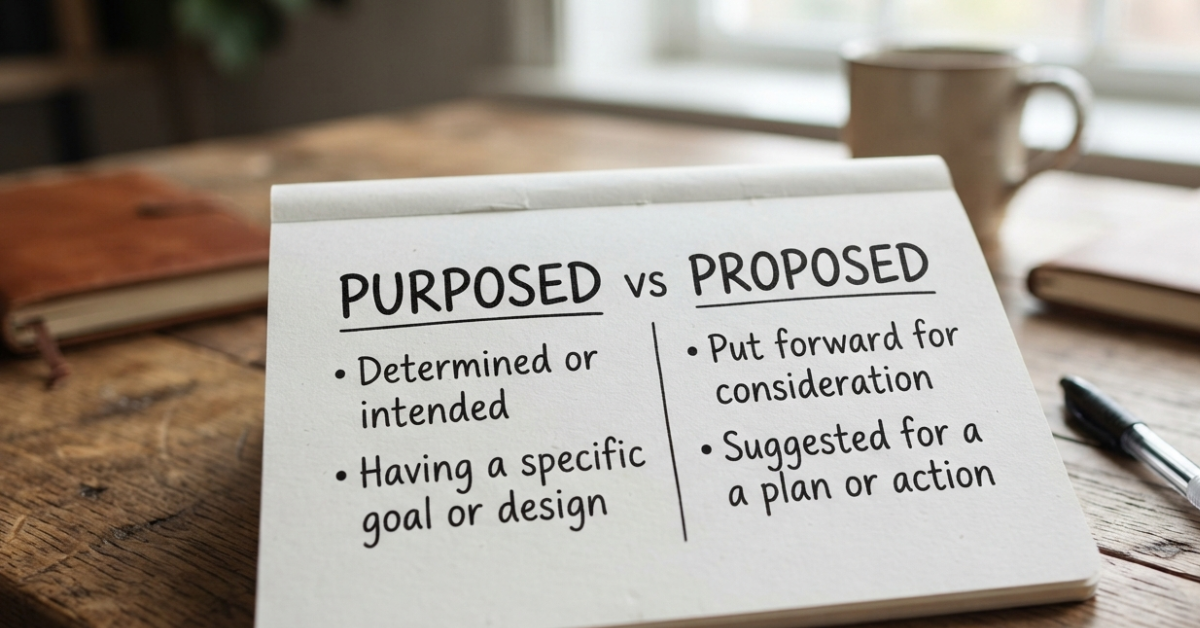
Have you ever written a sentence, paused for a moment, and wondered whether the correct word was purposed or proposed? You’re not alone. These two words look similar, but they serve very different purposes in English grammar.
Understanding purposed vs proposed can help you write with greater accuracy and confidence. In this guide, you’ll learn what each word means, when to use it, common mistakes to avoid, and practical examples that make the distinction easy to remember.
Understanding the Difference Between Purposed and Proposed
Although both words come from verbs, they are not interchangeable.
- Purposed relates to having an intention or specific aim.
- Proposed refers to suggesting, presenting, or offering an idea, plan, or action.
The confusion usually comes from their similar spelling and pronunciation, but their meanings differ significantly.
Purpose or Propose: What’s the Difference?
Before comparing the past forms, it’s important to understand the base words.
| Word | Part of Speech | Meaning |
| Purpose | Noun / Verb | An intention, objective, or to intend something |
| Propose | Verb | To suggest an idea, plan, motion, or solution |
As a noun, purpose means a reason for doing something.
Example:
The purpose of the meeting was to discuss next year’s budget.
As a verb, purpose means to intend or resolve to do something, though this usage is less common in modern English.
Example:
She purposed to finish the project before Friday.
By contrast, propose always involves presenting an idea or recommendation.
Example:
The committee proposed several new policies.
What Does “Purposed” Mean?
Purposed is the past tense and past participle of purpose when used as a verb.
It means:
- Intended
- Planned
- Determined
- Resolved
Although grammatically correct, purposed appears far less frequently in everyday English than proposed. Most modern writers prefer alternatives like intended or planned because they sound more natural.
Examples
- He purposed to learn a new language before moving abroad.
- They purposed to improve customer service throughout the year.
- She had purposed to call earlier but became busy.
Notice that each sentence expresses intention rather than suggestion.
What Does “Proposed” Mean?
Proposed is the past tense and past participle of propose.
It means someone:
- Suggested an idea
- Recommended a solution
- Submitted a plan
- Presented an option for consideration
This word appears frequently in business, education, law, government, and everyday communication.
Examples
- The manager proposed a flexible work schedule.
- Scientists proposed a new explanation for the findings.
- The city council proposed additional safety measures.
- She proposed meeting after lunch.
Unlike purposed, proposed is extremely common in modern writing.
Purposed vs Proposed: Side-by-Side Comparison
| Feature | Purposed | Proposed |
| Base verb | Purpose | Propose |
| Main meaning | Intended | Suggested |
| Common today | Rare | Very common |
| Expresses | Intention | Recommendation |
| Typical contexts | Literature, formal writing | Everyday, business, academic writing |
A simple memory trick is this:
- Purposed = Intended
- Proposed = Suggested
Purpose Meaning Example
To understand the difference fully, it helps to see purpose used in different ways.
Purpose as a Noun
This is the most common use.
Examples:
- Every business should have a clear purpose.
- Education serves an important purpose in society.
- The purpose of the training was to improve communication skills.
Purpose as a Verb
This usage is more formal and less common.
Examples:
- He purposed to complete the task before sunset.
- She purposed never to repeat the mistake.
- The team purposed to expand into international markets.
These examples show intention rather than a proposal.
Common Mistakes People Make
Because the words look alike, many writers accidentally substitute one for the other.
Incorrect
The company purposed a new pricing strategy.
Correct
The company proposed a new pricing strategy.
Why?
The company suggested the strategy—it didn’t merely intend it.
Another example:
Incorrect
She proposed to study harder this semester.
Although grammatically possible in certain contexts, if you mean she intended, the clearer choice is:
She purposed to study harder.
Or, more naturally:
She intended to study harder.
When Should You Use Each Word?
Use “Purposed” When Talking About Intention
Choose purposed if someone:
- Intended something
- Planned privately
- Had a personal objective
- Made a resolution
Examples:
- They purposed to improve quality.
- He purposed to become a doctor.
Use “Proposed” When Presenting Ideas
Use proposed when someone:
- Suggested a plan
- Introduced an idea
- Recommended a solution
- Submitted a formal motion
Examples:
- The architect proposed a modern design.
- Researchers proposed a different theory.
- The board proposed several policy changes.
Why “Proposed” Is More Common Today
Modern English has gradually shifted away from using purpose as a verb.
Instead, people usually say:
- intended
- planned
- aimed
- decided
However, propose remains an active and widely used verb in everyday communication.
You’ll regularly encounter proposed in:
- Business reports
- Academic papers
- Government documents
- News articles
- Project planning
- Legal writing
Memory Tricks to Remember the Difference
A few simple techniques can prevent future confusion.
Think About the Action
If someone is:
- Planning privately → Purposed
- Sharing an idea publicly → Proposed
Replace the Word
If you can replace it with:
- Intended → Purposed
- Suggested → Proposed
This quick test works in almost every situation.
Real-World Examples
Business
The executive proposed expanding into new markets.
Personal Goal
She purposed to exercise every morning.
Government
Officials proposed new environmental regulations.
Literature
The hero purposed never to abandon his mission.
These examples show how context determines the correct word.
Key Takeaways
- Purpose usually refers to an objective or reason.
- Propose means to suggest an idea or recommendation.
- Purposed expresses intention and is relatively uncommon today.
- Proposed expresses suggestion and is widely used in modern English.
- When in doubt, ask whether the sentence is about intending something or presenting an idea.
Frequently Asked Questions
What is the difference between purposed vs proposed?
Purposed means intended or resolved, while proposed means suggested or recommended. The distinction depends on whether the sentence expresses intention or a proposal.
Is “purposed” a real word?
Yes. Although it is less common in modern English, purposed is a legitimate past tense form of the verb purpose and appears mainly in formal or literary writing.
Should I use purpose or propose?
Use purpose when referring to an aim, objective, or intention. Use propose when presenting an idea, recommendation, or plan for consideration.
What is a simple purpose meaning example?
A straightforward example is: The purpose of the workshop was to improve leadership skills. Here, purpose refers to the reason or objective.
Why is proposed used more often than purposed?
Modern English favors verbs like intend and plan over purpose as a verb. As a result, proposed appears much more frequently in everyday conversation, professional writing, and academic texts.
Conclusion
Although purposed vs proposed may seem like a minor grammar question, understanding the difference can make your writing more precise and professional. Purposed focuses on intention, while proposed centers on suggesting an idea or course of action.
Whenever you’re unsure, remember this simple rule: if someone intended something, purposed may fit; if someone suggested something, proposed is almost always the right choice. Mastering this distinction will help you communicate more clearly, whether you’re writing emails, reports, essays, or everyday messages.