Have you ever heard someone say, “The company made an about face on its policy” or “She did an about face after hearing the news”? The about face meaning goes beyond a simple turn around. It describes a complete change in direction, opinion, attitude, or decision.
Originally a military command, “about face” has become a widely used expression in everyday English. Whether discussing politics, personal choices, business strategies, or relationships, this phrase represents a sudden and significant shift. In this guide, you’ll learn what “about face” means, where it comes from, and how to use it correctly in different situations.
What Does About Face Mean?
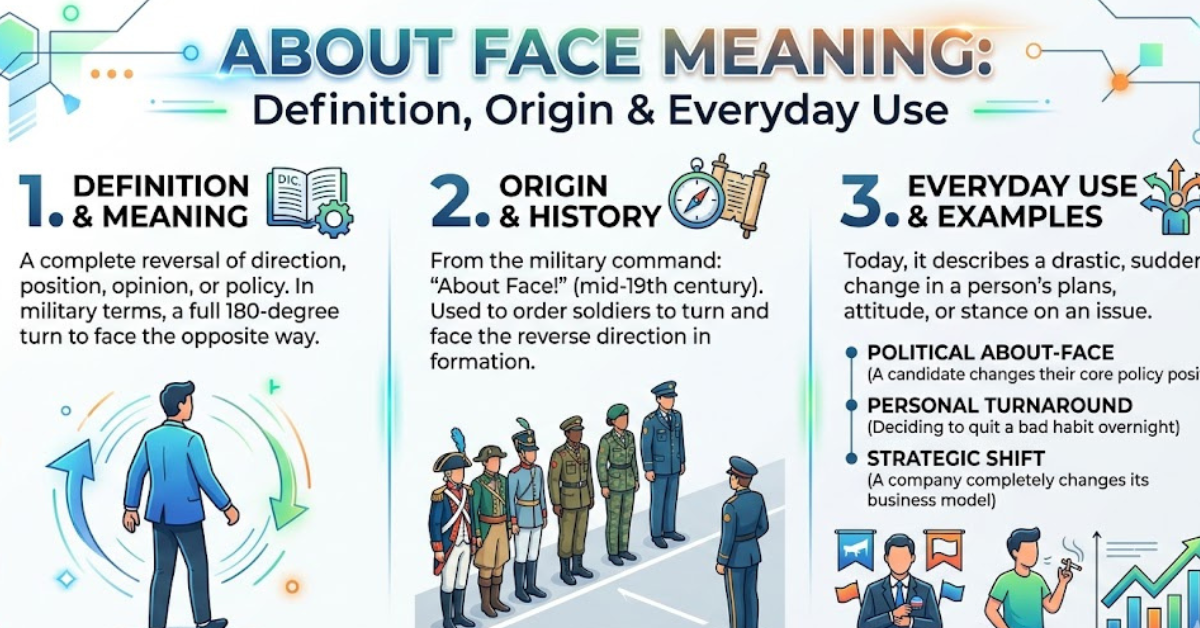
The about face meaning refers to a complete reversal or a dramatic change in direction, attitude, or opinion.
In its literal sense, an “about face” is a military command instructing soldiers to turn 180 degrees so they face the opposite direction. Figuratively, it describes someone who changes their position or course of action.
Simple Definition
About face (noun): A sudden and complete change of opinion, behavior, plan, or direction.
Examples:
- The government made an about face on its environmental policy.
- After reviewing the evidence, the manager did an about face and approved the project.
- He was against moving to another city but made an about face after receiving a better job offer.
The Military Origin of About Face
The phrase “about face” comes from military drill commands. Soldiers are trained to respond to commands quickly and precisely.
When a commander says “About face!”, soldiers turn around 180 degrees and face the opposite direction while maintaining their formation.
This physical turn became a powerful metaphor for a complete change in thinking or action. Over time, it moved beyond military settings and became a common idiom in the English language.
About Face Meaning in Everyday Conversations
Today, the phrase is frequently used to describe changes in many areas of life.
1. Politics and Government
Politicians and governments may make an about face when they reverse previous policies or public positions.
Example:
“The administration made an about face on the proposed tax reforms.”
2. Business and Corporate Decisions
Companies often make strategic changes based on new market conditions or customer feedback.
Example:
“The company made an about face and decided to focus on online sales instead of physical stores.”