Have you ever heard someone called a “buckle bunny” and wondered what it actually means? The phrase is common in rodeo circles, country music communities, and social media conversations, but its meaning isn’t always clear to outsiders.
Understanding the buckle bunny meaning requires looking beyond the slang itself and exploring its roots in Western culture. While some people use the term jokingly, others view it as insulting or stereotypical. In this article, you’ll learn what a buckle bunny is, where the phrase originated, how it’s used today, and why it remains a topic of debate.
What Does Buckle Bunny Mean?
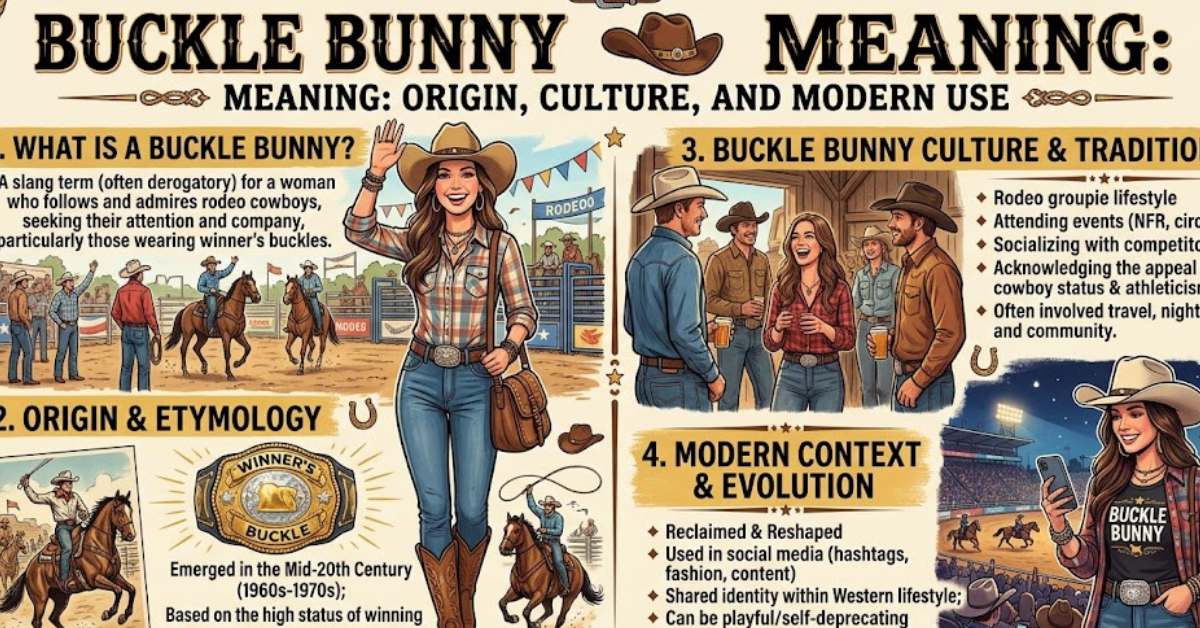
A buckle bunny is a slang term typically used to describe a woman who is attracted to rodeo cowboys, bull riders, or Western athletes, often because of their status, appearance, or popularity rather than a genuine interest in rodeo culture itself.
The term combines two elements:
- Buckle: Refers to the large championship belt buckles awarded in rodeo competitions.
- Bunny: A slang suffix often used to describe someone who enthusiastically follows or admires a particular group.
In many cases, the phrase suggests that a person pursues rodeo competitors for attention, social status, or romantic involvement.
The Origin of the Term Buckle Bunny
The phrase emerged within the rodeo community in the United States, particularly in regions where Western culture is prominent.
The Significance of Rodeo Belt Buckles
Unlike ordinary fashion accessories, rodeo belt buckles often represent achievement. Cowboys who win competitions receive custom buckles that symbolize success and skill.
These buckles became recognizable status symbols, leading to the creation of the term “buckle bunny” for individuals perceived to be attracted to successful competitors.
Connection to Western Culture
The expression gained popularity at:
- Professional rodeos
- County fairs
- Livestock shows
- Western festivals
- Country music events
Over time, it spread beyond rodeo arenas and entered mainstream slang.
How the Term Is Used Today
The modern use of the phrase varies depending on context.
Casual and Humorous Use
Among friends, the term may be used jokingly to describe someone who enjoys spending time around cowboys or frequently attends rodeo events.
For example:
“She never misses a rodeo and knows all the bull riders—people call her a buckle bunny.”
In this context, the phrase may not carry serious criticism.
Negative or Critical Use
In other situations, the term can be used as an insult.
Some people use it to imply that someone:
- Is seeking attention from rodeo stars
- Is interested in fame or popularity
- Lacks genuine appreciation for Western culture
- Pursues relationships for status
Because of these implications, many individuals consider the label dismissive or unfair.
Is Buckle Bunny an Offensive Term?
Whether the term is offensive depends largely on the situation and the people involved.
Why Some People Find It Offensive
Critics argue that the phrase:
- Stereotypes women
- Reduces individuals to romantic interests
- Assumes motives without evidence
- Creates unnecessary judgment within rodeo communities
Many women involved in rodeo culture genuinely enjoy the sport, raise livestock, compete themselves, or work in agricultural industries.
Why Others Use It Lightheartedly
Some rodeo fans embrace the phrase humorously and don’t view it as harmful. In certain social circles, it has become a playful nickname rather than a serious insult.
However, context matters. What feels harmless to one person may feel disrespectful to another.
Buckle Bunny vs Groupie: What’s the Difference?
People often compare buckle bunnies to groupies, but there are subtle differences.
| Buckle Bunny | Groupie |
| Associated with rodeo culture | Commonly associated with musicians and celebrities |
| Focuses on cowboys and rodeo athletes | Focuses on performers, bands, or public figures |
| Rooted in Western traditions | Found across entertainment industries |
| Often tied to rodeo events | Often tied to concerts and tours |
Both terms imply admiration for people with status or public recognition, though they exist in different cultural settings.
Common Stereotypes About Buckle Bunnies
Like many slang labels, the phrase has generated stereotypes that may not accurately reflect reality.
Some assumptions include:
- Following rodeos solely to meet cowboys
- Prioritizing appearance and social status
- Lack of interest in the sport itself
- Constant pursuit of rodeo champions
In reality, rodeo audiences are diverse. Many fans attend events because they enjoy the competition, support family members, or participate in agricultural communities.
The Role of Social Media
Social media platforms have helped popularize Western-inspired lifestyles and rodeo culture.
Influencers and Western Fashion
Platforms like Instagram, TikTok, and Facebook feature:
- Cowboy fashion
- Rodeo highlights
- Country music content
- Western lifestyle influencers
As a result, the term buckle bunny appears more frequently online than ever before.
Changing Perceptions
Younger generations often use the phrase differently than older rodeo participants.
Some use it ironically or as a meme, while others reject it entirely because of its stereotypical nature.
Buckle Bunny in Popular Culture
The phrase occasionally appears in:
- Country music lyrics
- Western-themed television shows
- Rodeo documentaries
- Social media captions
- Lifestyle blogs
Its continued presence in popular culture reflects the enduring influence of rodeo traditions across North America.
Understanding Rodeo Culture Beyond the Label
To fully understand the buckle bunny meaning, it’s important to recognize the broader rodeo community.
Rodeo culture includes:
- Professional athletes
- Ranch families
- Livestock owners
- Agricultural workers
- Fans and supporters
- Event organizers
Reducing someone’s involvement to a single stereotype often overlooks the complexity of their connection to the sport.
Key Takeaways
- A buckle bunny is generally someone perceived as being attracted to rodeo cowboys or competitors.
- The term originated from championship rodeo belt buckles.
- It can be used playfully or as a criticism, depending on context.
- Many people consider the phrase stereotypical or dismissive.
- Social media has increased awareness and use of the term.
- Understanding rodeo culture helps provide a more balanced perspective.
Frequently Asked Questions
What is the exact buckle bunny meaning?
A buckle bunny is a slang term for a person, usually a woman, who is perceived as pursuing rodeo cowboys or competitors because of their status, popularity, or success.
Is buckle bunny a compliment or an insult?
It can be either. Some people use it jokingly or affectionately, while others use it as a negative label that questions someone’s motives.
Where did the term buckle bunny come from?
The phrase originated in rodeo culture. “Buckle” refers to championship belt buckles won by rodeo athletes, while “bunny” refers to an enthusiastic follower or admirer.
Are buckle bunnies the same as groupies?
They are similar but not identical. A buckle bunny is associated with rodeo athletes, while a groupie is generally linked to musicians, celebrities, or performers.
Is the term still used today?
Yes. The term remains common in rodeo communities, country music circles, and on social media platforms discussing Western lifestyles.
Why do some people dislike the term?
Some believe it stereotypes women and unfairly assumes their reasons for attending rodeos or interacting with competitors.
Conclusion
The buckle bunny meaning goes far beyond a simple slang expression. Rooted in rodeo culture, the term originally described individuals drawn to successful cowboys and their championship status. Over time, however, its meaning has evolved, becoming both a playful nickname and a controversial label depending on context.
Understanding the history, cultural background, and modern usage of the phrase helps avoid misunderstandings and encourages a more nuanced view of rodeo communities. As language continues to evolve, so too will the way terms like “buckle bunny” are interpreted and used. Exploring these cultural expressions offers valuable insight into the traditions and social dynamics that shape Western culture today.