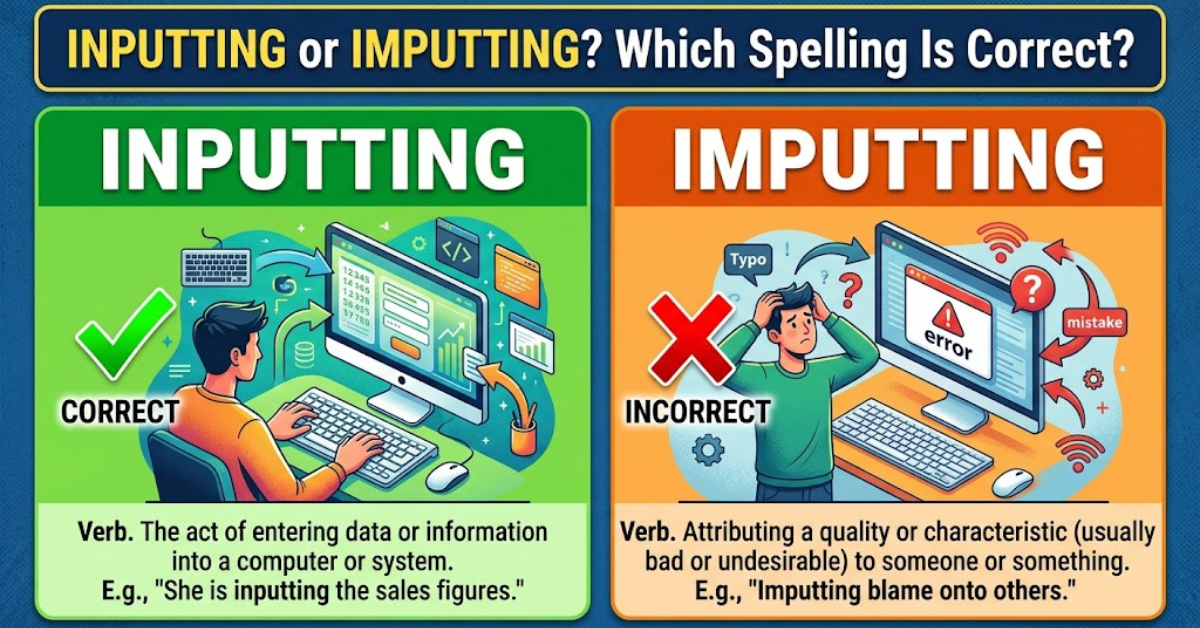

English spelling can be confusing, especially when words change form by adding endings like -ing. One common question people ask is: comming or coming? Whether you’re writing an email, a social media post, or a school assignment, using the correct spelling is essential for clear communication.
The good news is that the answer is straightforward. While both versions may appear online, only one is considered correct in standard English. Understanding the comming or coming meaning, spelling rules, and usage examples can help you avoid a mistake that many English learners and native speakers make.
In this guide, we’ll explain which is correct comming or coming, why the confusion exists, and how to remember the right spelling every time.
Comming or Coming: Which Is Correct?
The correct spelling is:
Coming
The spelling comming is incorrect in standard English.
Correct
- Coming
Incorrect
- Comming
If you’re wondering is it comming or coming, the answer is always coming.
Examples
Correct:
- I am coming home.
- The train is coming soon.
- Thank you for coming to the event.
Incorrect:
- I am comming home.
Comming or Coming Meaning
To understand the spelling, it’s helpful to know what the word means.
What Does Coming Mean?
The word coming is the present participle of the verb come.
It generally means:
- Moving toward a place
- Arriving
- Approaching
- Happening in the future
Examples
- She is coming to the party.
- Winter is coming.
- The deadline is coming quickly.
- A new product launch is coming next month.
In all these examples, coming refers to arrival or approach.
Why Is “Comming” Incorrect?
The confusion between comming or coming usually comes from spelling patterns in English.
Many verbs double the final consonant before adding “-ing.”
Examples include:
- Run → Running
- Sit → Sitting
- Swim → Swimming
Because of these examples, some people assume that come should become (comming).
However, English spelling rules work differently for verbs ending in silent e.
The Rule
When a verb ends in a silent e, you usually:
- Remove the final e
- Add -ing
Examples:
- Come → Coming
- Make → Making
- Write → Writing
- Drive → Driving
Since come follows this rule, the correct form is coming, not comming.
Comming or Coming Difference
Technically, there is no true meaning difference because only one form is correct.
Coming
- Proper English spelling
- Accepted by dictionaries
- Used in professional writing
- Grammatically correct
Comming
- Misspelling
- Not accepted in standard English
- Should be avoided
When discussing on these words difference, the key distinction is simply correctness.
Comming or Coming Soon
One of the most searched phrases online is comming or coming soon.
The correct phrase is:
Coming Soon
Examples
- Coming Soon: New Website Launch
- Coming Soon: Summer Collection
- Coming Soon to Theaters
- Coming Soon: Major Product Update
You should never write:
- Comming Soon
This is a spelling error.
Common Uses of Coming
The word coming appears in many everyday situations.
Referring to Movement
Examples:
- He is coming to my house.
- They are coming from London.
Referring to Future Events
Examples:
- The coming year will be exciting.
- Changes are coming soon.
Referring to Arrival
Examples:
- Thank you for coming.
- We appreciate everyone coming today.
Coming Meaning in English
Many learners search for these words meaning in English.
In English, coming generally means:
- Approaching
- Arriving
- Moving toward
- About to happen
Simple Definitions
Coming can describe:
- A person arriving somewhere
- An event approaching
- A future occurrence
Examples:
- The guests are coming.
- Rain is coming.
- Better days are coming.
Examples of Coming in Sentences
Seeing the word in context makes its usage easier to understand.
Everyday Examples
- I’m coming with you.
- The bus is coming now.
- Are you coming tomorrow?
Professional Examples
- New regulations are coming next year.
- The company announced coming changes to its policies.
Academic Examples
- Researchers discussed the coming challenges in the industry.
- The coming decade may bring significant technological advances.
Common Grammar Mistakes Related to Coming
Many spelling errors occur when people apply the wrong rule.
Incorrect
- Comming soon
- Are you comming?
Correct
- Coming
- Coming soon
- Are you coming?
Always remember that the original verb is come, not comm.
Easy Memory Trick
If you often confuse in these words, try this simple trick.
Think About the Base Word
The base word is:
Come
Remove the final “e”:
Com
Add “-ing”:
Coming
There is never a need to add an extra “m.”
Visual Reminder
- Come + ing = Coming
- Not Come + ming
This simple formula works every time.
Other Similar Spelling Rules
Understanding related examples can strengthen your grammar skills.
Remove the Silent E
- Come → Coming
- Make → Making
- Bake → Baking
- Write → Writing
- Drive → Driving
These verbs follow the same pattern as come.
Why Correct Spelling Matters
Using the correct spelling improves:
- Professional communication
- Academic writing
- Search engine visibility
- Reader trust
- Overall credibility
Although “comming” may seem like a small mistake, repeated spelling errors can make writing appear less polished and less authoritative.
Frequently Asked Questions
Is it comming or coming?
It is always coming in standard English.
What is the meaning of coming?
Coming means arriving, approaching, moving toward a place, or about to happen.
Why is comming wrong?
Comming is incorrect because the verb come follows the silent-e rule. The final “e” is removed before adding “-ing.”
How do you spell coming soon?
The correct phrase is:
Coming Soon
Is comming a word in English?
No. Standard English dictionaries do not recognize “comming” as a correct word.
What is coming meaning in English?
Coming means approaching, arriving, or occurring in the future.
How can I remember the correct spelling?
Remember:
Come → remove the “e” → add “-ing” = Coming
Conclusion
When deciding between comming or coming, the correct choice is always coming. The word comes from the verb come and follows a common English spelling rule: remove the silent “e” before adding “-ing.” As a result, comming is a misspelling and should be avoided in both formal and informal writing.
Understanding the comming or coming meaning, grammar rules, and usage examples makes it easier to write confidently and accurately. Whether you’re writing “coming soon,” describing someone’s arrival, or talking about future events, using the correct spelling ensures your communication remains professional, clear, and grammatically correct.