English has no shortage of words that look and sound similar while carrying entirely different meanings. One lesser-known but fascinating pair is gamble vs gambol. At first glance, these words seem nearly identical, yet they belong to completely different contexts.
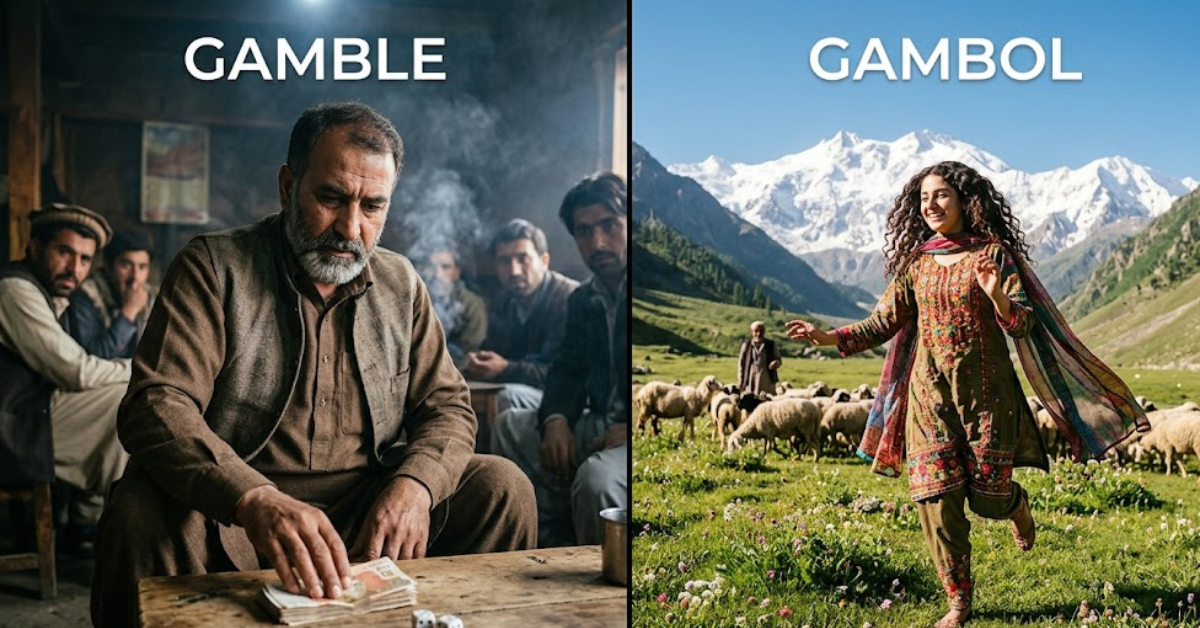
A gamble involves taking a risk in hopes of gaining something, often money or a favorable outcome. A gambol, on the other hand, refers to playful jumping, skipping, or frolicking, usually associated with children or animals. Understanding the distinction can help you avoid awkward mistakes and expand your vocabulary.
In this guide, we’ll explore the meanings, origins, examples, pronunciation, and practical uses of both words.
Why Gamble and Gambol Are Often Confused
The confusion stems from several similarities:
- Their spellings differ by only one letter.
- Their pronunciations are somewhat alike.
- Both can function as verbs and nouns.
However, their meanings have no connection whatsoever. One relates to risk-taking, while the other relates to playful movement.
Once you understand the contexts in which they are used, distinguishing them becomes much easier.
What Does Gamble Mean?
The word gamble is commonly used in both everyday conversation and formal writing.
Gamble Definition
As a verb, gamble means:
- To risk money or valuables on an uncertain outcome
- To take a chance in hopes of achieving a desired result
As a noun, it refers to:
- An act of risk-taking
- A wager or bet
- A decision involving uncertainty
Examples of Gamble in Sentences
- He decided to gamble on the card game.
- Investing all her savings was a risky gamble.
- The company made a gamble by launching a new product.
- They gambled on favorable weather conditions.
In many cases, the word extends beyond casinos and betting to include any situation involving uncertainty.
Common Uses of Gamble
The term appears in a wide variety of contexts.
Financial Decisions
- Stock market investments
- Business ventures
- Entrepreneurship
Sports and Gaming
- Betting on games
- Casino activities
- Competitive predictions
Everyday Life
- Career changes
- Relocation decisions
- Major purchases
People often use gamble figuratively to describe calculated risks.
What Does Gambol Mean?
Unlike gamble, the word gambol is much less common in modern conversation.
Gambol Definition
As a verb, gambol means:
- To skip about playfully
- To leap and frolic with joy
As a noun, it refers to:
- A playful leap
- A frolicsome movement
- Cheerful, energetic activity
Examples of Gambol in Sentences
- The lambs gamboled across the meadow.
- Children gamboled through the park on a sunny afternoon.
- The puppy began to gambol around the yard.
- The foal’s joyful gambol delighted visitors.
The word typically conveys happiness, energy, and carefree movement.
Common Uses of Gambol
Although less common today, gambol still appears in:
Literature
Authors often use gambol to create vivid imagery.
Nature Writing
The word frequently describes:
- Lambs
- Deer
- Horses
- Puppies
Poetry
Because of its playful tone, poets often use gambol to describe joyful movement.
Gamble vs Gambol: Side-by-Side Comparison
Understanding the distinction becomes easier when comparing them directly.
Gamble
Meaning:
- To take a risk
- To place a bet
- To wager on an uncertain outcome
Example:
- She chose to gamble on a new business idea.
Gambol
Meaning:
- To frolic playfully
- To skip or leap with joy
Example:
- The young goats gamboled across the hillside.
One involves uncertainty and risk, while the other involves carefree play.
Pronunciation Differences
Although similar, the words are pronounced slightly differently.
Gamble
Pronunciation:
- GAM-bul
Gambol
Pronunciation:
- GAM-bol
In everyday speech, the distinction may be subtle, which contributes to confusion.
Origins of the Words
Their histories reveal just how unrelated these terms really are.
Origin of Gamble
Gamble likely evolved from older Germanic words associated with games, risk, and betting.
Over time, its meaning expanded to include any risky undertaking.
Origin of Gambol
Gambol comes from older European words referring to playful movement and leaping.
Its historical meaning has remained largely unchanged for centuries.
Despite their similar spellings, the two words developed from entirely different linguistic roots.
Memory Tricks to Remember the Difference
Simple associations can help you choose the correct word.
Remember Gamble = Risk
Think of:
- Gambling
- Casinos
- Bets
- Risk-taking
If uncertainty or wagering is involved, gamble is the correct choice.
Remember Gambol = Play
Think of:
- Playful animals
- Jumping lambs
- Frolicking children
If someone is joyfully skipping or leaping, gambol is the word you need.
Common Mistakes to Avoid
Because the words look similar, writers occasionally mix them up.
Incorrect
- The puppy gambled around the garden.
Correct
- The puppy gamboled around the garden.
Why?
Because the puppy was playing, not taking risks.
Incorrect
- He gambolled his savings at the casino.
Correct
- He gambled his savings at the casino.
Why?
Because casinos involve risk and betting, not playful movement.
Why Context Matters
The surrounding words usually make the correct choice obvious.
Use Gamble When Discussing:
- Risk
- Money
- Betting
- Uncertain outcomes
- Strategic decisions
Use Gambol When Discussing:
- Playfulness
- Frolicking animals
- Joyful movement
- Leaping and skipping
The context will almost always point to the right word.
Related Words and Synonyms
Synonyms for Gamble
- Bet
- Wager
- Risk
- Venture
- Speculate
Synonyms for Gambol
- Frolic
- Skip
- Leap
- Romp
- Play
These alternatives can help diversify your writing while preserving meaning.
Why Correct Usage Matters
Although gambol is less common than gamble, confusing the two can create unintended meanings.
Consider these examples:
- “The investors gambled on the project.”
- “The investors gamboled on the project.”
The first sentence makes sense. The second suggests investors were playfully skipping around rather than making a financial decision.
Choosing the correct word ensures clarity and professionalism.
Frequently Asked Questions
What is the difference between gamble and gambol?
Gamble means to take a risk or place a wager, while gambol means to skip, leap, or frolic playfully.
Is gambol a real English word?
Yes. Gambol is a legitimate English word, although it is less common than gamble.
Can gambol be used as a noun?
Yes. Gambol can refer to a playful leap or frolic.
Is gamble only related to casinos?
No. Gamble can also describe any risky decision or uncertain undertaking.
Why do people confuse gamble and gambol?
Their spellings and pronunciations are very similar, making them easy to mix up.
How can I remember the difference?
Associate gamble with risk and gambol with playful movement.
Conclusion
Understanding gamble vs gambol is easier once you focus on their meanings. Gamble refers to taking risks, placing bets, or making uncertain decisions, while gambol describes joyful, energetic movement such as skipping, leaping, or frolicking.
Although the words look remarkably similar, they belong to entirely different situations. By remembering that gamble involves risk and gambol involves play, you’ll be able to use both terms accurately and confidently in your writing. Mastering this distinction is another step toward stronger vocabulary and clearer communication.