Dry eyes can make wearing contact lenses feel like a daily battle. What starts as mild irritation in the morning can turn into burning, redness, blurry vision, or that frustrating feeling that there is something stuck in your eye by the afternoon. Fortunately, having dry eyes does not automatically mean you have to give up contact lenses. Modern lens materials and designs have made comfortable wear much more achievable for many people.
The trick is understanding that there is no single contact lens that is best for every person with dry eyes. A lens that feels fantastic for one wearer may feel uncomfortable for another. Material, water content, oxygen transmission, surface technology, replacement schedule, fit, wearing time, and even your working environment can all influence comfort.
When people search for the top rated contacts for dry eyes, they are usually looking for lenses that can stay comfortable for several hours without making their eyes feel tired or gritty. Daily disposable lenses, silicone hydrogel lenses, and newer water-gradient designs are often worth discussing with an eye-care professional. The goal is not simply to find the most expensive lens, but to find the one that works best with your eyes and your lifestyle.
What Makes Contact Lenses Comfortable for Dry Eyes?
The first thing to understand is that contact lenses interact directly with the tear film covering the surface of your eye. When that tear film becomes unstable, a lens can start feeling dry, sticky, or irritating. Your environment matters, too. Air conditioning, fans, heating systems, low humidity, smoke, and prolonged screen use can all make symptoms more noticeable.
Lens material is another major factor. Silicone hydrogel lenses allow substantial oxygen to reach the cornea and are widely used in modern soft contact lenses. The FDA notes that newer silicone-hydrogel materials were developed to provide more oxygen to the eye during wear.
Water content deserves some attention as well. It may seem logical that a lens with more water would always be better for dry eyes, but it is not quite that simple. Some high-water-content lenses can lose moisture during wear, while certain lower-water or specialized surface designs may maintain comfort better for particular wearers. This is why comparing water percentage alone is not a reliable way to choose a lens.
Top Rated Contacts for Dry Eyes to Discuss With Your Eye Doctor
DAILIES TOTAL1
DAILIES TOTAL1 is frequently considered when people want a premium daily disposable lens with a water-gradient design. Its lens structure has a relatively lower water content in the core and a highly hydrated outer surface, creating a smooth interface between the lens and the eyelid.
The water-gradient concept is particularly interesting for dry-eye sufferers because the surface is designed to feel extremely wet and lubricated. Medical reviews have highlighted DAILIES TOTAL1 as an option for people looking for highly lubricated daily lenses and longer-wear comfort.
Another advantage is the daily replacement schedule. Instead of repeatedly wearing the same lens for weeks, you start each day with a fresh pair. Daily disposable lenses can reduce the accumulation of deposits associated with repeatedly worn lenses, although proper fitting and prescribed replacement remain essential.
ACUVUE OASYS MAX 1-Day
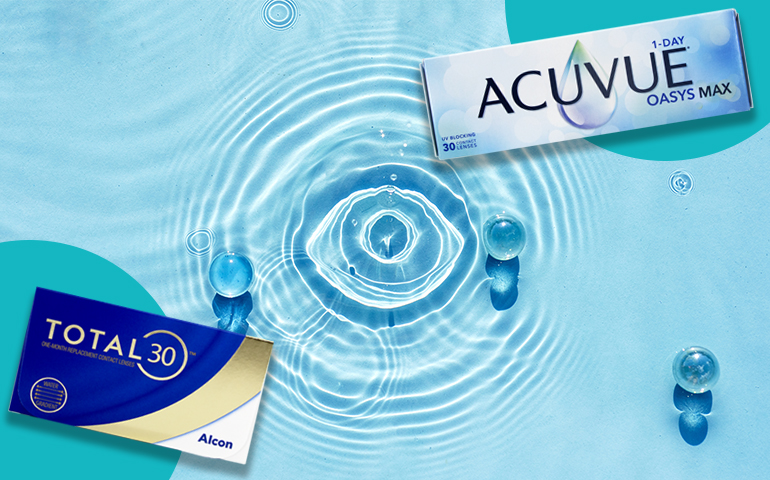
ACUVUE OASYS MAX 1-Day is another option worth discussing if you prefer daily lenses. It is designed with technologies intended to support tear-film stability and comfortable daily wear.
One of the biggest benefits of a daily lens is convenience. You do not have to clean and store the lens overnight, and you do not carry the same lens through multiple days of exposure to dust, cosmetics, environmental particles, and tear-film deposits.
For someone who spends long hours reading, working on a computer, or using a phone, comfort can be especially important. Screen use often reduces blinking, which can contribute to dry-eye symptoms, so a lens that feels comfortable during prolonged visual tasks can make a noticeable difference.
Bausch + Lomb INFUSE
Bausch + Lomb INFUSE is a daily disposable option that deserves consideration for people who want a modern lens designed around moisture and comfort. It uses a silicone hydrogel material and incorporates surface-related technology intended to support a comfortable wearing experience.
The important point is that silicone hydrogel does not automatically guarantee comfort. A lens still needs to fit correctly, match your prescription, and work well with your individual tear film. Even a technically advanced lens can feel uncomfortable if the fit or wearing schedule is wrong.
Still, INFUSE can be a useful candidate to discuss during a professional lens fitting. Daily replacement also makes it appealing to people who want a simple routine with fewer cleaning and storage steps.
Biotrue ONEday
Biotrue ONEday is another daily disposable lens that has attracted attention from people looking for moisture-focused lens designs. It uses a hydrogel material with relatively high water content and is designed to maintain a comfortable environment during daily wear.
Its high water content may sound ideal for dry eyes, but this is a good example of why specifications should not be viewed in isolation. A lens with a particular water percentage can feel excellent to one person and less comfortable to another.
Biotrue ONEday may be particularly worth considering if you prefer daily disposable lenses and your eye-care professional believes its material and design suit your tear film. It is also available in versions designed for different vision needs, although availability depends on the specific market and prescription.
Why Daily Disposable Lenses Can Be a Good Choice
One of the strongest arguments for daily disposable lenses is freshness. With a true daily disposable lens, you wear the lens once and discard it rather than cleaning and reusing it. The FDA distinguishes true daily disposables from lenses that are simply marketed as “disposable” but are actually intended for planned replacement.
For people with dry eyes, this can be attractive because there is no need to repeatedly handle the same lens. Deposits can accumulate on reusable lenses over time, and some wearers find that their lenses become less comfortable as the replacement date approaches.
Daily lenses can also simplify your routine. You do not need a lens case or a regular disinfecting routine for the lens itself. However, your hands still need to be clean before handling contacts, and you should follow the wearing instructions supplied with the specific product.
The downside is cost. Daily disposables can be more expensive than monthly lenses if worn every day. But for someone who struggles with comfort, the additional expense may be worthwhile if the lens provides better tolerance and more consistent wear.
Silicone Hydrogel Contacts and Dry Eyes
Silicone hydrogel is one of the most important developments in modern soft contact lenses. Traditional hydrogel lenses rely heavily on water content to transport oxygen, while silicone hydrogel materials allow oxygen to pass through the lens more efficiently. This can be especially relevant for people who wear lenses for many hours.
Several popular lenses for dry-eye sufferers use silicone hydrogel materials. Examples include certain ACUVUE, Biofinity, DAILIES TOTAL1, Bausch + Lomb Ultra, and other modern lens families. However, material alone should never be treated as a guarantee of comfort.
The surface of a lens matters, too. Manufacturers use different technologies and treatments to influence how the lens interacts with tears and the eyelids. A person who experiences dryness with one silicone hydrogel lens may still find another silicone hydrogel design much more comfortable.
This is why an eye-care professional may recommend trying more than one lens. A trial lens can provide valuable real-world information that a product specification sheet cannot provide.
How Screen Time Can Make Contact-Lens Dryness Worse
Many people blame their contacts when the real problem is partly their daily routine. Staring at a computer, tablet, or phone for long periods can reduce blinking. Fewer complete blinks mean the tear film may spread less effectively across the eye.
If your eyes feel fine when you wake up but become dry after several hours at your computer, your screen habits may be contributing to the problem. The contact lens can make you more aware of that dryness because it sits directly on the tear film.
Try consciously blinking more often when using screens. Taking regular visual breaks can also help. Keeping the screen at a comfortable distance and reducing direct airflow from a fan or air conditioner toward your face can make the environment more comfortable.
These changes are simple, but they can matter. Even the top-rated contacts for dry eyes cannot completely overcome poor blinking habits, a very dry environment, or an underlying eye condition.
How to Choose the Right Contacts for Your Dry Eyes
Start with your wearing pattern. If you only wear contacts occasionally, daily disposables may make more sense than purchasing lenses designed for long-term replacement. If you wear contacts every day for many hours, a silicone hydrogel monthly or biweekly option may be worth discussing.
Next, consider your symptoms. Do your eyes become dry immediately after inserting the lens, or only after several hours? Do you experience redness, burning, blurred vision, or a gritty sensation? These details can help an optometrist determine whether the issue may involve the lens material, fit, tear film, or another underlying problem.
Your prescription matters as well. Someone with astigmatism, presbyopia, or a particularly high prescription may have fewer lens choices than someone with a straightforward spherical prescription. The best lens is ultimately one that corrects your vision properly while remaining comfortable and safe for your eyes.
Mistakes to Avoid When Wearing Contacts With Dry Eyes
One common mistake is simply wearing lenses for too long. If your eyes become increasingly uncomfortable toward the end of the day, pushing through the discomfort is not a good strategy. Your prescribed wearing schedule should take priority over convenience.
Another mistake is sleeping in lenses that are not specifically approved for overnight wear. Extended-wear lenses exist, but that does not mean every contact lens can safely be slept in. Contact lenses should always be used according to their specific instructions and your eye-care professional’s advice.
It is also important not to replace professional advice with online reviews. Reviews can tell you how other people experienced a lens, but they cannot determine whether that lens fits your cornea or is appropriate for your eye health. Contact lenses are medical devices, and the FDA states that contact lenses require a valid prescription.
Tips for Making Contact Lenses More Comfortable
Start by washing and drying your hands thoroughly before handling your lenses. Avoid touching lenses with dirty or oily fingers because anything transferred onto the lens can affect comfort.
Pay attention to your environment. Air conditioning and fans can accelerate evaporation from the eye surface, while long periods of screen use can reduce blinking. Using a humidifier in particularly dry indoor environments may also be helpful for some people.
If your eye doctor approves lubricating eye drops, use products specifically compatible with contact lenses. Do not assume every eye drop is suitable for use while wearing contacts. If your lenses repeatedly become uncomfortable despite these measures, schedule a professional examination rather than continually changing products yourself.
When You Should Stop Wearing Contacts
Dryness is common, but significant or sudden symptoms should not be ignored. If you experience substantial eye pain, pronounced redness, light sensitivity, unusual discharge, or a sudden change in vision, remove the lenses and seek prompt professional medical advice.
Do not try to solve serious symptoms simply by switching brands. Discomfort can occasionally indicate an infection, corneal problem, inflammation, poor lens fit, or another condition that needs proper evaluation.
A contact lens that feels slightly dry after several hours is a different situation from an eye that is painful or visibly inflamed. Knowing that difference is important for protecting your vision.
Final Thoughts on the Top Rated Contacts for Dry Eyes
Finding the top rated contacts for dry eyes is less about discovering one universally perfect brand and more about finding the right combination of material, design, replacement schedule, prescription, and fit. DAILIES TOTAL1, ACUVUE OASYS MAX 1-Day, Bausch + Lomb INFUSE, and Biotrue ONEday are among the modern options worth discussing with an eye-care professional, while other silicone hydrogel lenses may work better depending on your individual needs.
Daily disposable lenses can be particularly appealing because they provide a fresh lens each day and eliminate the need to repeatedly clean and store the lens. Silicone hydrogel designs can also be useful because of their high oxygen transmission. Still, neither category guarantees comfort for everyone.
The best approach is to treat online rankings as a starting point rather than a final answer. Have your eyes examined, make sure your prescription and lens fit are correct, and tell your eye-care professional exactly when and how your dryness occurs. With the right lens and a few changes to your daily habits, many people can enjoy contact lenses without constantly fighting uncomfortable, dry eyes.
You May Also Read: Wordmaticz