
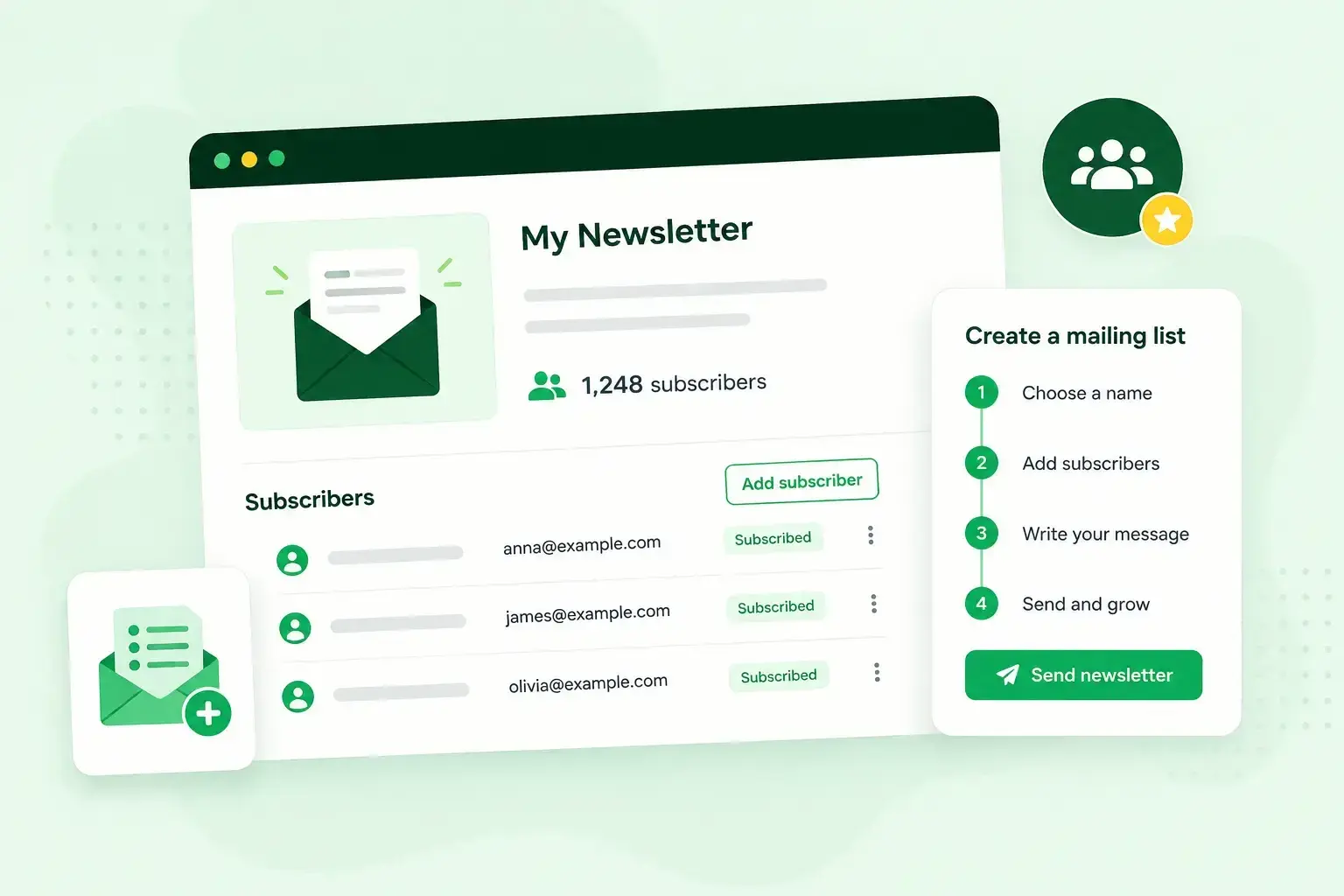
If you have ever received a newsletter, promotional email, company update, or special offer from a business, there is a good chance you were part of a mailing list. But what is a mailing list, exactly? In simple terms, a mailing list is a collection of people who have agreed to receive messages from a particular person, organization, business, or online service.
Mailing lists have been around in different forms for decades, but they remain an important part of modern communication. While social media platforms come and go, email gives businesses and organizations a direct way to communicate with people who have shown an interest in what they offer. A well-managed mailing list can be useful for sharing information, building relationships, and keeping an audience engaged.
Understanding what is a mailing list is especially helpful if you run a website, operate a business, manage a community, or simply want to stay connected with an audience. The idea is straightforward, but there are several important details behind how mailing lists are created, managed, and used.
What Is a Mailing List?
A mailing list is essentially a group of email addresses collected for the purpose of sending relevant messages to multiple recipients. Instead of typing individual email addresses every time you want to send an update, you can use a mailing list to organize your subscribers in one place and communicate with them efficiently.
For example, imagine that you own an online clothing store. Visitors to your website may sign up to receive information about new products, discounts, seasonal sales, and useful fashion tips. Their email addresses can be stored in a mailing list, allowing you to send appropriate messages to everyone who has subscribed.
A mailing list is not necessarily limited to businesses. Schools, nonprofit organizations, clubs, creators, professional communities, and individuals can all use mailing lists. The purpose can range from sending important announcements to sharing educational content. What matters is that the recipients are grouped together because they have a reason to receive communication from the sender.
How Does a Mailing List Work?
The basic process behind a mailing list is quite simple. First, someone provides an email address, usually through a signup form on a website, landing page, event registration page, or another legitimate subscription method. That address is then added to a mailing-list database or email marketing platform.
Once people subscribe, the sender can create an email and distribute it to the list. Depending on the system being used, the message may go to everyone or only to a specific group of subscribers. For example, an online store might send a general newsletter to all subscribers while sending a product-specific promotion only to customers interested in that category.
Modern mailing-list systems can automate much of this process. They can handle subscriptions, unsubscribes, email delivery, audience segmentation, and sometimes personalized messages. This makes it possible for even a small business to communicate with a large audience without manually sending hundreds or thousands of individual emails.
Why Do Businesses Use Mailing Lists?
One of the biggest advantages of a mailing list is direct communication. Social media posts depend on algorithms and platform visibility, while an email can arrive directly in a subscriber’s inbox. This gives businesses another reliable channel for communicating with their audience.
Mailing lists are also useful for building long-term relationships. A company can send helpful information instead of constantly trying to sell something. For instance, a fitness website might send workout advice, healthy recipes, and training tips along with occasional information about its paid services. Providing useful content can encourage subscribers to continue opening future messages.
Another major benefit is that mailing lists can support business growth. Subscribers who voluntarily provide their email addresses have already demonstrated some level of interest. With thoughtful communication, those subscribers may eventually become customers, repeat customers, members, or loyal followers. The key is to provide genuine value rather than overwhelming people with unwanted promotions.
What Can Be Sent to a Mailing List?
A mailing list can be used for many different types of communication. Newsletters are among the most common. A newsletter might contain company news, educational articles, industry updates, helpful tips, or curated content.
Businesses can also use mailing lists to announce new products and services. A software company, for example, might email subscribers when it releases a major feature. An online retailer might notify subscribers about a seasonal collection or limited-time promotion.
Other common messages include event invitations, appointment reminders, account updates, educational resources, surveys, and personalized recommendations. The most effective content depends on why people joined the list in the first place. A mailing list works best when its messages match the expectations created during the signup process.
Mailing Lists and Email Marketing
Although the terms are closely related, a mailing list and email marketing are not exactly the same thing. A mailing list is the audience or collection of subscribers, while email marketing is the broader strategy of communicating with that audience through email.
For example, a business may have 10,000 subscribers on its mailing list. Its email marketing strategy determines what messages those people receive, how often emails are sent, which subscribers receive particular campaigns, and what results the business wants to achieve.
Good email marketing is about more than sending messages to a large group. It involves understanding the audience, creating useful content, writing clear subject lines, designing readable emails, and monitoring performance. A large mailing list is not automatically valuable if subscribers rarely open messages or frequently unsubscribe.
How Do People Join a Mailing List?
People generally join a mailing list through a signup form. These forms can appear on a website’s homepage, blog, checkout page, contact page, or dedicated landing page. Some businesses also offer an incentive, such as a discount, guide, checklist, or other useful resource, in exchange for a subscription.
The signup process should clearly explain what subscribers are agreeing to receive. If someone signs up for weekly business tips, they should not suddenly receive unrelated promotional messages every day. Clear expectations help create trust and can improve the quality of the subscriber relationship.
A good mailing-list system should also make it easy for subscribers to leave. Unsubscribe options are an important part of responsible email communication. Someone who no longer wants to receive messages should be able to stop receiving them without unnecessary difficulty.
What Is a Mailing List Segment?
As a mailing list grows, not every subscriber will have the same interests. This is where segmentation becomes useful. Segmentation means dividing a larger mailing list into smaller groups based on relevant characteristics or behavior.
For instance, an online bookstore could create separate segments for customers interested in fiction, business books, children’s books, or biographies. The bookstore can then send more relevant recommendations to each group rather than sending every subscriber exactly the same content.
Segmentation can improve the overall quality of email communication because subscribers receive information that is more closely connected to their interests. It can also reduce unnecessary messages, which may help maintain engagement and reduce unsubscribes.
What Makes a Mailing List Valuable?
The size of a mailing list is only one measurement of its value. A smaller list containing genuinely interested subscribers can be much more useful than a huge list filled with inactive or uninterested addresses.
Engagement is an important factor. Businesses may look at metrics such as opens, clicks, conversions, and unsubscribes to understand how subscribers respond to their emails. These measurements can help identify which topics and formats are working well.
Trust is another major part of a valuable mailing list. People are more likely to remain subscribed when they receive useful, relevant, and reasonably timed messages. Sending too many emails or making misleading promises can damage that trust quickly.
Mailing List Best Practices
One of the most important mailing-list practices is to obtain email addresses responsibly. People should understand that they are subscribing to communications and should not be added without an appropriate reason or permission. Different countries and jurisdictions have their own requirements for commercial email, so organizations should understand the rules that apply to them.
Another best practice is consistency. This does not mean sending emails every day. Instead, it means creating a predictable communication pattern. If subscribers expect a weekly newsletter, regularly providing one can make the relationship feel dependable.
It is also worth keeping the list clean. Invalid addresses, repeated addresses, and long-term inactive subscribers can reduce the usefulness of a database. Regularly reviewing subscriber activity can help organizations maintain a healthier and more engaged audience.
Common Mistakes to Avoid
One common mistake is focusing entirely on quantity. Some businesses become obsessed with collecting as many email addresses as possible while paying little attention to subscriber quality. A mailing list should be built around people who are genuinely interested in the subject or organization.
Another mistake is sending too many emails. Even subscribers who initially enjoy your content may become frustrated if their inbox is constantly filled with promotions. Finding a reasonable frequency is important, and the right frequency depends on the audience and the type of content.
Poorly written or misleading subject lines can also hurt a mailing-list strategy. The subject should accurately communicate what the email contains. Likewise, emails should be easy to read on mobile devices because many people check email from smartphones and tablets.
What Is a Mailing List’s Role in Modern Communication?
Even with the popularity of social networks, messaging apps, and other digital channels, mailing lists remain highly useful. Email provides a direct communication channel that organizations can use to maintain ongoing relationships with their audiences.
For publishers and content creators, a mailing list can provide a dependable way to notify readers about new articles, videos, podcasts, or other work. For businesses, it can support customer communication, product announcements, promotions, and retention. For nonprofit organizations, it can help distribute updates and encourage supporters to participate in campaigns or events.
The technology behind mailing lists will continue to evolve, but the fundamental concept remains the same: people choose to receive useful information from a particular source, and that source communicates with them through email.
Final Thoughts on What Is a Mailing List
So, what is a mailing list? It is an organized collection of email subscribers who have chosen to receive communications from a particular sender or organization. It provides a practical way to communicate with multiple people while allowing messages to be organized, personalized, and delivered efficiently.
A successful mailing list is about much more than collecting email addresses. It depends on trust, relevance, consistency, responsible data handling, and useful content. Whether you are a business owner, blogger, creator, community manager, or organization, a thoughtfully managed mailing list can become a valuable communication channel.
The strongest mailing lists are built gradually. They attract people who genuinely want the information being offered, respect subscribers’ preferences, and consistently deliver something worthwhile. When those principles are followed, a mailing list can turn a simple collection of email addresses into a meaningful and lasting connection with an audience.
You May Also Read: Wordmaticz