
If you have ever seen a dessert with a striking purple color and wondered, “What is ube?” you are not alone. Ube has become increasingly popular around the world, showing up in ice cream, cakes, cookies, drinks, pastries, and even breakfast foods. Its naturally vivid purple color makes it easy to notice, but its appeal goes well beyond appearance.
Ube is a type of purple yam that comes from the Philippines. It has a mildly sweet, earthy flavor with hints that many people describe as nutty, vanilla-like, or reminiscent of roasted sweet potatoes. In Filipino cooking, ube has been used for generations, particularly in traditional desserts and festive dishes.
Today, ube has moved far beyond Filipino kitchens. Restaurants, bakeries, specialty food stores, and home cooks have embraced it as an ingredient that provides both distinctive flavor and beautiful color. Understanding what ube is, how it tastes, how it differs from other purple vegetables, and how it is used can make it much easier to appreciate why this ingredient has become such a global food trend.
What Is Ube?
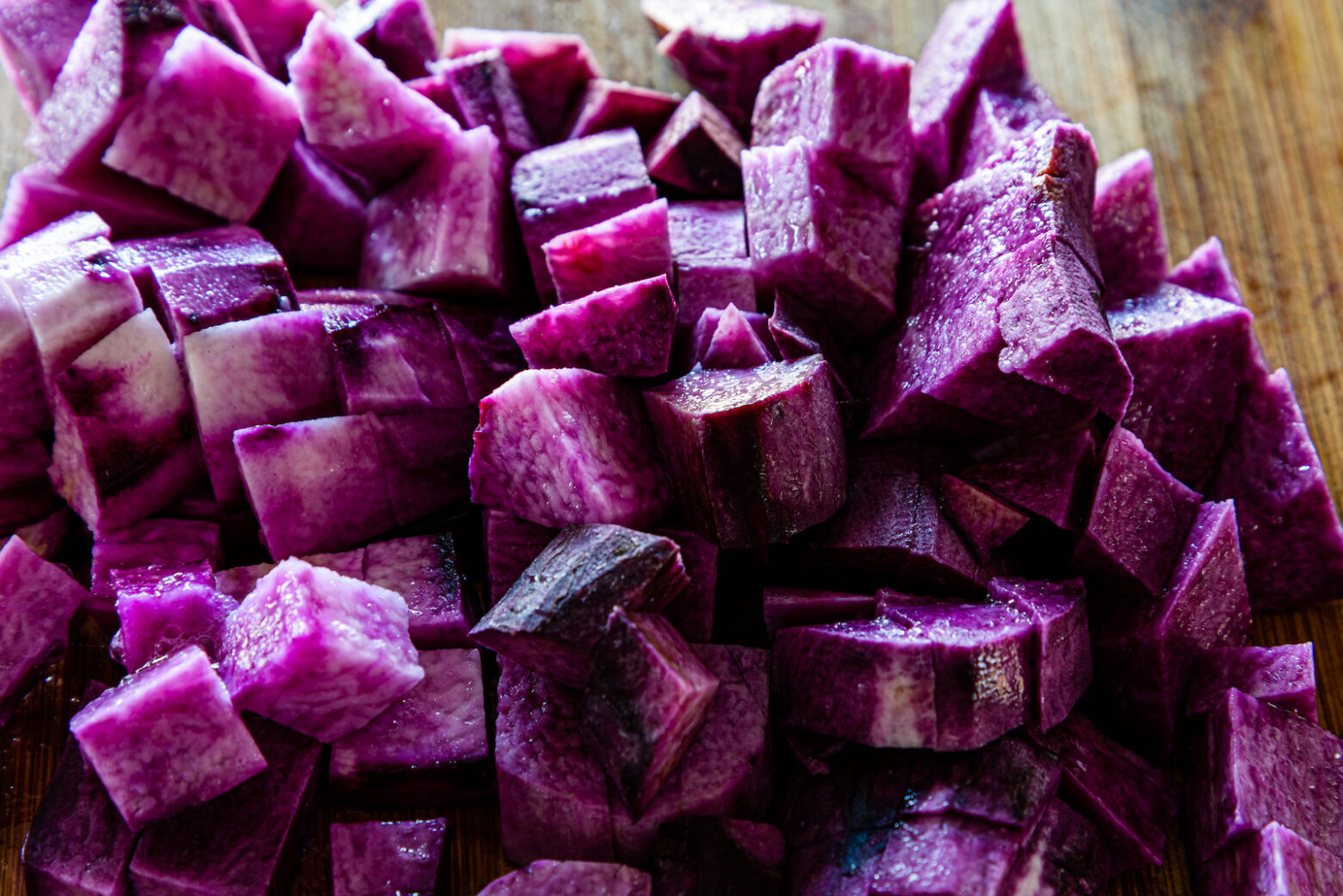
Ube is the Filipino name for a purple yam, scientifically known as Dioscorea alata. It is a starchy root vegetable that grows underground and is especially associated with the Philippines and other parts of Southeast Asia. The flesh can range from light lavender to a much deeper purple, depending on the variety and growing conditions.
Although ube is sometimes casually called a “purple sweet potato,” that description is not technically correct. Ube and purple sweet potatoes belong to different plant groups. Ube is a yam, while a sweet potato belongs to the Ipomoea batatas species. Their colors can look similar, but their texture, flavor, and botanical characteristics are different.
Ube has traditionally been prepared by boiling, steaming, baking, or mashing it. Once cooked, its soft texture makes it particularly useful in desserts. In the Philippines, cooked ube is often transformed into a sweet purple paste called ube halaya, which can be eaten on its own or incorporated into other recipes.
What Does Ube Taste Like?
One of the most interesting things about ube is its flavor. While its purple appearance may suggest that it tastes like berries or grapes, ube is not fruity in the way those foods are. Instead, it has a gentle sweetness and a distinctly earthy character.
People often describe the flavor as a combination of vanilla, roasted nuts, and mild sweet potato. Some also notice a subtle coconut-like quality, especially when ube is paired with coconut milk or other traditional Filipino ingredients. The flavor is usually pleasant without being overwhelmingly sweet, which is one reason it works so well in desserts.
The exact taste can vary depending on how the ube is prepared. Freshly cooked ube tends to have a more natural, earthy flavor, while commercial ube extracts and flavorings can have a stronger vanilla-like aroma. This distinction is important because an ube-flavored dessert does not necessarily contain a large amount of fresh ube.
Ube vs. Purple Sweet Potato: What Is the Difference?
Ube and purple sweet potatoes are often confused because both can have intensely purple flesh. However, they are different vegetables. Ube is a yam, while purple sweet potato is a variety of sweet potato.
The texture is another noticeable difference. Cooked ube tends to be dense, creamy, and slightly sticky when mashed. Purple sweet potatoes can be somewhat drier and firmer, depending on the variety and cooking method. Their flavors are also different, with purple sweet potatoes generally tasting more like conventional sweet potatoes.
The distinction matters when following recipes. A recipe specifically designed for ube may rely on the unique moisture, starch, and flavor of purple yam. Substituting purple sweet potato can work in some situations, but the final result may have a different texture and taste. For an authentic ube dessert, genuine ube or a quality ube product is usually the better choice.
Why Is Ube Naturally Purple?
Ube gets its famous purple color primarily from naturally occurring pigments called anthocyanins. These compounds are responsible for red, blue, and purple colors found in many plants, including certain berries, purple cabbage, and other colorful vegetables.
The intensity of ube’s color can vary considerably. Some varieties have pale lavender flesh, while others are richly violet. Cooking and processing can also influence the final appearance. That is why two ube desserts may not always have exactly the same shade of purple.
The color is one of the biggest reasons ube has become popular on social media. A purple cake, scoop of ice cream, or pastry immediately stands out visually. However, authentic ube does not need artificial coloring to achieve its characteristic appearance because the pigment naturally occurs in the yam itself.
How Is Ube Used in Filipino Food?
Ube has a long history in Filipino cuisine, particularly in sweets. One of the best-known preparations is ube halaya, a thick, sweet purple yam preserve. It is made by cooking mashed ube with ingredients such as sugar, milk, and butter or margarine until it develops a smooth, spreadable consistency.
Ube halaya can be enjoyed by itself, but it is also used as a filling or flavoring. It can appear in cakes, pastries, breads, puddings, and other desserts. Another familiar Filipino dessert is ube macapuno, which combines ube with macapuno, a soft and sweet variety of coconut.
Ube is also commonly incorporated into ice cream. Filipino-style ube ice cream has become particularly popular outside the Philippines, where its unusual color and distinctive flavor have introduced many people to the ingredient for the first time. From traditional Filipino celebrations to modern bakeries, ube continues to have an important place in food culture.
Popular Ube Desserts You Should Try
Ube ice cream is perhaps one of the easiest ways for newcomers to experience the flavor. It typically has a creamy texture, gentle sweetness, and recognizable purple color. Depending on the recipe, the flavor may be subtle or quite pronounced.
Ube cake is another popular option. Bakers use ube in cake batter, frosting, filling, or several of these components at once. The result can range from a light lavender sponge to a richly flavored celebration cake. Ube cupcakes and Swiss rolls have also become popular variations.
Beyond cakes and ice cream, you can find ube in cookies, doughnuts, cheesecakes, pancakes, waffles, milkshakes, and breads. Some modern recipes even combine ube with ingredients such as chocolate, coffee, coconut, or cream cheese. These combinations work because ube’s mild flavor can complement stronger ingredients without disappearing completely.
Is Ube Healthy?
Like other root vegetables, ube provides carbohydrates and starch, making it an energy-rich food. It also contains fiber and various vitamins and minerals. Its natural purple pigments are associated with anthocyanins, plant compounds that have antioxidant properties.
However, it is important to separate plain ube from many popular ube desserts. Fresh or simply cooked ube is nutritionally different from an ube milkshake loaded with sugar, whipped cream, or sweetened condensed milk. The nutritional value of the finished dish depends heavily on the other ingredients used.
For that reason, ube can certainly be part of a balanced diet, but it should not automatically be considered a health food simply because it is purple. As with most ingredients, preparation matters. Enjoying cooked ube as part of a varied diet is very different from consuming heavily sweetened ube desserts every day.
Where Can You Buy Ube?
Fresh ube can be found at some Filipino and Southeast Asian grocery stores, although availability depends on location and season. Because fresh purple yam can be harder to find, many cooks use frozen ube, powdered ube, ube halaya, or ube extract instead.
Ube halaya is especially convenient for baking because it is already cooked and sweetened. It can be mixed into cake batter, folded into whipped cream, spread between cake layers, or added to other desserts. Powdered ube can also be useful when storage and convenience are important.
One thing to watch for is labeling. Products marketed as “ube flavored” may contain only ube flavoring rather than a substantial amount of actual ube. If you want the authentic ingredient, check the label to see whether it contains real purple yam, ube puree, ube halaya, or simply artificial or natural flavoring.
Why Has Ube Become So Popular?
Ube’s international popularity comes from a combination of flavor, cultural heritage, and visual appeal. Its natural purple color gives familiar foods an unexpected appearance, making it particularly attractive in photographs and videos.
Social media has undoubtedly helped introduce ube to a much wider audience. Once people began sharing pictures of purple cakes, ice cream, lattes, and pastries, curiosity naturally followed. Searches for “what is ube” became an easy starting point for people encountering the ingredient for the first time.
At the same time, ube’s popularity is not simply a passing internet trend. It has deep roots in Filipino cuisine. Its current popularity gives more people an opportunity to discover Filipino flavors and traditional desserts while also encouraging chefs and bakers to experiment with the ingredient in new ways.
How to Cook With Ube at Home
If you are trying ube for the first time, starting with a prepared product can be easier than working with fresh yam. Ube halaya can be added to desserts without requiring you to cook and mash the root yourself.
If you have fresh ube, it generally needs to be cooked before eating. Steaming or boiling until tender is a common approach. Once softened, the flesh can be mashed and incorporated into recipes. Its natural starchiness makes it especially useful for creating thick and creamy desserts.
For beginners, simple recipes are often the best choice. Ube ice cream, cupcakes, pancakes, or a basic ube cake can allow you to understand the flavor without requiring complicated techniques. Once you become familiar with it, you can experiment with combinations such as coconut, vanilla, cream cheese, chocolate, or coffee.
Final Thoughts on What Is Ube
So, what is ube? In simple terms, ube is a naturally purple yam, Dioscorea alata, that has played an important role in Filipino cuisine for generations. It is known for its vibrant color, creamy texture, and gently sweet flavor with earthy, nutty, and vanilla-like notes.
Although ube is often compared with purple sweet potatoes, the two are not the same. Ube is a yam, and its unique characteristics make it particularly valuable in traditional Filipino desserts and modern baking. From ube halaya and ube macapuno to ice cream, cakes, cookies, and drinks, there are countless ways to enjoy it.
Its growing popularity around the world is a good example of how traditional ingredients can find new audiences without losing their cultural identity. If you have never tasted ube before, trying a classic Filipino preparation is a great place to begin. Once you understand its flavor, that unmistakable purple ingredient becomes much more than just a colorful food trend.
You May Also Read: Wordmaticz