
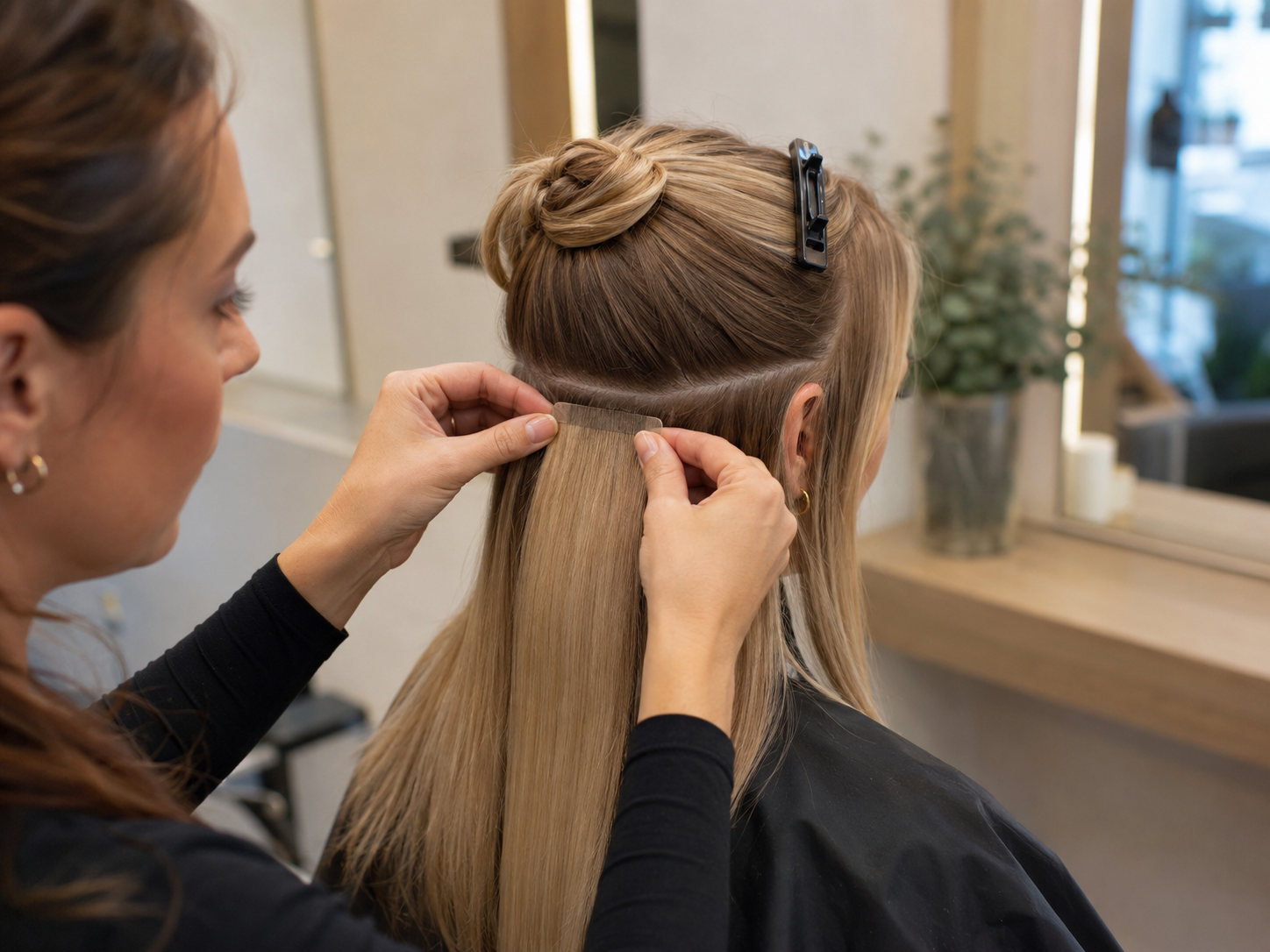
A tape-in install that fails in week three rarely fails because of the tape. It fails because something got between the adhesive and the hair, or because the section it was placed on was never the right thickness to begin with. Adhesive is chemistry, and chemistry is unforgiving about what it touches.
The Sandwich Has to Be Even
Tape wefts work in pairs, with a thin slice of natural hair pressed between them. That slice has to be consistent across the whole panel. Too thick and the tabs never fully bond, leaving an edge that catches on a brush. Too thin and the weight of the weft pulls on a small number of strands, which causes tension the wearer feels by the end of the day rather than sees in the mirror.
Placement matters as much as thickness. Tabs sitting too close to the parting show, and tabs sitting too close to the nape lift every time the head tilts back.
Hair Grade Matters Because Tapes Stay In
Clip-ins come out at night. Tapes do not, which means the same hair gets slept on, washed, brushed, and heated continuously for six to eight weeks before the first move up. Virgin hair holds up to that schedule better than processed hair because the cuticle is intact and aligned, so it resists the matting that usually appears at the bond line first. Suppliers of Wholesale Tape-in Hair Extensions generally reserve their highest grade for semi-permanent methods for exactly this reason, and the specification is worth checking before comparing prices between sets.
Density through the ends matters here too. Tapes that thin at the bottom cannot be trimmed to blend without losing what little length remains.
Conditioner Does More Damage Than Shampoo
Most slippage traces back to products applied above the bond line rather than below it. Oils, silicones, and heavy masks migrate upward as the hair dries and break the adhesive down gradually.
Habits that extend an install:
- Keep conditioner and oil on the mid lengths and ends only
- Wash with the head upright rather than tipped forward, which stresses the tabs
- Dry the bonds fully before sleeping, since damp adhesive loses grip
Heat Near the Bond
Irons should stay roughly an inch clear of the tab. Adhesive softens well below the temperature that human hair tolerates, so a single close pass can undo an otherwise solid install. Titanium and tourmaline plates help by heating evenly, which means fewer repeat passes over the same section. An adjustable digital display makes the limit concrete rather than approximate, and automatic shut off covers the moment a hot tool gets set down mid routine.
Tape-ins reward routine more than any other method. Even sections, a suitable hair grade, disciplined product placement, and controlled heat account for most of the difference between a set that survives several move ups and one replaced after a single cycle.