
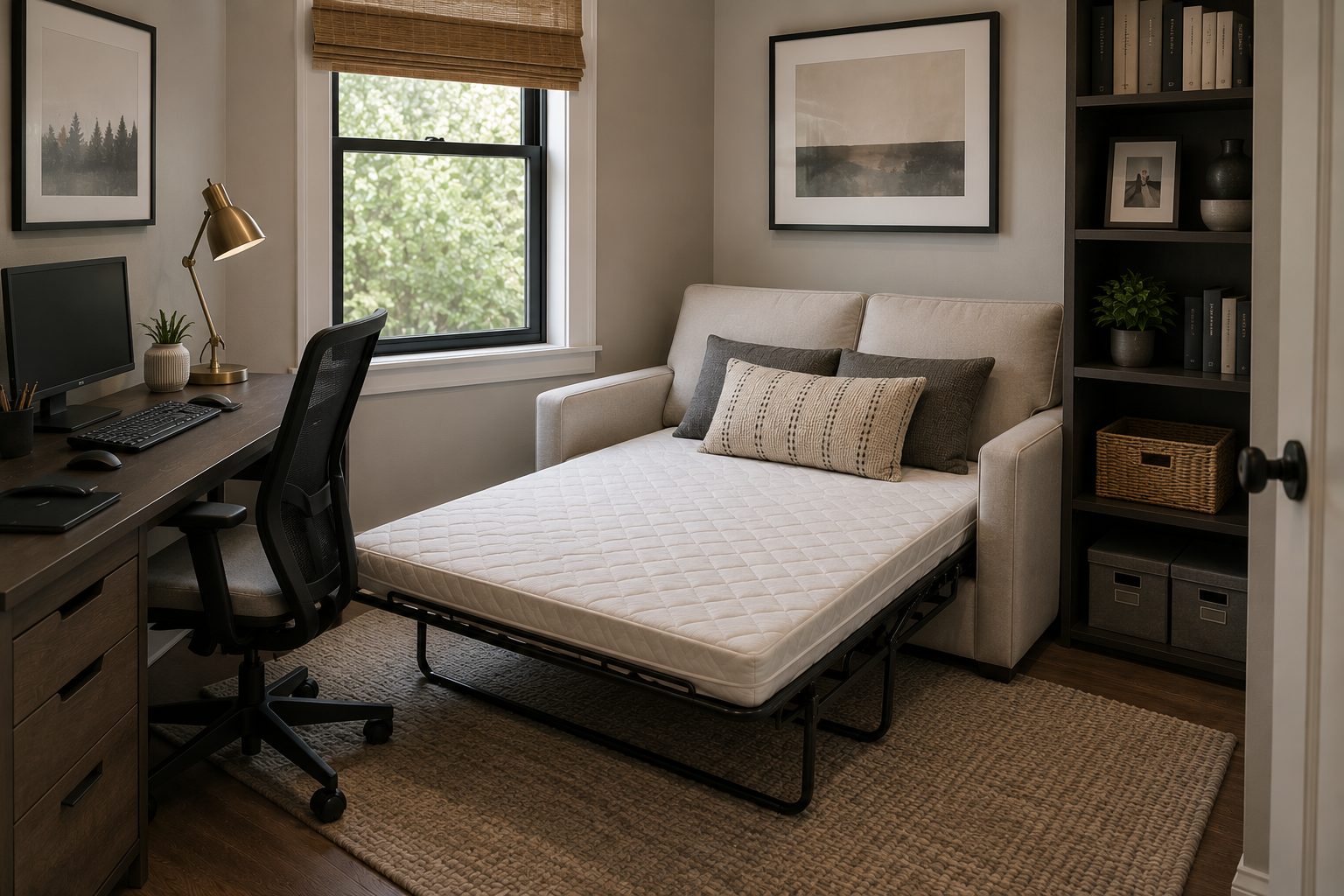
Convertible seating tends to end up in the same handful of rooms, and it is rarely the room anyone pictured when they started shopping. The living room gets the attention. The spare space down the hall is where the piece actually earns its keep.
Each of those rooms asks for something slightly different, and matching the piece to the room prevents most of the regret that follows a rushed purchase.
The Office That Hosts Relatives
A home office converted for guests a few weekends a year has the easiest requirements. The piece sits closed for months, so mechanism durability matters less than seating comfort during long work sessions and the ability to fold out without rearranging the desk.
Clearance is the real constraint here. An office already holds a desk, a chair, and usually a bookshelf, which leaves a narrow corridor for the bed extension. Measuring the open depth against that corridor prevents the common outcome of a guest bed that blocks the door.
Studio Apartments and the Single Piece Rule
Studios reverse the priorities entirely. The convertible is the main seat and the only bed, which means daily conversion, daily sitting, and no backup furniture to absorb the wear.
Nightly use puts real stress on specific components:
- Hinge hardware, which needs to move smoothly hundreds of times a year
- Frame joints, where solid wood or heavy steel holds up and particleboard loosens
- Seat foam, since high density fill recovers its shape while low density fill flattens permanently
Renters browsing Small Sofa Beds for a studio are effectively shopping for a mattress and a sofa at once, and the specification sheet should reflect both roles.
Basements, Bonus Rooms, and Anything Off the Main Floor
Rooms below grade or above the garage bring humidity and temperature swings that upper floors do not. Frames built from solid wood or treated metal handle those conditions better than engineered board, which swells and delaminates over time.
These rooms also tend to be the ones with awkward stair access. Pieces that ship in sections or arrive in a compact carton solve a problem that a fully assembled sofa cannot, and it is worth confirming delivery dimensions against the narrowest turn in the staircase.
The Piece Outlasts the Room
Rooms change purpose. The office becomes a nursery, the basement becomes a teenager’s hangout, and the studio gets traded for a one bedroom. Furniture bought for one specific room needs to look reasonable in the next one.
That argues for restraint in styling. Clean silhouettes, tapered legs, and neutral performance fabric move between rooms without looking transplanted, while bold shapes and statement colors tend to lock a piece into the space it was bought for.
The practical version of this decision is simple enough. Buy for the room that exists now, but check the specifications against the room it might become, because a well built convertible will still be around when the floor plan changes.